Our Top Picks
 LARBANKE 7-Drawer Rolling Tool Chest with Wheels7 Drawer Tool Chest24.6 x 13 x 28.6 inches57.47 poundsCheck on Amazon
 Maxority 7-Drawer Heavy-Duty Rolling Tool Chest Cabinet withLarge13 x 24 x 30 inches60 poundsCheck on Amazon


What's inside
- Rolling Tool Chest For Garage: Size And Class Comparison
- Casters: The One Spec That Predicts Long-Term Frustration
- Steel Gauge, Drawer Slides, And Weight Ratings That Actually Mean Something
- Tops, Liners, Power, And The Details People Regret Skipping
- Matching The Chest To How You Actually Work
- Rolling Tool Chest FAQ
- Related Guides
- Rolling Tool Chest For Garage: Size And Class Comparison
- Casters: The One Spec That Predicts Long-Term Frustration
- Steel Gauge, Drawer Slides, And Weight Ratings That Actually Mean Something
- Tops, Liners, Power, And The Details People Regret Skipping
- Matching The Chest To How You Actually Work
- Rolling Tool Chest FAQ
- Related Guides
As an Amazon Associate I earn from qualifying purchases. This post may contain affiliate links at no extra cost to you.
Most garage tool storage fails in the same place: the wheels. A cabinet loaded with 400 pounds of hand tools and impact drivers rolls fine on a showroom floor and then stalls on a garage expansion joint, a hose, or the 1/4-inch lip at the door threshold. If you are shopping for a rolling tool chest for garage use, caster diameter and load rating matter more than drawer count, and drawer slide capacity matters more than the number of drawers you get for the price.
The second failure point is depth. Garage bays get measured for cars, not cabinets. A 41-inch chest sticks out about 18 to 19 inches from the wall, and a 24-inch deep professional box eats close to 30 inches once you open a drawer. Measure your walk-around clearance before you shop, not after the freight carrier drops a 300-pound crate in your driveway.
As an Amazon Associate we earn from qualifying purchases at no extra cost to you.



Sections
- Rolling Tool Chest For Garage: Size And Class Comparison
- Casters: The One Spec That Predicts Long-Term Frustration
- Steel Gauge, Drawer Slides, And Weight Ratings That Actually Mean Something
- Tops, Liners, Power, And The Details People Regret Skipping
- Matching The Chest To How You Actually Work
- Rolling Tool Chest FAQ
- Related Guides
Rolling Tool Chest For Garage: Size And Class Comparison
Rolling storage sorts into four rough classes. The criterion that separates them is not width, it is load rating per drawer and caster quality. Everything else follows from that.
| Class | Typical Width | Typical Total Capacity | Best For | What You Give Up |
|---|---|---|---|---|
| Compact rolling cabinet | 26 to 30 in | Light to moderate | Small bays, apartment garages, mobile use | Shallow drawers, limited long-tool storage |
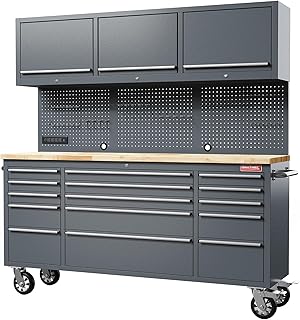
| Mid-size combo (chest + cabinet) | 40 to 42 in | Moderate to heavy | Most two-car garages, serious DIY | Weight makes relocation a two-person job |
| Wide professional box | 52 to 56 in | Heavy | Dedicated shop wall, full socket and wrench sets | Cost, footprint, freight delivery |
| Deep-drawer pro series | 24 to 30 in depth | Very heavy | Power tool bodies, cordless kits in cases | Drawer swing clearance, price |
For most home garages the mid-size 41-inch class is the sweet spot. It holds a full mechanic’s set plus three or four cordless kits, fits between a workbench and a wall without blocking a car door, and is widely stocked so you can compare units in person before buying.
Casters: The One Spec That Predicts Long-Term Frustration
The dividing line is caster diameter. Under 4 inches, the wheel climbs poorly and every crack in the slab becomes a stop sign. At 5 inches and up you can roll a loaded box over an extension cord and a slab joint without unloading it first. Look for polyurethane or hard rubber tread over a steel or cast core. Soft rubber flat-spots when a heavy box sits parked for months, and bare hard plastic transmits every crack straight into the drawer stack.
Check the stated caster load rating and compare it to the cabinet’s total capacity claim. Manufacturers usually rate capacity as a set of four wheels combined, which assumes even loading. Real garage boxes are loaded unevenly, sockets and wrenches low, light stuff up top, so give yourself margin. If the box claims 1,000 pounds and you plan to load 600, that is a reasonable buffer.
Two swivel casters with brakes plus two fixed casters is the configuration that steers predictably. All-swivel setups wander when you push them; all-fixed setups will not maneuver in a bay. Confirm the brakes are toe-activated locks on the wheel, not just a swivel lock, because a box that creeps while you lean on it is a real hazard on a sloped garage floor.
41-Inch Rolling Tool Chest And Cabinet Combos
This is the class to shop first if you have a standard two-car garage. Filter for 5-inch or larger casters, ball-bearing slides on every drawer rather than just the bottom row, and a drawer liner set included. Expect to pay a meaningful premium for a full-width top drawer and a powder-coat finish rather than a thin painted shell.
Steel Gauge, Drawer Slides, And Weight Ratings That Actually Mean Something
Sheet steel is specified in gauge, and lower numbers are thicker. Most budget garage boxes use 21 to 24 gauge on the shell and drawer fronts. Mid-tier units move to 19 or 20 gauge, and professional truck-brand boxes commonly use 16 to 18 gauge on the frame. Thicker steel resists the racking that makes drawers bind after a few years of being dragged and reloaded. If a listing does not state gauge anywhere, that is usually because the answer is not flattering.
Drawer slides are the second criterion. Friction slides are acceptable only on small top trays. For anything holding sockets or a cordless kit, you want ball-bearing slides with a stated per-drawer rating. Common tiers run roughly 50 to 75 pounds per drawer on entry units, 100 pounds on mid-tier, and 100 to 200 pounds on professional boxes. A 100-pound drawer holds a healthy socket assortment; a full set of impact sockets with drivers gets heavier than people expect, so match the rating to the deep drawers specifically.
Two more checks that separate good from bad. First, look for a full-extension slide, so the back of the drawer clears the cabinet face and you are not fishing blind. Second, check for a drawer interlock or single-point keyed lock on the whole bank. Open drawers on a rolling box shift the center of gravity forward and are the most common cause of tip-overs during a move.
- ✔ Five-inch or larger casters roll over slab joints and cords without unloading
- ✔ Ball-bearing full-extension slides keep deep drawers usable when loaded
- ✔ A locking bank protects tools and prevents drawers from rolling open in transit
- ✔ Rolling storage lets you reposition the whole set for a project instead of walking back and forth
- ✘ Loaded boxes get heavy enough that moving them is a two-person job
- ✘ Deep pro-series drawers need extra swing clearance most garage bays do not have
- ✘ Thin-gauge budget shells rack over time and drawers begin to bind
- ✘ Freight-delivered units often require curbside handling and your own dolly
Tops, Liners, Power, And The Details People Regret Skipping
The work surface is worth deciding on before you buy, because retrofitting is awkward. Powder-coated steel tops shrug off solvents and heat but ring loudly and mar. Stainless tops resist rust and clean easily but scratch into a visible pattern. Hardwood tops are the friendliest for woodworking, since you can clamp to them and refinish them, but they stain under oil and should not be your parts-cleaning surface. If you plan to clamp anything, confirm the top overhangs the shell far enough to accept a clamp jaw.
Drawer liners are not a luxury. Non-slip foam or rubber liner keeps sockets from sliding into a pile every time you roll the box, and it dampens the noise that makes people stop using a drawer. Buy a bulk roll and cut it yourself if the unit does not include liners.
On power: many mid-tier and professional boxes include a power strip mounted in the side panel or a rear channel. If you use it, check that the strip carries a UL listing and that any surge protection rating is stated in joules. Garage circuits see motor loads and voltage sag, and a chest-mounted strip is a convenient place to keep chargers, so a listed unit with real overload protection is the right call. Never run a garage chest off a daisy chain of household extension cords; use a single properly gauged cord to a dedicated outlet.
Compact Rolling Tool Cabinets For Tight Bays
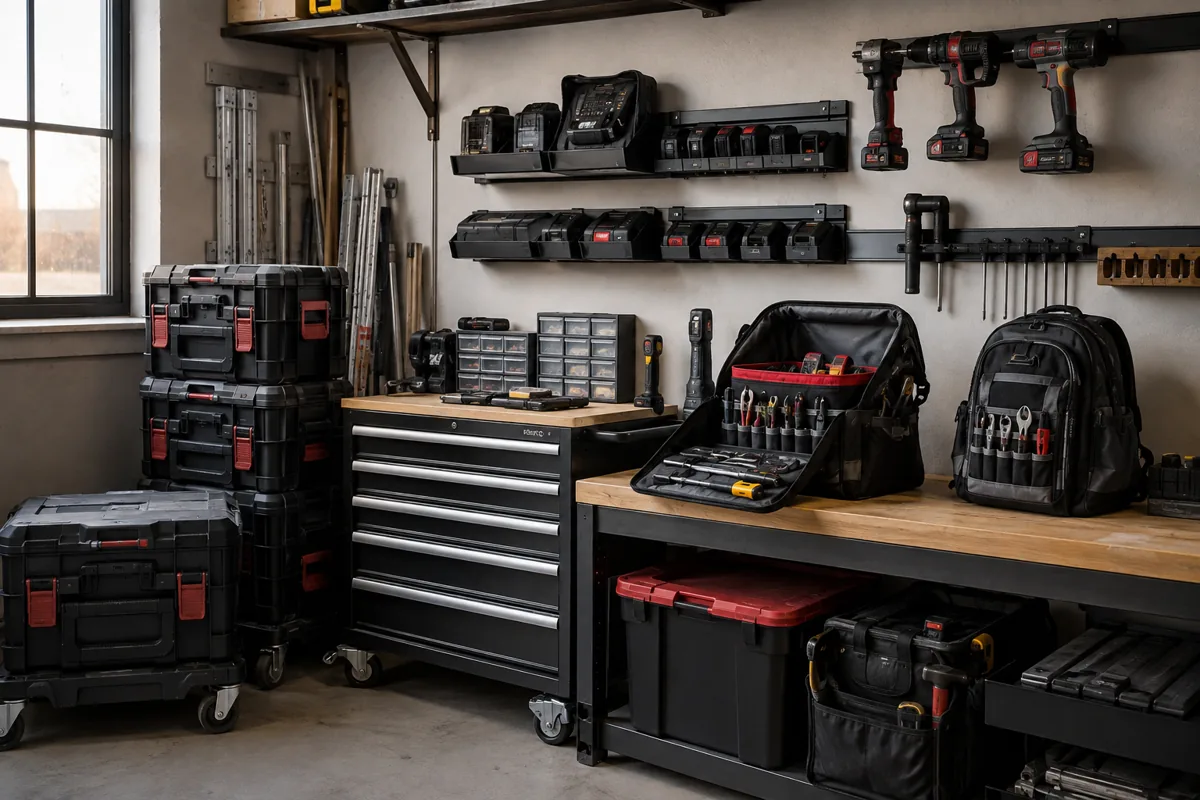
Choose this class if your walk-around clearance is under 30 inches or you share the bay with a vehicle daily. The honest tradeoff is drawer depth, so plan to store cordless kits like DeWalt XR, Milwaukee FUEL, or Makita LXT sets in their cases on a shelf and reserve the drawers for hand tools and consumables.
Matching The Chest To How You Actually Work
The criterion here is whether your tools live in cases or loose. Woodworkers accumulate bulky items, routers, sanders, planes, and jigs, which favors a cabinet with two or three deep drawers and a bottom compartment tall enough for a case. Automotive and general repair work favors many shallow drawers, because sockets, wrenches, and pliers should sit in one layer where you can see them.
If you split your time, buy the mid-size combo and dedicate the top chest to shallow layers and the lower cabinet to deep storage. Also decide now whether the box stays put. A chest that never moves does not need premium casters, and you would be better off putting that money into steel gauge and slide ratings. A box you plan to roll to a project car or out to the driveway should get the biggest wheels and the best brakes you can afford.
One more practical point on floors. Epoxy and sealed concrete are hard on soft wheels and hard wheels are hard on epoxy, so a polyurethane tread is the compromise that protects both. If your slab is unsealed and cracked, oversize wheels do more for you than any other upgrade on the spec sheet.
Rolling Tool Chest FAQ
How much weight can a garage rolling tool chest really hold? Treat the headline capacity as an evenly distributed maximum and plan to load well under it. The number that limits you day to day is the per-drawer slide rating, commonly in the 50 to 200 pound range depending on tier. Put your heaviest items in the lowest drawers to keep the center of gravity down.
Do I need to bolt or anchor a rolling chest? Not usually, but you should lock the casters whenever the box is parked, especially on a sloped slab, and close all drawers before moving it. If the unit came with a tip-restraint bracket or an anti-tilt drawer interlock, use it. Boxes taller than they are wide deserve extra caution.
Is a combo chest and cabinet better than one tall unit? A combo is easier to move, because you can separate the top chest, and it gives you a work surface at a comfortable height. One-piece tall cabinets usually offer more contiguous storage and a stiffer shell for the money. Choose the combo if the box will relocate; choose the single cabinet if it lives against one wall.
Shop the specs in this order: caster diameter and rating, steel gauge, per-drawer slide rating, then features. A box that scores well on the first three will still be usable in ten years, and one that skips them will bind and creep no matter how good the drawer layout looked in the listing.
Check prices on Amazon →