Our Top Picks
 IRIS USA 44-Drawer Small Parts Storage Cabinet44 Drawer19.5 x 7 x 15.5 Inches5.47 poundsCheck on Amazon
 FRAYSCENT Slat Wall Paneling Garage Slat Wall Storage8x4ft(15hooks)1 x 96 x 48 InchesCheck on Amazon
 TVKB 68'' All Metal Garden Tool Organizer Adjustable68inch(17"x4pack)1.25 x 17 x 5 inches4.08 PoundsCheck on Amazon


What's inside
As an Amazon Associate I earn from qualifying purchases. This post may contain affiliate links at no extra cost to you.
A small garage punishes bad storage decisions faster than a big one. Buy the wrong rolling cabinet and you lose the walking lane beside the car. Hang the wrong rack into drywall and it sags off the wall by spring. Choosing a tool organizer for small garage use is really a question of geometry first and product features second: how much wall you can claim, how much floor you must protect, and how much weight the structure behind the drywall will actually carry.
The criterion that separates good from bad here is simple. A good organizer converts unused vertical space into accessible storage without adding depth you cannot afford. A bad one takes the same tools you already had in a pile and puts them in a taller pile with wheels. Below is how the main categories compare, what ratings to look for, and who each one actually suits.
As an Amazon Associate we earn from qualifying purchases at no extra cost to you.




| System type | Typical depth | Best for | Watch out for |
|---|---|---|---|
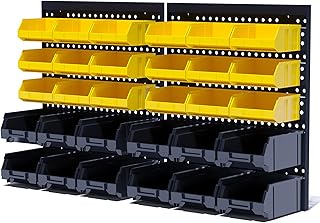
| French cleat or slat wall | 3 to 6 in | Hand tools, cordless kits, odd shapes | Needs stud mounting and layout planning |
| Pegboard (metal or composite) | 1 to 3 in | Light hand tools, frequent rearranging | Low weight capacity per hook |
| Overhead ceiling rack | 12 to 24 in drop | Seasonal bins, lumber offcuts | Vehicle and door clearance |
| Rolling tool cart or cabinet | 16 to 24 in | Active projects, mobile work | Eats floor space permanently |
| Wall-mounted cabinet | 12 to 16 in | Chemicals, blades, anything to lock | Blocks the wall for anything else |
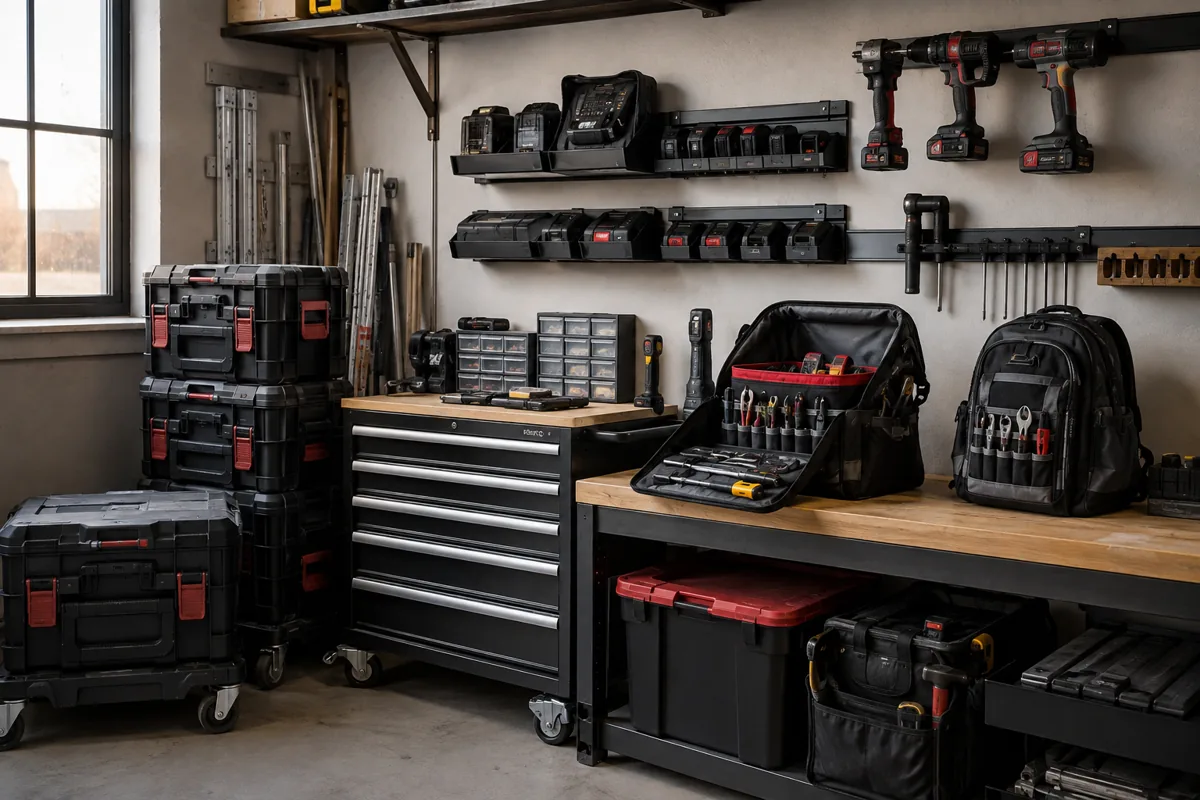
| Modular stacking boxes | Varies | Jobsite crossover, tool-per-box storage | Cost per cubic foot is high |
Sections
Start With Depth, Not Capacity
In a single-car or tight two-car garage, the number that matters is inches of depth taken from the wall, not cubic feet gained. A standard car door needs roughly 30 inches of swing clearance to open comfortably, and most building guidance treats 3 feet as the minimum comfortable walking aisle. Measure from your parked vehicle to the wall before you shop. If you have 14 inches, a 24-inch-deep rolling cabinet is not a candidate no matter how good the drawer slides are.
This is why shallow wall systems win in small spaces. A French cleat wall or a steel slat wall gives up 3 to 6 inches and returns nearly the full wall height as usable storage. Pegboard is shallower still, though its weight limits are real: composite and hardboard pegboard typically tops out well under what a stack of cordless tools and batteries weighs, while steel pegboard panels and slat systems are rated substantially higher per linear foot. Look for a published per-hook or per-linear-foot rating. If the manufacturer will not state one, treat it as light duty only.
The second measurement is height. Standard reach for daily-use items is roughly 20 to 70 inches off the floor. Anything above that is fine for seasonal storage but frustrating for tools you touch weekly. Plan the zone at eye and chest height for your top twenty tools, then push everything else up or down.
Steel Slat Wall Panel Kits
For most small garages this is the highest return per dollar. Steel slat panels mount to studs, take 3 to 5 inches of depth, and accept hooks, bins, shelves, and tool holders that you can move in seconds as your kit changes. Buy panels plus a hook variety pack rather than a single premium accessory set, and confirm the panel spacing matches any accessories you add later since profiles are not universal across brands.
Mounting Is The Whole Ballgame
Wall storage fails at the fastener, not the panel. US residential framing is normally 16 inches on center, sometimes 24 in garages, and hitting studs is non-negotiable for anything holding real weight. Drywall anchors have published ratings, but those ratings assume static, in-plane load. A rack full of tools gets bumped, pulled on, and loaded unevenly, so treat anchor-only mounting as suitable for light pegboard and nothing more.
For masonry or concrete block walls, common in many garages, you need sleeve anchors or concrete screws rated for the substrate, plus a hammer drill. Standard wood screws into plastic anchors in block is the single most common failure I see people report after a season.
Overhead racks add a layer of code and physics. Ceiling storage transfers load into ceiling joists or trusses, and engineered roof trusses are not designed to carry arbitrary added dead load in the bottom chord. Manufacturers publish capacities, often in the 250 to 600 pound range for common 4-by-8 units, but the rack rating is only valid if the structure and the fasteners are up to it. Keep heavy loads near bearing walls, spread weight across multiple joists, and if you are hanging hundreds of pounds under trusses, that is a question for a local building official or engineer rather than a product listing.
- ✔ Vertical storage recovers space you are already paying for
- ✔ Shallow wall systems keep aisle and door clearance intact
- ✔ Modular hooks and bins adapt as your tool kit grows
- ✔ Visible storage cuts the time you spend hunting for tools
- ✘ Good wall systems require stud location and correct fasteners
- ✘ Ceiling racks are limited by vehicle and garage door clearance
- ✘ Rolling cabinets trade floor space for convenience permanently
- ✘ Piecemeal buying across brands often means incompatible accessories
Choosing A Tool Organizer For Small Garage Layouts By Tool Type
The dividing criterion in this section is tool shape. Storage that works for wrenches fails for cordless tools, and storage that works for cordless tools wastes space on long-handled items.
Cordless tools and batteries. These need a shelf or a molded holder, not a hook. Drills hang acceptably by the handle, but circular saws, multi-tools, and grinders want a flat surface. Look for slat wall shelves rated at 20 pounds or better, or dedicated cordless tool holders. Keep lithium-ion batteries off unheated concrete floors and out of direct sun; most manufacturers specify a moderate storage temperature range and cite reduced capacity outside it.
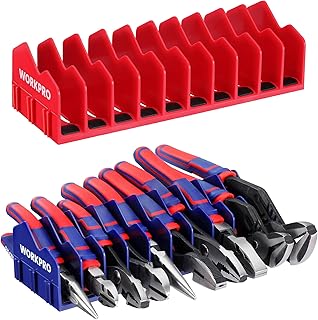
Hand tools and small parts. Pegboard, magnetic strips, and small bin racks all work. The failure mode is unlabeled bins. Clear-front bins or a label maker pay for themselves within a month.
Long-handled items. Rakes, shovels, levels, clamps, and pipe clamps deserve a dedicated corner rack or a horizontal clamp rail. They are the worst offenders for eating floor space when leaned in a corner.
Sheet goods and offcuts. A narrow vertical offcut bin against an end wall, roughly 12 to 16 inches deep, beats a horizontal lumber rack in a small garage because it uses height instead of length.
Rolling Tool Cart With Locking Casters
Worth it only if you have a spot for it that is not an aisle. The advantage in a small garage is that it rolls out to the driveway, which effectively doubles your work area in good weather. Prioritize locking casters on at least two wheels, a published load rating, and drawer liners. Skip anything wider than about 30 inches unless you have measured the parked-car clearance and confirmed it.
Budget Tiers And What You Actually Get
Rather than chase specific prices, think in tiers. Entry level means hardboard pegboard, basic hooks, and utility shelving, and it works for a modest hand-tool collection. Mid tier means steel slat wall or a well-built French cleat wall plus a few dedicated holders, and this is where most small garages should land because the accessories are reconfigurable. Upper tier means enclosed cabinetry, drawer systems, and matched modular boxes, which buy dust protection and lockability more than raw capacity.
One caution on modular jobsite box systems. They are excellent if you carry tools to sites, since the box is both storage and transport. As pure garage storage, the cost per cubic foot is high and the stacks consume floor area. Buy them for the workflow, not the square footage.
Lockable storage deserves a note in any garage that kids access. Blades, chemicals, and pneumatic tools belong behind a door. A single wall-mounted lockable cabinet at chest height solves this without a floor footprint.
Frequently Asked Questions
How much weight can garage wall storage actually hold? It depends on the fastener and the framing, not the product. Mounted into studs with the manufacturer’s specified lag screws, steel slat wall and French cleat systems commonly carry 50 to several hundred pounds per linear foot of rail. Mounted into drywall anchors alone, assume light duty only, and never hang heavy tools that way.
Is pegboard good enough, or should I go straight to slat wall? Pegboard is fine for screwdrivers, pliers, wrenches, and light accessories, and it is the cheapest way to get organized this weekend. Move to steel slat wall if you own a cordless kit, want shelves and bins rather than hooks, or expect to reconfigure often. The accessory range and weight rating are the real difference.
Can I use an overhead rack if my garage door opener is in the way? Sometimes, but measure first. You need clearance for the open door panels, the opener rail, and the track. Many racks offer adjustable drop heights from roughly 12 to 24 inches or more, so a shallow drop along the side walls often works even when the center of the ceiling is unavailable. Verify the joist or truss situation before loading anything heavy.
The practical order of operations for a tight garage is this: measure your clearances, claim the walls first with a shallow reconfigurable system, add overhead racks for seasonal items only, and buy a rolling cart last and only if the floor space genuinely exists. Do it in that order and the space keeps working as your tool collection grows.
Check prices on Amazon →