What's inside
As an Amazon Associate I earn from qualifying purchases. This post may contain affiliate links at no extra cost to you.
Vintage chisels and modern chisels can both be excellent tools for general carpentry. The better choice depends less on age than on steel condition, blade geometry, handle safety, and what work you actually do. A good old chisel may outperform a cheap new one, while a quality modern set usually offers more predictable edges and fewer repairs.
For framing, trim, door work, cabinet fitting, and general site carpentry, you do not need a rare collectible tool. You need chisels that hold an edge, tolerate occasional mallet blows, and can be sharpened without wasting half the day.
As an Amazon Associate we earn from qualifying purchases at no extra cost to you.


Sections
Our Top Picks


What vintage chisels offer
Older chisels were commonly made with thick blades and substantial tangs. Many have enough steel behind the edge to survive years of sharpening. A vintage firmer chisel with a straight back can be particularly useful for paring hinges, cleaning mortises, and fitting timber joints.
The main attraction is value. A used chisel bought individually can cost less than a new boxed set, especially if the handle has cosmetic damage. Older carbon-steel blades are often straightforward to sharpen. They may take a keen edge quickly and give clear feedback on a sharpening stone.
Vintage chisels also tend to have useful proportions. A 1/2-inch or 3/4-inch blade with a thick section is suitable for general joinery, while a 1-inch chisel is handy for removing waste. Some older socket chisels have handles designed for repeated striking, although not every surviving handle is safe to hit.
The disadvantages are inspection and cleanup. Rust may have reduced the blade thickness near the edge, and pitting on the back can make flattening difficult. A blade that has been ground heavily may be several millimeters shorter than intended. That is not automatically a problem, but it reduces future sharpening life.
What modern chisels offer
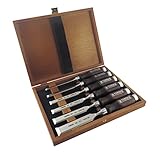
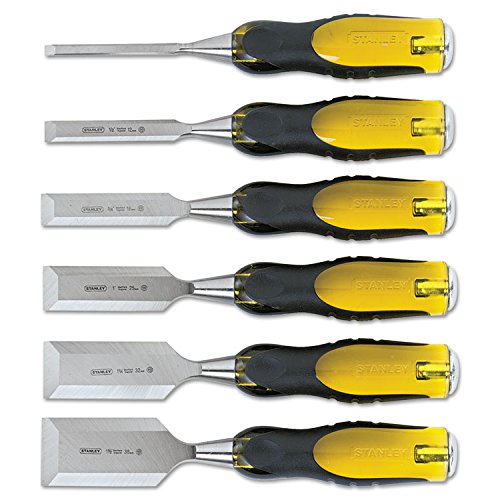
Modern chisels are easier to buy as a matched set. Their sizes are usually marked clearly, handles are replaceable or readily available, and the blades arrive with consistent bevels. For a first kit, a basic wood chisel set can cover most household carpentry without hunting through used-tool listings.
New chisels also remove uncertainty. You can check the back, edge, and handle before the first job rather than repairing a neglected tool. Many are supplied with a secondary bevel or a usable factory edge, though “ready to use” still may mean a few minutes on a stone.
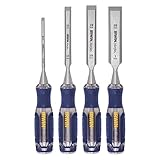
There are trade-offs. The cheapest new sets often use thin blades, soft steel, poorly fitted handles, or oversized plastic grips that make controlled paring awkward. A low-cost chisel may work well for opening paint tins, trimming shims, and rough carpentry, but its edge can roll after a few mallet blows. If you want a dependable general-purpose set, look for professional wood chisels with forged or substantial blades and replaceable handles.
Vintage versus modern: practical comparison
| Factor | Vintage chisel | Modern chisel |
|---|---|---|
| Purchase price | Often low when bought singly, but restoration adds time | Predictable; sets range from cheap to premium |
| Blade condition | Must be checked for pitting, cracks, and excessive shortening | Usually consistent and unused |
| Edge performance | Can be excellent, depending on steel and previous abuse | More consistent within a set, but cheap steel varies |
| Handles | May be cracked, loose, or mushroomed | Generally safer and easier to replace |
| Best use | Value hunting, restoration, heavy-duty joinery | Reliable first kit, site work, matched sizes |
| Main risk | Hidden damage and time spent restoring it | Buying a cheap set with weak steel or poor ergonomics |
How to inspect a vintage chisel
Start with the handle. Reject one with a longitudinal crack, a loose ferrule, or a handle that moves noticeably under hand pressure. A few dents are harmless. A badly mushroomed striking end is not: it can shed metal when hit with a hammer. Lightly file the end smooth if the handle is otherwise sound, or replace it.
Check the blade for deep pitting, especially within the last 10 to 15 millimeters behind the cutting edge. Surface discoloration is acceptable; deep pits can weaken the edge and make the back nearly impossible to flatten. Sight down the blade. A slight bow may be manageable, but a severe twist makes accurate paring frustrating.
Measure what remains of the blade. A chisel shortened by 10 percent may still be a good buy; one shortened by 30 or 40 percent has limited value unless the price is very low. Avoid blades with visible cracks, a bent cutting edge, or a large crescent-shaped grind from repeated careless sharpening.
For restoration, remove loose rust, flatten only the area needed behind the edge, and establish a primary bevel around 25 degrees. A small secondary bevel around 30 degrees is practical for general carpentry. Do not grind away sound steel just to make the entire back mirror bright.
Which sizes matter for general carpentry
A useful starter spread is 1/4, 3/8, 1/2, 3/4, and 1 inch. The 1/2-inch chisel handles hinges, latch recesses, and many small joints. The 3/4-inch size is a strong general-purpose choice for cleaning mortises and trimming framing joints. The 1-inch blade removes waste efficiently but is less nimble in narrow recesses.
A 1/4-inch chisel is useful for small hardware and tight corners, but it is easier to damage with sideways levering. Do not use any chisel as a pry bar; even a thick vintage blade can snap at a nick or stress point. For rough site work, keep one sacrificial chisel for scraping adhesive, removing hardened filler, and other jobs that would ruin a good edge.
The best choice for different buyers
Choose modern chisels if you need a dependable kit immediately, do not enjoy restoration, or will be sharing tools with other workers. A new set also makes sense when the job involves finish trim, where a damaged edge can leave visible bruising or tear-out.
Choose vintage chisels if you can inspect them in person, are comfortable sharpening, and want to build a set one useful size at a time. Buying three sound old chisels is often better than buying ten anonymous low-cost chisels. For a mixed kit, pair restored vintage blades with a new chisel sharpening stone set; consistent maintenance matters more than the logo or production date.
The cheapest option is fine for occasional repairs, softwood framing, and rough work, provided the handle is secure and the blade can hold a usable edge. Spend more when you need repeated mallet work, clean joinery, or predictable performance across several sizes. In practice, condition and maintenance decide the result far more often than whether the chisel was made fifty years ago or last month.