Our Top Picks
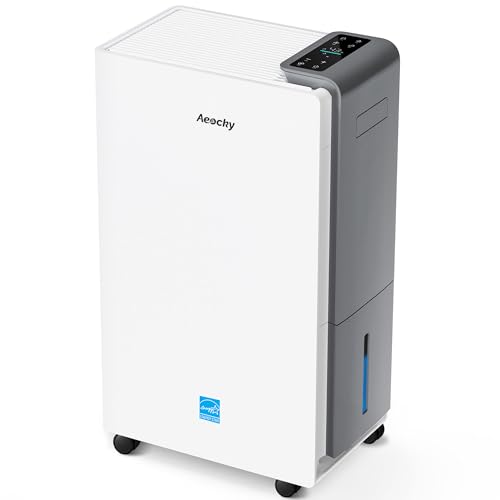 AEOCKY 5500 Sq.Ft Energy Star Most Efficient 202580 Pints - 5500 Sq.Ft14.45 x 8.66 x 24.09 inchesCheck on Amazon
 Waykar 80 Pints 2025 Energy Star Dehumidifier for9.45 x 13.51 x 20.47 inches28.57 poundsCheck on Amazon
 KNKA Energy Star 5500 Sq.Ft Dehumidifier for BasementMAX 80 Pints11.14 x 14.17 x 20.87 inches5.5 poundsCheck on Amazon
 21-Pint Dehumidifier for Basement with Drain Hose1600Sq.ft-21 Pints6.89 x 9.65 x 15.94 inches15.3 poundsCheck on Amazon
What's inside
- Why the pint rating on the box is not the pint rating in your barn
- Compressor or desiccant for an unheated outbuilding
- Dry the room you care about, not the whole barn
- Power: what a 15-amp circuit can really carry
- What running one costs: an estimate with assumptions
- Top picks at a glance
- Large-capacity units for tool rooms and big zones
- Smaller units for a walled-off zone
- Cold-weather and drainage checklist
- How we picked these
- Five mistakes that waste money in a barn
- Verdict
- Frequently asked questions
As an Amazon Associate I earn from qualifying purchases. This post may contain affiliate links at no extra cost to you.
The best dehumidifier for a pole barn is a large compressor unit with a way to get the water out without carrying a bucket, and the AEOCKY 105 pint model with a pump is our pick for barns that have no floor drain nearby. The catch is temperature. A pint rating printed on a box describes a warm test room, and an unheated barn in October is not one. This guide sorts eight options by capacity, drainage and power draw, and spends real space on the cold-weather limits that decide whether a unit earns its place.
If you want the cheaper route, the KNKA 80 pint is the lowest-priced unit in the 80-pint class here, and the Aiusevo 21 pint is the budget pick for drying a single room. The Editorial team compared published specifications, manufacturer documentation and buyer reviews. Nobody on the team used or measured these machines, so every performance figure below is an estimate and is labeled that way.
Sections
- Why the pint rating on the box is not the pint rating in your barn
- Compressor or desiccant for an unheated outbuilding
- Dry the room you care about, not the whole barn
- Power: what a 15-amp circuit can really carry
- What running one costs: an estimate with assumptions
- Top picks at a glance
- Large-capacity units for tool rooms and big zones
- Smaller units for a walled-off zone
- Cold-weather and drainage checklist
- How we picked these
- Five mistakes that waste money in a barn
- Verdict
- Frequently asked questions
Why the pint rating on the box is not the pint rating in your barn
AEOCKY 5500 Sq.Ft Energy Star Most Efficient 2025 Dehumidifier Max 80Pint/D | Dehumidifier with Drain Hose for Basement, Home, Bedroom, Bathroom, Intelligent Humidistat


As an Amazon Associate we earn from qualifying purchases. Product prices and availability are accurate as of the date/time indicated.
Waykar 80 Pints 2025 Energy Star Dehumidifier for Home up to 5,000 Sq. Ft, Ideal for Basement, Bathroom and Large Room with Drain Hose, Portable, Auto Defrost and Self-Drying





As an Amazon Associate we earn from qualifying purchases. Product prices and availability are accurate as of the date/time indicated.
KNKA Energy Star 5500 Sq.Ft Dehumidifier for Basement, Max 80 Pint/Day | Dehumidifier with Drain Hose, Dehumidifiers for Home, Bedroom, Bathroom, Large Room, Smart Humidity Control, Sleep Mode


As an Amazon Associate we earn from qualifying purchases. Product prices and availability are accurate as of the date/time indicated.

DREO 4500 Sq Ft Smart Dehumidifier, 1.85 Gal Water Tank, Energy Star 2025 | Max 75 Pint Dehumidifier for Basement, Home & Large Room, Quiet 41dB, Drain Hose, Auto Humidity Control, 3 Fan Speeds,Timer


As an Amazon Associate we earn from qualifying purchases. Product prices and availability are accurate as of the date/time indicated.

Waykar 80 Pints 5000 Sq. Ft 2025 Energy Star Dehumidifier for Basement | 90° Auto Swing, 30%–80% Humidity Control for home, Continuous drainage support, Whole-House Dehumidification, Auto-defrost


As an Amazon Associate we earn from qualifying purchases. Product prices and availability are accurate as of the date/time indicated.
21-Pint Dehumidifier for Basement with Drain Hose, 1600 sq ft, White | Dehumidifiers for Home with Drain Hose for Bathroom, Bedroom, Garage, Smart Humidity Control, 3 Modes, 24H Timer,Auto Defrost


As an Amazon Associate we earn from qualifying purchases. Product prices and availability are accurate as of the date/time indicated.

BANABIE 2000 Sq.Ft Max 32 Pints Dehumidifier for Basement | Dehumidifiers for Home with Drain Hose, Quiet 32dB, Smart Humidity Control, 24H Timer, Portable for Bedroom, Bathroom, RV


As an Amazon Associate we earn from qualifying purchases. Product prices and availability are accurate as of the date/time indicated.

AEOCKY Dehumidifier with Pump Up to 16.5ft Energy Star Most Efficient 2024 | 105 Pint/D,5500 Sq.Ft,Commercial Dehumidifier with Drain Hose for Basement,Home,Crawl Space,Whole House,Large Room,Industrial


As an Amazon Associate we earn from qualifying purchases. Product prices and availability are accurate as of the date/time indicated.
Pints per day is the headline number on every dehumidifier. It tells you how much water a unit can pull from the air in 24 hours under a specific, warm, humid test condition. Listing titles in this guide state numbers such as 80, 75, 105, 32 and 21 pints, and none of them says at what temperature. Check the listing or the manual for the test condition.
The reason it matters: a compressor dehumidifier works by cooling a coil so water condenses on it. Cold air holds less water to begin with, and a coil that is already cold can ice over. As a rough planning estimate from general experience with compressor units, output at 50 degrees Fahrenheit can be around half of the rated figure, and it can fall further as you approach the mid-40s. That is an estimate, not a measurement of any listed unit.
So an 80-pint label may behave like a 40-pint machine in a cool shed in spring. That still might be enough. Warm summer humidity, not winter cold, is when pole barns feel damp, because warm moist air hits cool tools, concrete and metal. The point is not to avoid big units, but to buy with a margin and to stop expecting the label number in cold weather.
Compressor or desiccant for an unheated outbuilding
There are two broad technologies. A compressor unit uses a refrigeration loop, is efficient in warm air and loses effectiveness as temperatures drop. A desiccant unit uses a drying material and tends to hold up better in cold air, but typically draws more power per pint and runs warm.
All eight listings here read like compressor units: they mention auto defrost, humidistat control, drain hoses and, for one, a pump. None of the titles names desiccant technology. Check each listing for the type and for the minimum operating temperature before assuming.
If your barn sits above roughly the high 40s Fahrenheit during the damp season, a compressor unit is a sound choice. If the damp season for you is a cold, frosty one, a desiccant model or a small heater to warm the room slightly may serve you better, and none of the units here is built around that approach.
Dry the room you care about, not the whole barn
Here is the most useful decision in the article. A pole barn is usually a large, tall, drafty space with big doors that open often. Trying to dehumidify the whole building is like trying to heat a driveway.
Take a 40 by 60 foot barn with 12-foot walls. That is 2,400 square feet and 28,800 cubic feet of air, before gables. The listings here advertise 4,500 to 5,500 square feet for the big units, which sounds like plenty. But those ratings assume a closed space with normal ceilings and little air leaking in. Open ridge vents, gaps under doors, dirt floors and wet concrete keep feeding the building new moisture all day.
A better plan is to isolate the zone that matters: the tool room, the woodworking corner or the equipment bay. Suppose that is 20 by 30 feet, 600 square feet, with an insulated partition and a weather-sealed door. A mid-size unit then works against a manageable volume, and you can aim for a relative humidity near the 40s to 50 percent range that is commonly cited for keeping tools from rusting and stock lumber stable. Those are general guidelines; adjust for your materials.
Quick sizing guide for a walled-off zone
| Zone to protect | Condition | Reasonable class (estimate) |
|---|---|---|
| 200 to 400 sq ft room | Sealed door, insulated | 20 to 35 pint unit (Aiusevo, BANABIE) |
| 400 to 800 sq ft room | Sealed, mostly dry floor | 35 to 50 pint, or 75 to 80 pint for margin |
| 800 to 1,500 sq ft zone | Partial partition | 75 to 80 pint class |
| Open barn, 2,000 sq ft or more | Leaky, uninsulated | Two 80 pint units or 105 pint with pump; expect limited results in cold |
These classes are planning estimates built from general rules of thumb. The listing figures are maximum claims. When in doubt, go up one class and put a hygrometer in the room to see what is happening.
Power: what a 15-amp circuit can really carry
A standard 120-volt, 15-amp circuit delivers a theoretical maximum of 1,800 watts. The usual rule for loads that run continuously is to stay under 80 percent of that, which is 1,440 watts. A dehumidifier that runs for hours counts as a continuous load.
None of the titles states wattage, so check the nameplate or the listing. As a hypothetical, a 650-watt unit draws about 5.4 amps (650 divided by 120). Add a 400-watt shop light bank and a 1,500-watt space heater on the same circuit and you are well over the limit. Barns often share one circuit across several outlets, and breakers in older outbuildings may be undersized.
Extension cords: the weak link
Many manufacturers recommend plugging directly into a wall outlet and discourage extension cords, and that is the first rule to follow. If a cord is unavoidable:
- Use a heavy-duty outdoor-rated cord, as short as possible.
- Match the gauge to the amperage and length. A thin household cord can overheat under continuous load. Many guides suggest 14-gauge as a minimum for a 15-amp load over short runs and 12-gauge for longer runs, but follow your manual, not this summary.
- Never daisy-chain cords or use a power strip.
- Do not run a cord under rugs, through standing water or across a door that closes on it.
- Feel the plug and cord after an hour of running. Warm is a warning. Hot means stop.
If your outbuilding has no suitable outlet, have an electrician add a dedicated circuit. It is cheaper than a burned cord.
What running one costs: an estimate with assumptions
Here are two illustrations with the assumptions stated, because no listing gives a running wattage. Assume 650 watts for a large unit, 12 hours a day, 30 days a month, at 15 cents per kilowatt-hour. That is 650 x 12 = 7.8 kWh a day, 234 kWh a month, or about $35 a month. Assume 300 watts for a small 21-pint class unit under the same schedule and rate: 108 kWh, about $16 a month.
Real numbers differ because humidistats cycle the unit on and off, and a dry room needs less running. Replace the assumed watts with the nameplate figure and your own rate. The lesson holds: a bigger unit running against a leaky building will cost more per month and remove less than a smaller unit in a sealed room.
Top picks at a glance
Price tier is relative to this list: Budget, Mid-range or Premium. Key specs come from titles; anything else, check the listing.
| Model | Key spec (from title) | Price tier | Best for |
|---|---|---|---|
| AEOCKY 105 pint with pump | 105 pint/D, 5,500 sq ft, pump up to 16.5 ft | Premium | No floor drain, long lift |
| Waykar 80 pint, auto swing | 80 pints, 5,000 sq ft, continuous drainage, 30-80% control | Premium | Wide control range |
| Waykar 80 pint, self-drying | 80 pints, up to 5,000 sq ft, auto defrost, self-drying | Premium | Hose drain, auto defrost |
| AEOCKY 80 pint | Max 80 pint/D, 5,500 sq ft, intelligent humidistat | Premium | Large zones |
| DREO 75 pint | 75 pint, 4,500 sq ft, 41 dB, 1.85 gal tank | Mid-range | Quieter shop or loft |
| KNKA 80 pint | Max 80 pint/day, 5,500 sq ft, sleep mode | Mid-range | Lowest cost for 80 pint |
| BANABIE 32 pint | Max 32 pints, 2,000 sq ft, 32 dB | Mid-range | Quiet small shop |
| Aiusevo 21 pint | 21-pint, 1,600 sq ft, drain hose, garage use | Budget | Single room or garage corner |
Large-capacity units for tool rooms and big zones
AEOCKY 105 Pint Dehumidifier with Pump: best for barns without a floor drain
AEOCKY’s biggest model carries the most distinctive feature in the group: a pump, with the title promising lift of up to 16.5 feet. It also lists 105 pints per day, 5,500 square feet, Energy Star Most Efficient wording, a drain hose, and a pitch aimed at crawl spaces, whole houses and industrial use. It is the most expensive unit here.
The pump is the reason it tops the list. Pole barn floors are often slab-on-grade with no drain, and the nearest exit for water may be a door or a window 20 feet away and uphill. A pump that pushes water through a hose to a sink, a floor drain or outdoors removes the daily bucket chore. Check the listing for the hose included, the connector size and whether the pump handles freezing conditions, because water left in a hose in winter can freeze.
As an estimate, a 105-pint rating in a warm room could drop sharply in a cool barn. If the shop is warm in summer and unheated in winter, you would be paying for capacity that mostly shows up in the damp months, which is acceptable. The unit draws more power than smaller options, so give it a dedicated circuit and avoid cords.
The title says commercial and industrial. Treat that as marketing and check the warranty terms for use in a workshop.
A practical setup note: run the pump hose to its outlet before you plug the unit in, tape or clip it so it cannot kink under a door, and check the route with a bucket of water if the manual describes a way to do so. Owners of larger shops sometimes pair a unit like this with an inexpensive hygrometer at bench height and another near the ceiling, since moisture stratifies in tall buildings.
Pros
- Pump with a stated lift of up to 16.5 ft
- Highest pint rating in the list, 105 pint/D
- Drain hose and Energy Star Most Efficient wording in the title
Cons
- Highest price tier and likely highest power draw
- Cold-weather output will be below the label
- Pump and hose freeze risk in winter
Who it’s for: owners of a large, enclosed shop without a nearby floor drain.
Waykar 80 Pint Dehumidifier with 90-Degree Auto Swing: the wide humidity range
This Waykar listing mentions 80 pints, 5,000 square feet, Energy Star, a 90-degree auto swing, 30 to 80 percent humidity control, continuous drainage support, whole-house use and auto-defrost. It is the priciest of the 80-pint models.
The 30 to 80 percent control range is the useful detail. Woodworkers who want stable stock may aim near the middle of that band, and someone protecting steel tools may prefer the lower half. Check the listing to see how fine the steps are, and check whether the humidistat reads accurately by comparing it with a separate hygrometer.
“Continuous drainage support” suggests you can run a hose and let it empty on its own. Combined with auto-defrost, that is what you want for an unattended barn. The auto swing is an air-direction feature. In a barn, it can help spread dry air across a bench area, but a swinging outlet does little for a room with a closed partition.
The unit is meant for whole-house use, and the title says basement. Treat the cold limit as unknown and look for the minimum operating temperature in the manual before buying for an unheated space.
One tip for woodworkers: set the humidistat once the lumber has acclimated, not before. Dropping the room too quickly can dry stock faster than you want and cause movement, so step the setpoint down over days and watch your boards. Keep a log of readings for the first two weeks so you can tell whether the numbers on the unit and the numbers on your hygrometer agree.
Pros
- 30 to 80 percent humidity control range
- Continuous drainage support and auto-defrost
- Auto swing helps distribute dry air
Cons
- Premium price tier
- No pump in the title
- Cold-weather limit not stated
Who it’s for: someone who wants a wide control range and a hose drain for an unattended shop.
Waykar 80 Pints Dehumidifier with Drain Hose and Self-Drying: the other Waykar
The second Waykar listing is similar in capacity and price but different in features. The title lists 80 pints, up to 5,000 square feet, Energy Star, a drain hose, portable build, auto defrost and self-drying. It has no wide-range control mention and no swing outlet.
Self-drying is the barn-friendly detail. After a cycle, a self-drying function runs the fan to dry the interior and reduce damp surfaces where mildew could grow. That matters if the unit sits idle between damp spells in a closed, humid building. Check how long the function runs and whether it can be disabled, since an unplanned fan cycle in a quiet shop can be a nuisance.
The unit is the cheaper of the two Waykar models by a small margin, and the choice between them comes down to the swing and control range versus self-drying. If you prefer a simple unit that drains by hose and dries itself, this one suits. If you want finer humidity control, the other fits.
Portable here suggests wheels or a handle. For a barn, check the weight and wheel size, because a gravel or concrete floor and a unit full of residual water are a poor mix.
A small check before buying is hose length. Barn layouts put the unit in the middle of the room, and the nearest exit may be across the floor. Measure the run from the unit to where water must go, add a margin for slope, and compare with the hose on the listing. If the supplied hose is short, a standard replacement garden-style hose often fits, but confirm the connector in the manual.
Pros
- Self-drying and auto defrost
- Drain hose included in the title
- Portable build
Cons
- Premium price tier
- No humidity-range detail in the title
- Weight and wheel details unknown
Who it’s for: an owner who wants a hose-drain unit that dries its own interior between damp spells.
AEOCKY 80 Pint Dehumidifier with Drain Hose: the humidistat model
This AEOCKY lists 5,500 square feet, Energy Star Most Efficient wording, a maximum of 80 pints per day, a drain hose and an intelligent humidistat, for basement, home, bedroom and bathroom use. It sits at the bottom of the premium tier.
The humidistat is its focus. An intelligent humidistat means you set a target and the unit cycles to hold it. That is the feature that keeps a shop dry without running 24/7. Verify the setting range, since some units stop at a limited band.
“Max 80 pint” wording tells you the rating is the top end under test conditions. In a barn, assume less. The 5,500 square foot figure is larger than most barn zones you would partition, so you gain margin at the cost of a bigger machine.
Compared with its pumped sibling, this model uses gravity drainage. If your slab slopes toward a door or a drain, a hose run is fine. If not, you will carry a bucket or look at the pump model.
As an estimate, a unit in this class may draw several hundred watts when the compressor runs. Check the nameplate and plan the circuit accordingly.
Think about where it sits. A big unit pushes dry air out of one side and pulls damp air into another, so a corner placement with the outlet facing the work area helps. Leave clearance on all sides, since barn dust, sawdust and insulation fibers clog intakes faster than household dirt. Plan on checking the filter monthly during busy seasons and cleaning it as the manual describes.
Pros
- Intelligent humidistat
- Drain hose and Energy Star Most Efficient wording in the title
- Large stated coverage
Cons
- Gravity drain only in the title
- Premium price tier
- Rated output will fall in cold air
Who it’s for: a barn with a sloped slab or a nearby drain and a need for set-and-hold humidity.
KNKA 80 Pint Dehumidifier: the lowest-cost big unit
KNKA’s listing offers Energy Star, 5,500 square feet, a maximum of 80 pints per day, a drain hose, smart humidity control and sleep mode. It sits in the mid-range tier, below every other 80-pint model here.
The main reason to look at the KNKA is value. The headline capacity matches the AEOCKY 80 and Waykar models at a lower price tier. What you give up is unknown from the titles: build quality, warranty length and low-temperature behavior may differ, and the title does not say.
“Sleep mode” is useful if the shop is near a house or in an attached space where noise matters. In a barn, it matters less, but a lower-noise mode helps if you work nearby and want conversation to carry.
The smart humidity control suggests automatic cycling to a setpoint. For a barn that sits unattended for days, that and the drain hose are what let you leave it running without babysitting.
Because it costs less, it is also the one to buy if you want to try a second unit in a different zone. Two modest units in two walled zones can beat one large unit in an open building.
A sensible way to use a lower-cost unit is to treat it as the first of two. Put it in the zone that matters most, record the humidity for a month, and only then decide whether a second machine is needed elsewhere. Because the title does not state warranty terms, read the seller’s policy and keep your order record, as large appliances are the items most likely to need a claim.
Pros
- Lowest price tier for an 80-pint-class unit
- Drain hose and smart humidity control
- Sleep mode
Cons
- Warranty and low-temperature behavior unknown from the title
- Gravity drain only
- Rating falls in cold air like any compressor unit
Who it’s for: a budget-aware owner who wants 80-pint capacity and will check the warranty.
DREO 75 Pint Smart Dehumidifier: quiet, with a stated tank size
DREO’s listing says 4,500 square feet, smart, 1.85 gallon water tank, Energy Star, max 75 pints, quiet 41 dB, drain hose, auto humidity control, three fan speeds and a timer. It is one of the few titles in the group with both a noise figure and a tank size.
The 41 dB claim is a title claim, not our measurement. It still helps if the barn doubles as a hobby shop where you spend hours. A tank of 1.85 gallons is useful as a fallback when you can’t run a hose, though it fills quickly in damp weather.
Three fan speeds let you trade speed for noise. Run it fast to pull the humidity down after wet weather, then switch to a lower speed for maintenance. The timer is handy for scheduling dry-out cycles around when you work in the space.
At 75 pints it gives up 5 pints against the 80-class units, which is a small difference, and costs less than the premium models. The “smart” in the name suggests app control, but confirm on the listing, and do not rely on a wireless connection in a barn far from the router.
If the smart features appeal to you, check whether the app works over Wi-Fi only and how far the signal needs to reach. A detached barn often sits at the edge of or beyond router range, and a unit that loses its connection should still run on its local controls. Verify that the physical buttons and display let you set the target, fan speed and timer without the app.
Pros
- 41 dB stated, plus three fan speeds
- 1.85 gallon tank as a backup to the drain hose
- Timer and auto humidity control
Cons
- Slightly lower pint rating than the 80-class units
- Smart features may need Wi-Fi coverage
- No pump in the title
Who it’s for: a hobby shop where noise matters and you want fan-speed control.
Smaller units for a walled-off zone
BANABIE 32 Pint Dehumidifier: quiet for a small shop room
BANABIE’s title lists 2,000 square feet, a maximum of 32 pints, a drain hose, quiet 32 dB, smart humidity control, a 24-hour timer, and use in bedrooms, bathrooms and RVs. It sits in the mid-range tier, ahead of the 21-pint unit in capacity.
For a partitioned 300 to 600 square foot room, this is the class that suits. It is much smaller than the 80-pint units and uses less power, so it can run on a circuit with other loads more safely. The 32 dB claim, which we cannot confirm, suggests you can work next to it.
The weak point is the cold. A 32-pint rating will shrink in a cool room. If your shop is heated in winter, even a little, this unit can keep up. If not, it will drift from its target.
The drain hose lets you run it continuously. Check hose length and whether the unit can be placed far from a wall, since hose slope matters for gravity drainage.
Because the title mentions RV use, it is a small, portable machine. That helps if you want to move it between zones, but it will not tackle an open barn.
Placement matters more with a small unit. Put it near the center of the walled-off room, not in a corner behind a bench, and keep the hose sloped downward the entire run. Close the door and keep the room closed while it works. A small unit in a room that is constantly open to the barn is fighting the whole building, and a hygrometer will quickly show that it is not winning.
Pros
- 32 dB stated, drain hose and 24-hour timer
- Smaller power draw than big units
- Portable between zones
Cons
- Limited capacity for a leaky building
- Rating falls in cold air
- Mid-range price tier for its size
Who it’s for: someone drying a small, sealed shop room where noise matters.
Aiusevo 21 Pint Dehumidifier: the budget garage-corner unit
The Aiusevo, listed as a 21-pint dehumidifier for basements, lists a drain hose, 1,600 square feet, smart humidity control, three modes, a 24-hour timer and auto defrost, for bathroom, bedroom and garage use. The brand comes from the product data. It is the only budget-tier unit here.
Its title explicitly mentions garage, which is the closest match to a barn in this group. A garage-sized space of 400 to 600 square feet with a closed door suits a 21-pint class unit in mild weather, provided you are not fighting a wet slab.
Auto defrost is a good sign for cooler spaces, though it is not a promise of strong output in the cold. As an estimate, a small unit near 50 degrees Fahrenheit will pull noticeably less water than its label. If your goal is protecting a tool chest and a workbench from summer humidity, that is acceptable.
The drain hose avoids the bucket. Place the unit on a stable surface, keep the hose sloped, and watch for kinks. If you need a pump, step up to the AEOCKY 105 pint.
It also makes a sensible first purchase. Run it for a month with a hygrometer and see what the room does before spending four or five times as much.
Use it as a diagnostic. Put it in the corner with the toolbox, close the door, and check a hygrometer morning and evening for two weeks. If readings fall into the range you want, you have your answer at low cost. If the room refuses to dry, the problem is moisture coming in, through the slab, the roof or the door seals, and a bigger machine would only chase it.
Pros
- Lowest price tier in the list
- Drain hose, auto defrost and 24-hour timer
- Garage use named in the title
Cons
- Small capacity for a leaky or wet building
- No noise figure
- Output falls in the cold
Who it’s for: someone protecting a workbench or tool chest in a closed corner or small shop room.
Cold-weather and drainage checklist
- Find the minimum operating temperature in the manual. Many compressor units list a figure in the 40s Fahrenheit.
- Plan for the damp season. If the barn is below that figure when it is damp, a compressor unit will cycle or stop.
- Keep hoses from freezing. Slope them to drain completely, or switch to the tank in freezing weather.
- Use a hygrometer. Read it weekly and adjust the setpoint.
- Clear the coil and filter. Barn dust clogs both fast.
- Raise the unit off a wet floor on a stable platform if the manual allows.
- Close the openings. Seal door gaps, vents and gaps under sills in the dried room.
Dryness is only half the story if the barn smells musty. Dehumidifying removes the damp that feeds odors, but nothing in a unit adds fragrance, so people who like a woodsy note in a finished shop office sometimes look at things like this best Tom Ford Oud Wood clone roundup once the air is dry.
How we picked these
The Editorial team built this list from published specifications, manufacturer documentation and buyer reviews. Nobody on the team used or measured these units. That means we cannot tell you how loud any unit is in your barn or how much water it pulls in October, and we have not tried to guess with false precision.
We compared on five points: stated pint rating, stated coverage, drainage method (hose, pump or tank), controls such as humidistat and defrost, and the extras that matter in an outbuilding such as self-drying, noise claims and timers. We stated only what titles say and labeled everything else “check the listing.” Cost and sizing figures are estimates with the assumptions shown.
Buyer reviews guided the cautions: complaints in this category cluster around hoses that kink, humidistats that read differently from a separate hygrometer, units that ice up in cool rooms and customer service gaps after the warranty window. We counted themes, not stars. Because pole barns are a harsher environment than the basements most listings target, we gave more weight to cold-weather behavior and power draw than a basement guide would.
Five mistakes that waste money in a barn
- Buying by square footage on the label. The rating assumes a sealed, normal-height space. A barn is not that.
- Ignoring the cold. If the damp season is also cold, a compressor unit may stop working just when you need it.
- Skipping the cord check. A thin cord on a continuous load is a fire risk.
- Drying the whole building. Partition the zone that matters.
- Forgetting the water. A tank that fills in a day is a daily chore. Plan a hose or pump.
Verdict
Top pick for barns without a drain: the AEOCKY 105 pint with pump, premium-priced but solving the water-out problem. Best value big unit: the KNKA 80 pint. Best for noise: the DREO 75 pint or, for a small room, the BANABIE 32 pint. Best budget: the Aiusevo 21 pint for a sealed corner.
Whatever you pick, dry a walled-off zone instead of the whole barn, check the manual’s minimum operating temperature, and put the unit on a circuit that can carry it. A modest unit in a sealed room beats a big unit in an open building.
Frequently asked questions
What size dehumidifier do I need for a pole barn?
Size by the space you need to protect, not the whole building. A leaky 2,400 sq ft barn with tall walls and big doors is very hard to dry, so most owners wall off a tool room or shop corner and dry that. For a 600 sq ft enclosed room, a unit in the 30 to 50 pint class is a sensible starting point, and an 80 pint unit gives margin. Treat listing square footage as a ceiling and plan for 2x headroom.
Will a dehumidifier work in an unheated barn in winter?
Often not well. Compressor dehumidifiers pull less water as air cools, and frost can form on the coil, so many units have auto defrost and a minimum operating temperature listed in the manual, commonly somewhere in the 40s of degrees Fahrenheit. Below that the unit may cycle or stop. For a barn that regularly drops into the 30s, look at desiccant models or heat the dried room slightly, and always read the manual’s low-temperature limits.
Can I run a barn dehumidifier on an extension cord?
Read the manual first, because many manufacturers advise plugging directly into a wall outlet. If a cord is unavoidable, use the shortest heavy-duty cord rated for at least the unit’s amperage, never a thin household cord, and do not share the circuit with a table saw or heater. A 15 amp circuit tops out around 1,800 watts and about 1,440 watts for continuous loads, so add up everything on it.
Do I need a pump or a drain hose in a barn?
Most barns have no floor drain nearby, so you have three options. A gravity hose works if you can run it downhill to a drain, a door sill or outside. A built-in pump, like the one in the AEOCKY 105 pint title, lifts water over a distance, and the title says up to 16.5 ft. A bucket works only if you empty it daily, which defeats the point. Keep hoses from freezing in winter.
Is a bigger pint rating always better for a barn?
No. The pint rating is measured under warm, set test conditions, and a cold barn will pull far less water than the label suggests. A bigger rating gives margin, but it also draws more power and costs more to run. Match capacity to the enclosed space, add margin for cold, and check amperage before buying. A well-sealed small room with a mid-size unit often beats a big unit fighting an open building.