Our Top Picks
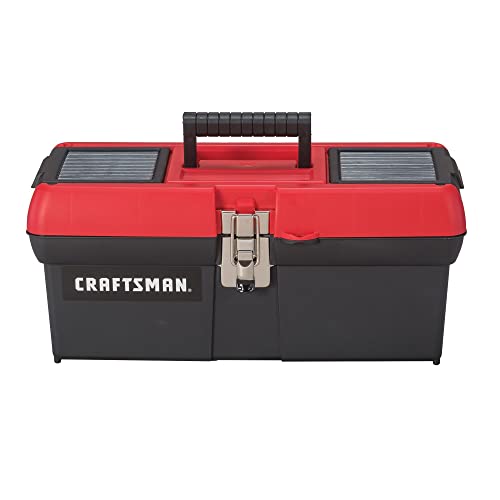
 CRAFTSMAN VERSASTACK 30 Gallon Quick-Access Rolling Tool Chest30.1 x 21.8 x 15.2 inches21 x 30 x 15 inches19.9 PoundsCheck on Amazon


What's inside
As an Amazon Associate I earn from qualifying purchases. This post may contain affiliate links at no extra cost to you.
A portable tool box for jobsite work gets judged in the first ten minutes of the day, not on a shelf in the store. You pull it out of a truck bed, roll it over gravel, carry it up temporary stairs, and set it down in dust and mud. These boxes almost never fail in the middle of the shell. They fail at the latch, the hinge, the wheels, and the lid gasket, usually in cold weather when polymer is at its most brittle.
Check things in the order that matters: lid and latch construction, then box style matched to how far you actually carry it, then wheels and handle, then the ratings printed on the carton. Where a real standard exists, use it. Where it doesn’t, put your hands on the box.
As an Amazon Associate we earn from qualifying purchases at no extra cost to you.


Jobsite box styles at a glance
| Box style | Best for | Empty weight | Where it fails first |
|---|---|---|---|
| Cantilever hand box | Trim and service calls | 5 to 9 lb | Hinge lugs and tray tabs |
| Modular stacking system | Crews staging on the floor | 8 to 14 lb each | Latch tabs and connectors |
| Single rolling box | Remodelers on finished slab | 15 to 25 lb | Small hard plastic wheels |
| Rolling stack with totes | Daily truck and van haulers | 30 to 45 lb assembled | Handle side play |
| Steel site chest | Tools that stay overnight | 80 lb and up | Lid struts and lock hasp |
Sections
What separates a good portable tool box for jobsite duty from a cheap one
The criterion: how the lid closes and what holds it closed. Everything else can be average and the box will still serve you. Get the closure wrong and you own a bin with a loose top by the second winter.
Look for over-center latches with a steel pin through the pivot, or at least a molded latch with a metal reinforcing insert. Latch tabs that are nothing but a thin flap of polypropylene split at the root, and they split fastest near freezing. Check the hinge next: a full-width hinge on a continuous steel rod beats two molded lugs, and a lid that holds at 90 degrees without a strut usually means decent hinge geometry. Then squeeze the long wall. Structural foam or thick copolymer polypropylene should barely move. If it oil-cans in your hand, the lid will not stay sealed once the box is loaded and stacked.
Best all-around: a modular stacking system
Pick one ecosystem and stay in it. Connectors on lines like Milwaukee PACKOUT, DeWalt TOUGHSYSTEM, and ToughBuilt StackTech are proprietary, so the value shows up on your second and third purchase. Start with a rolling base and one deep box, then add organizers once you know what you carry.
Box styles and who each one is for
The criterion: the distance between where the truck parks and where you work. Under 20 feet on flat ground, wheels are dead weight. Over 100 feet, across gravel or down into a basement, the wheels are the whole purchase.
Cantilever and hand-carry boxes
For trim, punch lists, and service calls. Check grip width and whether the top tray latches on its own. Keep loaded weight under roughly 40 lb or the box stays in the truck.
Modular stacking systems
For small crews staging tools on the floor all day. One trip instead of four is the payoff. The trade-off is brand lock-in and a stack that gets top-heavy, so keep the deep box on the bottom.
Single rolling boxes
For remodelers on finished slab or subfloor. Cheaper than a stack with no connector to break. Make sure the handle locks in two positions and the wheels sit outside the footprint, or it tips at curbs.
Steel site chests
For tools that stay overnight. Portable only in the sense that two people and a truck can move them. Look for gas struts, welded corners, and two hasps.
Wheels, handles, and the 30 feet between the truck and the work
The criterion: wheel diameter and tread material. Anything under about 4 inches in hard plastic is a shop floor wheel and will stop dead in gravel.
Site duty wants 6 to 9 inch wheels with rubber or TPE overmold and a steel axle running through the shell instead of molded plastic stubs. Sealed bearings are worth paying for on a box you drag daily. Single-tube telescoping handles generally have less side play than twin-tube designs, so extend one and twist it in the aisle. Published stack load ratings on pro systems commonly land in the 200 to 250 lb range. Treat that as flat-ground capacity and derate it by about a third for stairs.
- ✔ One trip from truck to work area
- ✔ Big wheels clear gravel, curbs, and expansion joints
- ✔ Boxes separate so you carry only what you need
- ✔ Rated units double as a step or seat
- ✘ 30 to 45 lb assembled before any tools go in
- ✘ Proprietary connectors lock you to one brand
- ✘ More failure points at handle locks and stack latches
- ✘ Still beaten by a bag on ladders and in attics
Best for solo remodelers: single rolling box
One shell, one handle, nothing proprietary to break. Check that the wheels are at least 6 inches and rubber treaded, that the lid latches independently of the extension handle, and that there is a molded skid plate on the back where it drags off tailgates.
Weather, dust, and security ratings worth checking
The criterion: whether an IP claim is backed by a gasket you can see. Ingress protection codes come from IEC 60529 and they are specific. IP54 is dust protected and splash resistant, which covers rain in an open bed. IP65 is dust tight and rated for low-pressure water jets. IP67 adds brief immersion, roughly 1 meter for 30 minutes. Impact resistance shows up as an IK rating under IEC 62262, where IK08 is a 5 joule strike. Few boxes publish it, so a stated IK number is a bonus rather than a requirement. OSHA does not rate tool boxes, so “OSHA approved” on a carton is marketing.
For security, look for hasps sized to a 3/8 inch shackle and shrouded enough to keep bolt cutters off the padlock. A polymer box is theft deterrence, not a safe. Anything left overnight belongs in a bolted steel chest, and either way keep photos and a serial number log for your insurer.
Packing it so it stays portable
The criterion: total lift weight and where the mass sits. The NIOSH lifting equation sets a recommended limit of 51 lb under ideal conditions, and that drops fast once you add twisting or a long reach over a tailgate. Batteries, chargers, and heavy drivers ride in the bottom box over the axle. Fasteners go in a shallow organizer on top. Label the ends of stacked boxes, not the lids.
Best light-duty: cantilever hand box
The right answer for finish carpenters working out of a small kit. Fold-out trays keep fasteners visible without digging, but the tray tabs are the weak point, so check that they are ribbed and thick. Skip anything held shut by a single center latch.
Frequently asked questions
Is a rolling stack or a tool bag better for jobsite work? Bags win on ladders, in attics, and on service calls where you carry everything the last 50 feet by hand. Rolling boxes win as soon as you are moving more than about 40 lb from a parked truck. Most carpenters end up owning both.
How much should a loaded jobsite box weigh? Keep any box you lift by hand under 40 to 45 lb, which lines up with the NIOSH 51 lb ideal figure once you account for twisting and tailgate height. Split the load across two boxes before going heavier.
Can I mix modular boxes from different brands? Generally no. Connectors, footprints, and latch geometry are proprietary, and third-party adapters are hit or miss. Pick the ecosystem your batteries and existing tools already point toward.
Buy the closure and the wheels, not the accessory count. A box with steel-pinned latches, a visible gasket, a real axle, and a rating you can look up will outlast three cheap ones, and trays can be added later.
Check prices on Amazon →