What's inside
As an Amazon Associate I earn from qualifying purchases. This post may contain affiliate links at no extra cost to you.
A jobsite table saw earns its keep when it handles rip cuts in plywood, dadoes in hardwood, and occasional nonferrous or mild steel trim without demanding a blade swap or a separate chop saw. That is the specific gap the Evolution table saw lineup targets. Evolution Power Tools built its reputation on cold-cut technology that produces burr-free edges in metal at lower motor loads than abrasive alternatives, and that same philosophy now shapes their woodworking and multi-material saws.
What separates a good Evolution table saw from a mediocre one on a crowded jobsite comes down to fence precision under repeated use, the actual quality of the zero-clearance throat plate, and whether the included dado set is a one-off novelty or a plate you will genuinely reach for. Rip capacity, bevel range, and how fast the unit folds on its wheeled stand matter more than marketing specs. This roundup for 2026 compares published specs, street prices, and recurring owner feedback to help you narrow the field.
As an Amazon Associate we earn from qualifying purchases at no extra cost to you.





Quick Picks
| Product | Best for | Price |
|---|---|---|
| Evolution R10TBLX | Contractor who needs a wheeled stand and dado capability in one package | $475 |
| Evolution R10TS | Same performance as the TBLX at a lower entry price | $400 |
| Evolution S14MCS | Steel and metal cutting with a dedicated cold-cut chop saw | $966.59 |
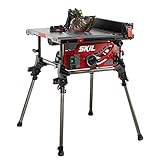
| SKIL TS6307-00 | A budget jobsite table saw when brand is irrelevant | $302.68 |
| EVOLUTION MCSSTAND | Ergonomic setup for the S14MCS on uneven terrain | $295 |
| Evolution R8MTS | Convertible miter-to-table work in tight spaces | $275 |
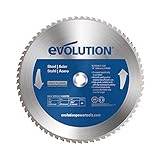
| Evolution 14BLADEST | Replacement blade for mild steel cold cutting | $95 |
| Evolution R185SMS+ | Sliding miter saw for crosscut-heavy framing and trim | $178.53 |
How We Picked
We weighed four criteria across every unit: usable cut capacity (rip length, depth at 90°, and bevel range), fence and throat plate quality as reported by owners over months of regular use, multi-material flexibility without tool changes, and portability measured in setup and teardown speed. Price was the tiebreaker, never the first filter.
The 8 Best Evolution Table Saw in 2026
Evolution R10TBLX
This is the premium jobsite table saw in the Evolution lineup, and the wheeled stand is its defining feature. The 15-amp motor drives a 10-inch blade through a 26-inch rip at 3-3/8 inches of depth, with a full 0 to 45-degree bevel. The zero-clearance throat plate ships in the box alongside a dado plate, which is unusual at this price. Owners consistently praise the precision fence for holding tune between setups.
- Wheeled stand folds quickly for transport without removing the saw from the table
- Included dado plate expands the saw beyond simple rip and crosscut work
- Heavier than the R10TS, which matters if you carry it up stairs daily
Skip it if the $75 premium over the R10TS does not justify the stand for your workflow.
Evolution R10TS
The R10TS is the core jobsite saw without the wheeled stand. Identical motor, identical cut specs, identical zero-clearance throat plate and dado plate inclusion. If you already own a rolling base or work from a bench, this saves real money with no performance compromise. Owner feedback mirrors the TBLX almost exactly because the saw itself is the same tool. Fence rigidity gets high marks; the folding legs are lighter but less rigid than the TBLX stand.
- Best value in the Evolution table saw range for woodworkers with an existing stand
- Same dado-ready configuration as the more expensive TBLX
- Folding leg base wobbles slightly on uneven concrete compared to the wheeled version
Skip it if you need to roll the saw between rooms on a job site; get the TBLX.
Evolution S14MCS
This is not a table saw. It is a 14-inch cold-cut mitering chop saw built for steel, and it occupies a different role on the jobsite. The EVOMAX intelligent motor adjusts torque to resist blade stall, and the 3500-plus blade life figure is a genuine long-term cost advantage over abrasive chop saws. Shadow guide line alignment is accurate. Miter range covers plus or minus 46 degrees.
- Produces burr-free cuts in mild steel with virtually no sparks
- Blade life dramatically outpaces abrasive alternatives, lowering per-cut cost
- Priced like a dedicated metal shop tool, out of reach for most general carpenters
Skip it unless you routinely cut steel conduit, angle iron, or rebar.
SKIL TS6307-00
The SKIL fills the budget slot in this roundup. It is not an Evolution table saw, and that distinction matters: no cold-cut heritage, no included dado plate, no zero-clearance throat plate in the box. What it does offer is a 15-amp motor and a folding stand at a price well below every Evolution above it. Owners report adequate fence accuracy for rough carpentry, but fine-joinery work exposes the cheaper components.
- Lowest entry price in the roundup by a meaningful margin
- Folding stand is compact and stores easily in a van
- Throat plate and fence quality trail the Evolution saws noticeably
Skip it if you need dado cuts or repeatable fine joinery on the jobsite.
EVOLUTION MCSSTAND
The Powerlift assist stand pairs with the S14MCS and several other Evolution chop saws. The gas-strut mechanism reduces the perceived weight of the saw head when raising and lowering for repeated cuts. Heavy-duty steel frame construction with all-terrain wheels makes it stable on gravel and mud where a folding bench stand would sink.
- Gas-strut lift reduces fatigue during repetitive long-run cuts
- All-terrain wheels handle uneven ground without additional leveling blocks
- Only useful if you own a compatible Evolution chop saw
Skip it if you are buying the S14MCS but store it in a fixed workshop where a bench mount is simpler.
Evolution R8MTS
The R8MTS is a convertible that functions as both a miter saw and a table saw, sharing one 12-amp motor and an 8-1/4-inch blade. It cuts wood, plastic, and metal on the same blade, which is the multi-material promise in its most compact form. Bevel and miter ranges are full, and the footprint is genuinely small.
- Two saws in one footprint, ideal for vans and small studios
- Multi-material cutting without blade changes for most common stock
- Eight-inch blade limits depth and rip capacity compared to any 10-inch saw here
Skip it if you regularly rip sheet stock wider than a few inches.
Evolution 14BLADEST
A 66-tooth carbide-tipped TCT blade for 14-inch cold-cut applications. It is the consumable that keeps the S14MCS working. No heat, no burrs, and virtually no sparks are the claims, and owner feedback confirms long life when the blade is kept clean and run at proper feed rate.
- Long service life compared to abrasive discs at equivalent cutting tasks
- Clean burr-free edge eliminates secondary deburring on cut pieces
- Only fits 14-inch cold-cut saws, not the table saws in this roundup
Skip it if you do not already own an Evolution 14-inch chop saw.
Evolution R185SMS+
A 7-1/4-inch sliding miter saw with a 12-amp motor, 45-degree bevel, and 50-degree miter. The 210 mm slide gives crosscut capacity beyond a standard non-sliding saw. Multi-material blade included. This is the right pick when your work is primarily crosscuts in trim, decking, and framing stock rather than rips.
- Sliding carriage handles wider boards than a fixed-arm miter saw of similar size
- Multi-material capability in a compact, portable package
- Smaller blade means less cutting depth for thick stock
Skip it if your primary need is ripping, not crosscutting.
Buying Guide
Motor Amperage and Cut Depth
A 15-amp motor on a 10-inch table saw handles 2-inch hardwoods without bogging. Depth at 90 degrees is the number to check first; Evolution’s 10-inch saws deliver 3-3/8 inches, which clears two-by-six stock and most common framing lumber. Bevel depth at 45 degrees drops noticeably, so verify the spec sheet for your actual joinery thickness.
Fence Repeatability and Throat Plate Quality
A precision fence that shifts under lateral pressure is worse than a cheap fence you never trust. Owner reviews of the Evolution table saw line consistently rate the included fence above average for jobsite saws. The zero-clearance throat plate reduces tearout on veneered plywood and melamine; if a saw in this price range does not include one, budget for an aftermarket plate.
Dado Capability and Blade Compatibility
Not every jobsite table saw accepts stacked dados. Evolution includes a dado plate with the R10TBLX and R10TS, which expands the saw from a rip-and-crosscut machine into a joinery tool. Check the arbor size and whether the motor has enough torque headroom to drive a full dado stack without stalling in dense hardwood.
Our Verdict
The R10TBLX is the top pick for contractors who need one saw for wood and occasional metal trim, with a wheeled stand that makes the 26-inch rip practical on any jobsite layout. The R10TS is the budget pick, delivering identical cutting performance at a lower price if you already own a rolling stand. The S14MCS wins outright if steel conduit and angle iron are daily stock on your site; no table saw in this roundup substitutes for a dedicated cold-cut chop saw.
FAQ
Can an Evolution table saw cut metal?
Evolution’s TCT blades allow many of their saws to cut aluminum, plastic, and mild steel without sparks or burrs. Check the specific blade rating; the included wood blade is not rated for ferrous metal, so swap to a metal-cutting blade for that application.
What is the difference between the R10TBLX and the R10TS?
The saw body, motor, cut capacity, and accessories are identical. The TBLX adds a heavy-duty wheeled stand with folding handles, while the R10TS ships on a lighter folding leg base. Choose based on whether you transport the saw frequently on rough ground.
Do I need a separate dust collection system?
Jobsite table saws generate significant fine dust, and the included collection bag fills quickly during full-day use. A shop vacuum connected to the 2-1/2-inch port is the minimum; a dedicated cyclone or HEPA-filtered collector is strongly recommended for health and visibility.
Are Evolution replacement blades difficult to source?
Evolution blades use standard arbor sizes and are available through most major tool distributors. The proprietary geometry and tooth count matter for cold-cut performance, so stick with Evolution-branded blades when cutting metal to preserve the burr-free edge claim.