Our Top Picks
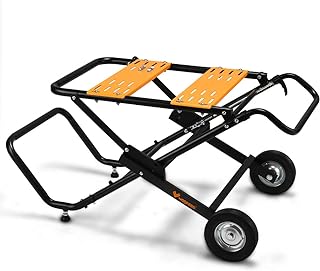
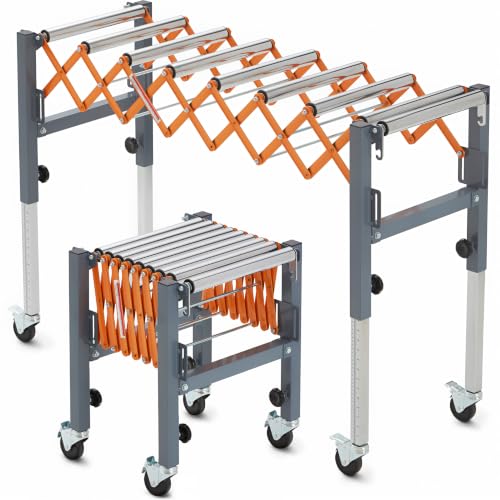 BORA Adjustable Conveyor Roller Stand for Table Saw19.3 x 18.1 x 20.5 Inches44.7 poundsCheck on Amazon


What's inside
As an Amazon Associate I earn from qualifying purchases. This post may contain affiliate links at no extra cost to you.
Most complaints about a table saw with rolling stand have nothing to do with the saw. They come from the stand: wheels that bog down on gravel, a release lever you have to kick to unlatch, a frame that racks under a sheet of plywood, or legs that leave the top a half inch out of level on a garage floor that slopes toward the drain. The blade and motor on most jobsite saws in this class are competent. The rolling base is where the money is either well spent or wasted.
This is a catalogue-style walkthrough of what separates a good rolling stand from a bad one, plus the saw specs that matter once the stand is sorted. Prices in this category generally run from the low hundreds for a stand-and-saw combo up to the high hundreds for a full-size jobsite saw on a genuine folding cart. Check current pricing before you commit, because this segment discounts hard around holiday weekends.
As an Amazon Associate we earn from qualifying purchases at no extra cost to you.


Sections
Quick Comparison: Rolling Stand Types
The single biggest decision is the stand mechanism. Everything else follows from it.
| Stand Type | How It Works | Best For | Watch Out For |
|---|---|---|---|
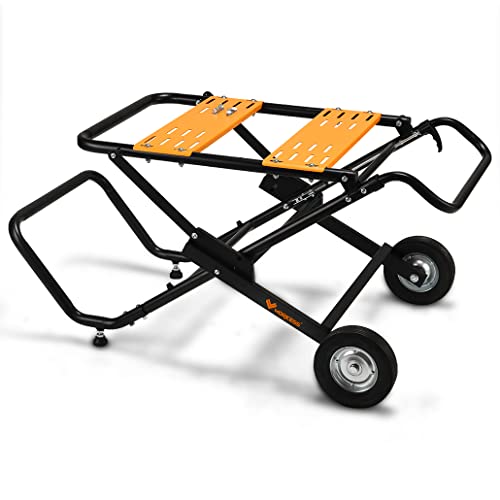
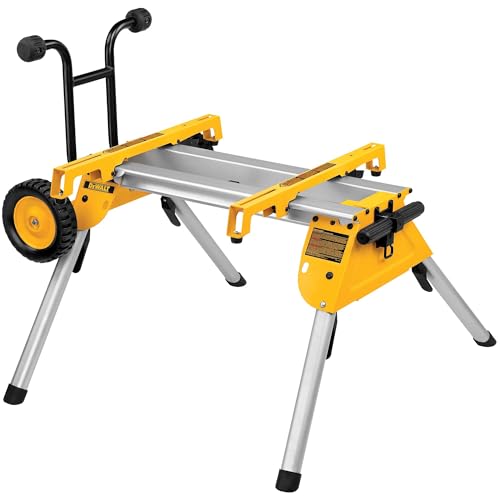
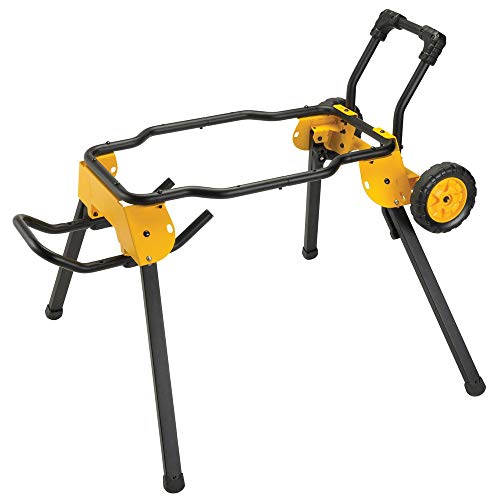
| One-step folding cart | Foot pedal or lever collapses legs, saw stays attached | Contractors loading a truck daily | Heaviest option, awkward on stairs |
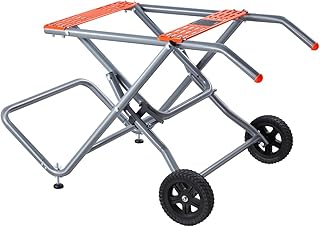
| Scissor / accordion stand | Legs cross and compress under the saw | Small shops and tight garages | Can rack side to side under load |
| Fixed stand with caster kit | Bolt-on wheel set added to a rigid frame | Shop use where the saw rarely leaves | Wheels are small, poor on gravel |
| Compact stand with wheels | Lightweight frame, two wheels, lift-and-drag | Occasional DIY use, apartment garages | Least stable at full rip capacity |
| Integrated mobile base (cabinet style) | Heavy base with locking casters | Semi-permanent shop layout | Not a jobsite tool, not truck friendly |
Stand Mechanism: Can You Deploy It One-Handed?
The criterion that separates good from bad here is whether you can set up or collapse the stand while holding something else. On a job site your other hand is holding a cord, a board, or a coffee. Good carts use a single foot-actuated release and a gas-strut or spring assist so the saw rises rather than falls. Bad carts require two hands, a knee, and a specific sequence.
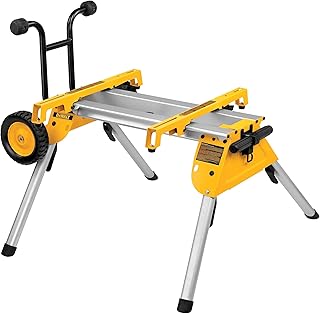
Test the wheels next. Pneumatic or semi-pneumatic tires in the eight-inch range roll over extension cords, door thresholds, and gravel driveways. Small hard plastic casters do not. If the listing photos show wheels smaller than a soda can, plan on that saw living in one spot.
Third, check deployed stability. A stand should give you a wide footprint once open, ideally wider than the saw table itself, and the legs should have adjustable feet or at least enough compliance that an uneven slab does not leave the saw rocking. Rocking is not just annoying, it changes your cut as the workpiece shifts.
Full-Size Jobsite Table Saw With Rolling Stand
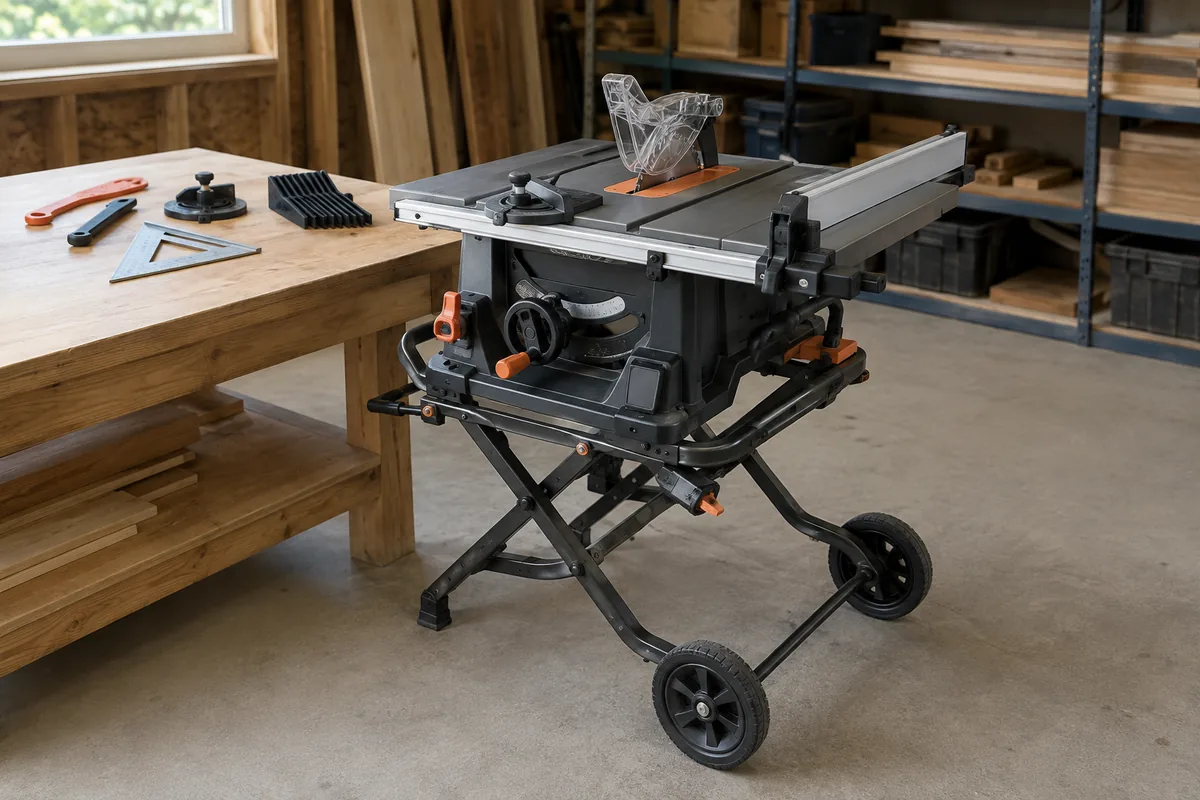
If you are moving the saw more than once a week, buy the version with a real folding cart rather than the bare saw plus a generic base. Integrated carts are engineered around that specific saw’s mounting points, so the top sits level and the release geometry works. Look for a 10-inch blade, rack-and-pinion fence, and rip capacity of at least 24 inches to the right of the blade.
Fence Quality Is the Accuracy Ceiling
The criterion is repeatability: can you set the fence to a dimension, cut, move the fence away, bring it back, and get the same dimension? Rack-and-pinion fence systems, now standard on better jobsite saws, advance the fence on a geared track so it stays parallel to the blade through its travel. Older single-lock T-fences can skew when you cinch them down, and skew is what causes burning and kickback.
Rip capacity is the second fence spec. Twenty-four to thirty inches to the right of the blade lets you break down a 4×8 sheet into usable halves without a track saw. Under about 20 inches, sheet goods become a two-person job.
Check the miter slot too. A standard 3/4-inch by 3/8-inch T-slot means aftermarket miter gauges, crosscut sleds, and featherboards fit. Proprietary slots lock you into whatever the manufacturer ships.
Motor, Blade, and What the Ratings Actually Mean
Universal motors dominate this category because they start under load on a 15-amp circuit and weigh little. They are loud and they wear brushes. Induction motors are quieter and last longer but are heavy and usually appear on cabinet saws, not portable ones. For a genuinely mobile saw, a 15-amp universal motor is the right call.
Ignore peak horsepower claims and look at amperage. Fifteen amps at 120 volts is the practical ceiling on a standard US household or job site circuit. If a listing claims horsepower well beyond what 15 amps can deliver, that number is a marketing peak, not sustained output.
Cordless options built on DeWalt XR, Milwaukee FUEL, and Makita LXT platforms are real now, and several ship on rolling stands. Brushless motors and high-capacity packs handle framing lumber fine. Long rips in hardwood will drain batteries quickly, so budget for spares if that is your daily work.
On safety, look for UL listing on the tool and check the guarding. A modern saw should include a riving knife, anti-kickback pawls, and a clear blade guard, and the riving knife should be removable without tools for non-through cuts. Blade brake technology that stops the blade on skin contact exists but is largely limited to specific premium lines, so do not assume it is present.
- ✔ Folding carts let one person load a full-size saw into a truck bed
- ✔ Large wheels handle gravel, cords, and thresholds without lifting
- ✔ Rack-and-pinion fences hold parallel better than legacy single-lock designs
- ✔ Rolling stands free up garage floor space between projects
- ✔ Standard T-slots open up sleds and aftermarket accessories
- ✘ Integrated carts add significant weight, often 30 pounds or more
- ✘ Cheap scissor stands rack sideways when ripping sheet goods
- ✘ Small plastic casters are near useless outside a smooth shop floor
- ✘ Universal motors are loud and eventually need brush service
- ✘ Dust collection on open-frame jobsite saws is inherently leaky
Dust Collection and Shop Integration
The criterion is whether the saw has a shrouded blade area feeding a single port. Open-bottom jobsite saws throw dust onto the floor no matter what you hook up. Saws with a partial or full lower shroud and a 2-1/2 inch port capture a meaningful share when paired with a shop vacuum. Adding an over-blade guard collection hose improves it further, though it complicates non-through cuts.
Fine dust matters here. Wood dust is classified as a carcinogen by several health agencies, and the particles that reach deep into your lungs are the ones you cannot see. Pair the saw with a vacuum using a HEPA or fine-dust filter rather than a standard bag, and wear an N95 or better for extended sessions in an enclosed garage.
Compact Table Saw With Rolling Stand for Small Garages
For weekend DIY where the saw shares a garage with a car, a compact saw on a folding or scissor stand is the practical pick. Accept the smaller rip capacity and plan to break down sheet goods with a circular saw and guide first. Prioritize a stand that folds truly flat so it stores against a wall.
Who Should Buy Which
Daily contractors: full-size jobsite saw with a one-step folding cart and large wheels. The weight penalty is worth the setup speed and the stability during long rips.
Remodelers and trim carpenters: cordless jobsite saw on a rolling stand, especially if you work in occupied homes where running a 15-amp cord is a hassle. Buy extra batteries.
Serious hobbyists with a shared garage: compact or mid-size saw on a folding stand, or a benchtop saw on a shop-built mobile base with locking casters. Spend the savings on a good blade and a crosscut sled.
Anyone with dedicated shop space and no need to travel: skip the portable category and look at a contractor or hybrid saw on a mobile base. You get an induction motor, a heavier top, and better dust collection for similar money.
Frequently Asked Questions
Can I add a rolling stand to a table saw I already own? Often yes. Universal jobsite stands and shop mobile bases exist, but confirm the mounting hole pattern and the saw’s base dimensions before buying. Integrated carts designed for a specific saw almost always deploy more smoothly than a universal adapter, and a mismatched base can leave the top out of level.
Is a rolling stand stable enough for ripping full sheets of plywood? A wide-footprint folding cart on a level surface handles it, but the real limit is outfeed support, not the stand. Sheet goods need support behind and beside the blade. Add a roller stand or, better, break the sheet down with a circular saw and straightedge first, then trim to final size on the saw.
What blade should I run on a jobsite table saw? The stock blade is usually a coarse general-purpose blade. A 40-tooth ATB combination blade in a thin-kerf design is a strong default because thin kerf asks less of a 15-amp universal motor. Keep a 24-tooth ripping blade for thick hardwood and a higher-tooth-count blade for plywood and melamine if clean edges matter.
Choose the stand first, then the saw that bolts to it. Fence quality, rip capacity, and a standard miter slot decide how accurate your work can be; the cart decides whether you actually use the tool.
Check prices on Amazon →