Our Top Picks
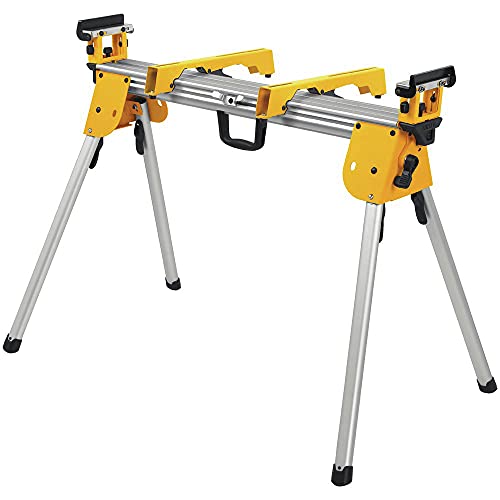
 POWERTEC Portable Miter Saw Stand w/ Quick-release Mounting1PK49 x 16.25 x 8.25 inchesCheck on Amazon


What's inside
As an Amazon Associate I earn from qualifying purchases. This post may contain affiliate links at no extra cost to you.
The saw is usually not the problem. A miter saw bolted to a pair of sawhorses or the tailgate of a truck cuts crooked because the workpiece is unsupported, the deck flexes, and the operator is holding a 12-foot board with one hand while trying to keep a stop block from creeping. This miter saw stand buying guide is organized around the specifications that actually change cut quality and setup time: rated load capacity, how the saw attaches, how far the material support extends, and how the whole assembly moves and stores.
Stands fall into four practical families. Knowing which family fits your work eliminates most of the catalog before you compare individual features.
As an Amazon Associate we earn from qualifying purchases at no extra cost to you.




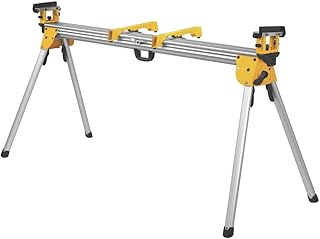
| Stand type | Best for | Typical capacity range | Trade-off |
|---|---|---|---|
| Folding leg stand | Homeowners, occasional trim work | Light to moderate | Shortest material support, cheapest |
| Wheeled/rolling miter saw stand | Trim carpenters, jobsite crews | Moderate to heavy | Heaviest to lift into a vehicle |
| Sawhorse-bracket system | Mixed-tool users, remodelers | Moderate | Requires separate horses, slower setup |
| Shop bench or cabinet | Dedicated shop station | Highest | Not portable |
Sections
Load capacity is the first number to check
The criterion that separates a usable stand from a hazard is whether the rated capacity covers the saw plus the longest, heaviest stock you cut, with margin. A 12-inch dual-bevel sliding compound saw is a genuinely heavy tool, and stands often quote a single capacity figure that assumes the load is centered. It rarely is. When you cantilever a wet pressure-treated 2×12 out to one side, the stand sees a tipping moment, not a static center load.
Look for manufacturers who publish a distributed load rating and a separate note about the saw’s own weight. Treat any stand whose capacity is close to your realistic load as too small. Also check the footprint: a wider stance resists tipping far better than a higher capacity number on a narrow base. Steel tube construction with welded joints holds tolerance longer than stamped and riveted assemblies, and the difference shows up after a year of being thrown in a truck bed.
Stability standards worth knowing: ANSI and UL listings apply mainly to the saw’s electrical and guarding requirements, not to the stand. Stands are largely self-certified, which is exactly why the published capacity, base width and material gauge matter more than marketing language about “heavy duty” construction.
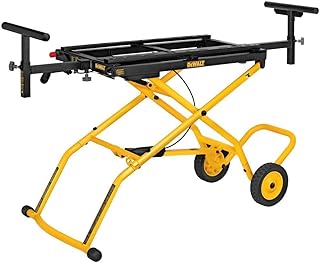
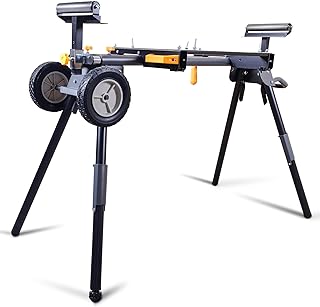
Rolling Miter Saw Stand with Pneumatic Wheels
If you load and unload a saw daily, wheels are not a luxury. Look for large pneumatic or solid rubber wheels rather than small casters, because small wheels stop dead at door thresholds, gravel and unfinished slab edges. Confirm the stand collapses tall and narrow enough to fit through a 30-inch doorway on edge, and expect real weight: the sturdiest rolling stands are the least fun to lift alone.
Mounting brackets decide whether the stand fits your saw
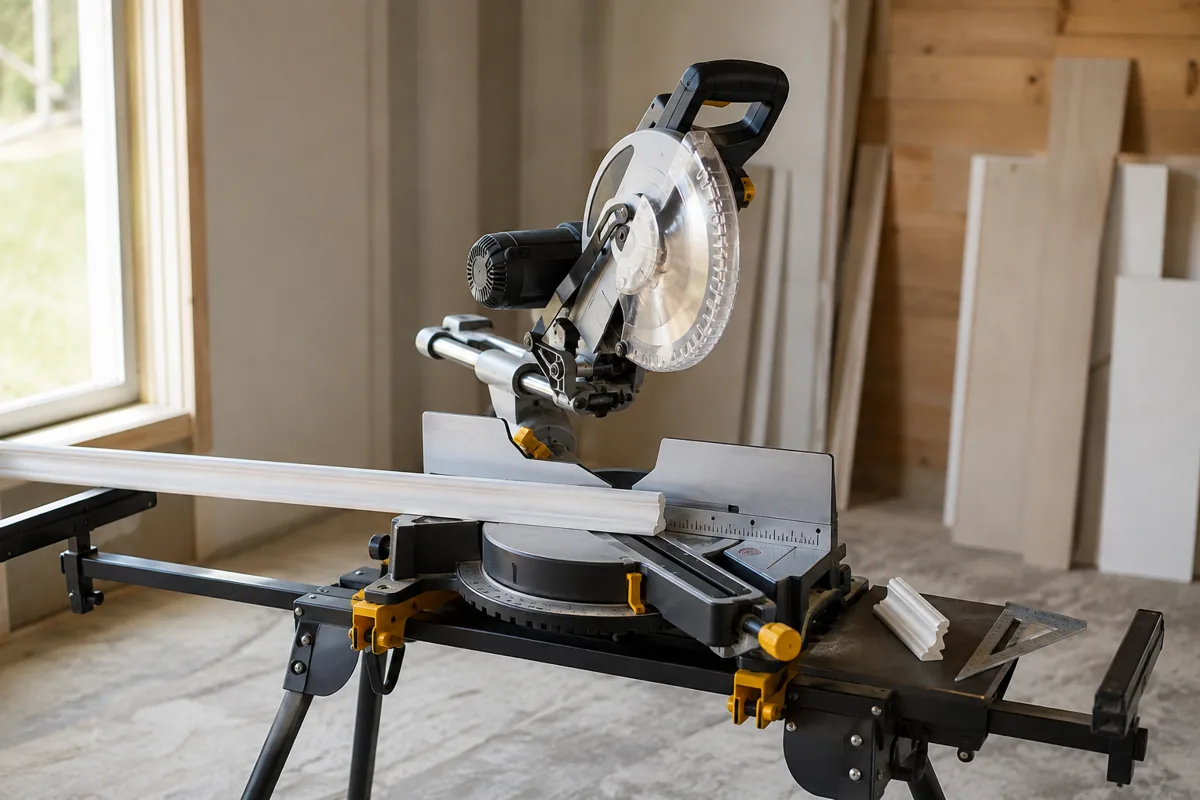
The single most common buying mistake is assuming universality. Most stands use a pair of mounting brackets or arms that carry the saw, and the criterion here is whether those brackets accommodate your saw’s base bolt pattern and base depth. Universal brackets typically use slotted channels with adjustable positions, which cover most mainstream saws from the DeWalt, Milwaukee, Makita, Bosch, Metabo HPT and Ryobi lines. Some brand-specific stands use quick-release cradles that snap to matching brackets and are noticeably faster, but they lock you into that ecosystem.
Three details to verify before buying:
Bolt pattern reach. Measure the distance between mounting holes on your saw base in both directions and compare with the bracket’s slot travel. Sliding saws with deep bases sometimes exceed what a compact bracket can span.
Bracket-to-deck clearance. The brackets raise the saw. If the stand’s material supports cannot be raised to match the saw’s new table height, every cut will be supported below the deck, which pinches the blade on long stock.
Rear clearance for slide rails. A sliding compound saw needs the rails to travel freely behind the saw. Some stands place a crossbar exactly where the rails want to go.
If you own two saws, or expect to upgrade, buy the universal bracket system and accept slightly slower changeovers. If your saw is staying put for years, a matched brand stand is the cleaner setup.
Extension length and stops are what improve your cuts
Capacity keeps the stand upright; extension support is what makes the cut square. The criterion is total supported span with the extensions deployed, measured from support to support, not the stand’s folded length. Short stands support roughly the length of a countertop, which is enough for trim blocks and studs. Longer designs support baseboard, crown and deck framing lengths without a second helper.
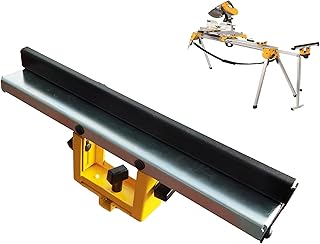
Two features earn their keep here. First, height-adjustable roller or fixed material supports, so the support surface sits exactly level with the saw deck. A support even a quarter inch high lifts the far end of the board and opens the cut at the bottom of the kerf. Second, a positive length stop that clamps to the extension rail. Repeat cuts on a stand without a stop are guesswork; with a stop, a stand becomes a small production station.
Rollers versus flat supports is a real choice. Rollers make it easy to slide long stock into position but let short pieces wander, and they can pull the board away from the fence at the moment of the cut. Flat pads hold position better. Some designs offer flip-up stops on the rollers, which is the best of both.
- ✔ Height-adjustable supports that reference the saw deck
- ✔ Positive, lockable length stops for repeat cuts
- ✔ Wide base stance for tipping resistance
- ✔ Universal slotted brackets for future saws
- ✔ Welded steel over riveted stamped parts
- ✘ Small caster wheels that catch on thresholds
- ✘ Fixed-height supports with no fine adjustment
- ✘ Narrow footprint with a high published capacity
- ✘ Crossbars that block slide rail travel
- ✘ Plastic clamp knobs on primary load joints
Portability, storage and the truck-bed test
The criterion that decides long-term satisfaction is not how the stand performs when set up, it is how much effort stands between the truck and the first cut. Count the steps. A rolling stand with the saw permanently mounted goes from vehicle to working height in under a minute, but the loaded assembly can be an awkward lift for one person. A folding leg stand is light and stacks flat but requires you to carry the saw separately and align it every time.
Measure your storage space before ordering. Folded footprint and folded height are published by most manufacturers and are frequently the deciding factor for a garage shop where the stand hangs on a wall between projects. Also weigh the sawhorse-bracket approach honestly: brackets that mount a saw onto standard horses are inexpensive and versatile, and the same horses serve other tasks, but setup is slower and material support depends on whatever you improvise.
Matching the stand to the work
Occasional homeowner, trim and small projects: a folding leg stand with adjustable supports is enough, and the money saved is better spent on blades.
Remodeler or finish carpenter working several sites: a rolling stand, sized generously on capacity, with a length stop. This is the configuration that pays back in labor.
Deck and framing work: prioritize capacity, base width and long extension span over compact folding, since stock is heavy and long.
Dedicated shop: skip the portable category and build or buy a bench station with a recessed saw deck flush to continuous fences and a long stop system. Nothing portable matches it for accuracy.
Universal Miter Saw Stand with Adjustable Mounting Brackets
The safest purchase when you are not sure which saw you will own in three years. Check that the slotted brackets span your saw’s bolt pattern in both directions, and that the material supports adjust high enough to meet a tall sliding saw’s deck. Slightly slower to swap tools than a proprietary cradle, but it will outlive the saw currently sitting on it.
Setup details that most buyers miss
Level the stand, not the floor. Adjustable feet or a leveling foot on one leg solve rocking on a slab or driveway. A stand that rocks makes every miter unreliable regardless of the saw’s detent quality.
Dust and cord management matter more than they sound. Mounting the saw on a stand raises the dust port and puts the cord in the walking path. A stand with a hose hook, cord wrap or an accessory tray reduces the number of times you trip over your own setup.
Finally, check the saw deck height at working position. Roughly 34 to 36 inches puts most operators in a comfortable posture with clear sightlines to the blade and the pencil line. Too low and you stoop over long cuts; too high and you lose the sightline entirely.
Frequently asked questions
Do I need a brand-matched stand for my saw? No. Universal stands with slotted brackets fit most current saws from the major lines, including DeWalt, Milwaukee, Makita and Bosch. Brand-matched stands with quick-release cradles are faster to mount and dismount, which matters if you move the saw daily. Verify bolt pattern span and rear clearance for slide rails either way.
Are rolling stands worth the extra weight? If you load a saw into a vehicle regularly, yes. The time saved at each setup is significant, and the saw stays mounted. If the saw mostly lives in a garage and moves a few feet, a folding stand or a shop bench is a better use of money and space.
Can I use sawhorses instead of a stand? For rough framing cuts, often yes, especially with mounting brackets designed for horses. The limitation is material support: without adjustable supports level with the saw deck and a length stop, repeat accuracy on trim work suffers. Horses are a reasonable starting point, not a permanent solution for finish work.
Sort the options by load capacity first, then mounting compatibility with the saw you own, then extension span and stops, then the way it folds and rolls. Those four filters in that order narrow a crowded category to two or three real candidates.
Check prices on Amazon →