Our Top Picks
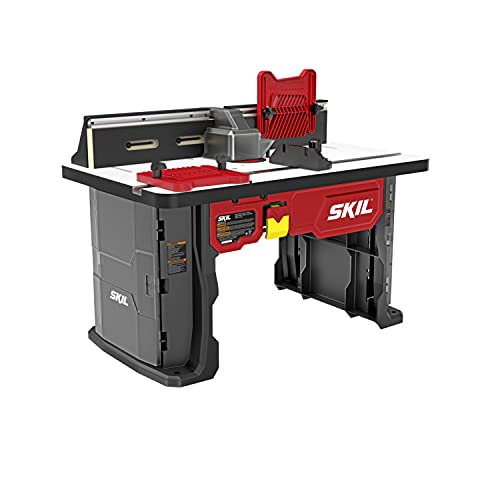 SKIL SRT1039 Benchtop Portable Router Table for SKILOne Size1 x 1 x 1 Inches24.23 PoundsCheck on Amazon

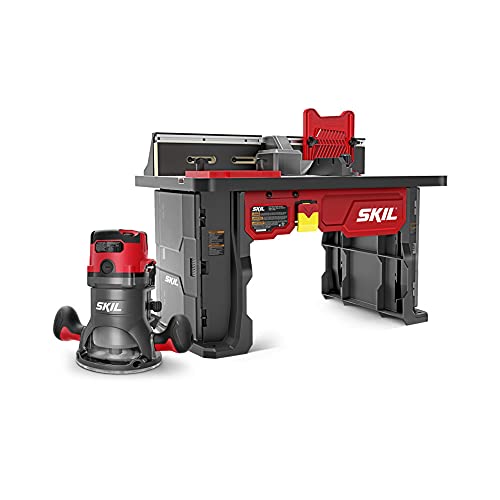


What's inside
As an Amazon Associate I earn from qualifying purchases. This post may contain affiliate links at no extra cost to you.
Most disappointing router tables fail in the same two places: the fence does not stay parallel to itself when you lock it, and the top is not flat enough to trust for a straight edge. Everything else on the spec sheet is secondary. If you are shopping for a router table for home workshop use, those two criteria will separate a tool you keep for a decade from one you fight every weekend and eventually rebuild.
This is a catalogue-style walkthrough of the categories rather than a hunt for a single winner. Home shops differ too much for one answer: a benchtop unit bolted to a workbench is the right call in a one-car garage, and a cabinet-style floor stand is the right call if you have a dedicated wall and want dust collection that actually works. Below, each section starts with the criterion that matters, then the products and configurations that satisfy it.
As an Amazon Associate we earn from qualifying purchases at no extra cost to you.


Sections
Router Table Formats At A Glance
The criterion here is footprint versus rigidity. Every gain in stability costs you floor space or portability.
| Format | Best For | Typical Top Size | Main Tradeoff | |
|---|---|---|---|---|
| Benchtop kit | Small shops, occasional edge work | Roughly 16 x 24 in | Needs a solid bench under it | |
| Floor stand with cabinet | Frequent joinery, dust control | Roughly 24 x 32 in | Takes a permanent footprint | |
| Table saw wing / extension | Shops already built around a saw | Varies by saw | Shares the saw’ | s outfeed space |
| Shop-built top plus commercial fence | Woodworkers who want a specific size | Whatever you build | Requires flat MDF and careful layout |
One honest note about the extension-wing approach: it saves space beautifully, but you cannot rout and rip at the same time, and dust extraction has to be shared or split. In a two-person shop that is fine. In a shop where you batch work, a standalone table pays for itself in setup time.
Top Flatness And Material: The First Thing To Check
The criterion is deflection under load, not surface hardness. A router motor and lift hanging from the middle of a thin top will bow it, and a bowed top means your stock rocks over the bit.
What to look for in descending order of quality: phenolic-faced MDF or particleboard cores in the 1 to 1.5 inch range, cast iron, then thin laminate over a light core. Cast iron is dead flat and kills vibration, but it is heavy and can rust in an unheated garage. A thick MDF-core top with a phenolic or high pressure laminate face on both sides is the pragmatic home-shop answer because the balanced faces resist seasonal movement. Avoid tops laminated on the visible side only; those cup over a humid summer.
Check the insert plate opening too. The plate should sit flush within a few thousandths and have leveling screws at the corners. A plate that sits a hair proud will catch every workpiece; a plate that sits low will cause snipe at the start of a cut. Reducing rings that drop into the plate matter more than most buyers realize, because supporting the wood close to the bit is what prevents tearout on narrow stock.
Benchtop Router Table Kits
For a first router table, a benchtop kit with a two-piece adjustable fence and a pre-cut insert plate gets you working the same afternoon. Verify the plate opening matches the router base you already own before you buy, and plan to clamp or bolt the unit to a bench so it cannot walk under a heavy pass.
Fence Design Separates Good Tables From Cheap Ones
The criterion is repeatable parallelism. A router table fence has one job: hold a straight, square face at a set distance from the bit and return to that setting after you move it.
Look for a one-piece extruded aluminum or laminated MDF body that clamps at both ends, not a single center bolt. Split faces that slide independently let you close the gap around the bit, which supports the workpiece and improves dust pickup. A T-slot along the fence face for featherboards and stop blocks is not a luxury; it is the difference between guessing and cutting to a line.
Micro-adjust is genuinely useful for jointing and for tuning a rabbet, but only if the fence stays put when you tighten it. When you can, test the motion in person: slide the fence, lock it, then check both ends against the miter slot or the table edge with a rule. A fence that racks a sixteenth of an inch when locked will never produce a clean rail-and-stile joint.
Two secondary features worth paying for: a tall auxiliary face for vertical panel work, and dust ports on the fence body itself. Fence extraction captures the majority of the chips at the cut, which is where the vacuum works best.
- ✔ Split fence faces close around the bit and support small stock
- ✔ T-slots accept featherboards, stops and hold-downs
- ✔ Fence-mounted dust port captures chips at the source
- ✔ Micro-adjust makes hairline fitting repeatable
- ✘ Single-bolt center-clamped fences rack when locked
- ✘ Thin stamped fences flex under hand pressure
- ✘ Some fences block the insert plate screws, making bit changes awkward
- ✘ Tall auxiliary faces are often sold separately
Choosing A Router Table For Home Workshop Space And Power
The criterion is above-table access. In a home shop you will change bits more often than you expect, and crawling under a table with a wrench gets old fast.
Two paths get you there. A router lift with a hex crank through the insert plate gives you height adjustment and, on most lifts, above-table collet access. Alternatively, several fixed-base routers in the 2 to 3.5 horsepower class ship with a through-the-base adjustment and a dedicated router table base. Both work. The lift costs more and generally offers finer resolution; the router-only route is cheaper and perfectly adequate for edge profiles and dadoes.
On power: a compact trim router in a small table handles roundovers, chamfers and light rabbets. Anything involving raised panels, large rail-and-stile sets or half-inch shank bits over about 1.5 inches in diameter wants a 2.25 horsepower or larger motor with a half-inch collet, and it wants variable speed. Large-diameter bits must be run slower to keep rim speed reasonable, which is a safety issue as much as a finish issue.
Electrical and switching details that matter in a garage: put the router on a paddle or emergency-stop switch mounted at the front edge where you can hit it with a knee or hip. Many aftermarket router table switch boxes are safety-listed; check for a UL or ETL listing mark rather than just a photo of a red button. Also confirm your circuit. A 15 amp branch circuit shared with a shop vacuum and a 2.25 horsepower router will trip, so either use a 20 amp circuit or plug the vacuum somewhere else.
Dust Collection, Guarding And Safety Standards
The criterion is two-point extraction. Routing produces fine dust in large volumes, and one port never gets it all.
The best home-shop setup pulls from the fence and from an enclosed cabinet or shroud below the table. If you are using a shop vacuum, a 2.5 inch hose with a cyclone separator ahead of the filter keeps suction from collapsing mid-cut. If you have a dust collector, a 4 inch port under the table plus a 2.5 inch reducer at the fence is the common arrangement. Wood dust is classified as a carcinogen by the International Agency for Research on Cancer, so pair collection with a NIOSH-approved N95 or better respirator for extended sessions, and add an ambient air cleaner if your shop is enclosed.
For guarding, use a clear bit guard on the fence, featherboards on the infeed for anything narrow, and a starting pin with a bearing-guided bit for curved work. Never freehand a piece against a spinning bit without either a fence or a starting pin. Check that the table’s insert plate and any accessory switch carry recognized listings; look for UL, ETL or CSA marks, and for the tool itself, ANSI and OSHA guarding expectations are the baseline your setup should meet or beat.
Router Lifts And Insert Plates
If you already own a decent fixed-base router, adding a lift and a matched insert plate is usually a better spend than replacing the whole table. Measure your existing plate opening and your router’s base bolt pattern first, since plate footprints are not standardized across brands.
Who Each Configuration Suits
If you build small boxes, picture frames and shelving, a benchtop table with a solid split fence and a compact or midsize router is enough, and it stores on a shelf between projects. If you are cutting cabinet doors, mortise-and-tenon joinery with a spiral bit, or long runs of moulding, get a full-size top with a floor cabinet, a 2.25 horsepower or larger variable-speed motor, and a lift. If your shop revolves around a cabinet saw, a router wing in the extension table is the space-efficient compromise, provided you accept the shared workflow.
Budget guidance without pretending to know current pricing: entry benchtop kits cluster at the low end, complete cabinet tables with a good fence sit in the middle, and premium cast iron tops with a precision lift land well above that, often before you have bought a motor. Bits will quietly become the largest line item over time, so buy carbide, buy half-inch shanks where the bit is offered in both, and buy fewer better ones.
Frequently Asked Questions
Can I use my cordless trim router in a router table? For light profiles on small stock, yes, and several manufacturers sell table-compatible bases for their compact routers. The limits are collet size, the quarter-inch shank ceiling on bit diameter, and runtime. For panel-raising or long production runs, use a corded midsize or full-size router with a half-inch collet.
Do I need a router lift, or is a fixed base enough? A lift is a convenience and precision upgrade, not a requirement. Many fixed-base routers offer above-table height adjustment through the insert plate, which covers most home-shop work. Add a lift when repeatable thousandths-level height changes start costing you time, such as when fitting rail-and-stile sets.
What size top should I get for a small garage shop? Roughly 24 by 32 inches handles most cabinet-door and moulding work while still fitting a mobile base. Anything smaller than about 16 by 24 inches makes long stock hard to control unless you add outfeed support. Depth matters more than width for fence travel, so do not trade top depth away to save a few inches of wall.
Buy for the fence and the top first, then the motor, then the accessories. That order almost never leads you wrong, and it keeps you from paying for features that a racking fence would waste anyway.
Check prices on Amazon →