What's inside
As an Amazon Associate I earn from qualifying purchases. This post may contain affiliate links at no extra cost to you.
Layout tools don’t fail because you bought the wrong brand. They fail because they got knocked out of square in transit. A 12-inch combination square that reads 1/64″ off, a marking gauge with a bent beam, or a bevel gauge that slipped will cost you more time than any tool box ever saves. The case you choose for these tools is about protection and repeatability, not just storage.
As an Amazon Associate we earn from qualifying purchases at no extra cost to you.



Sections
Our Top Picks
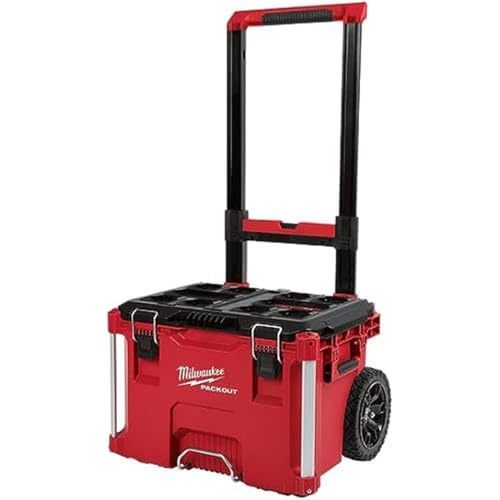 Milwaukee 48-22-8426 Packout22.1" x 18.9" x 25.6"22.1 x 18.9 x 25.6 inches23.4 PoundsCheck on Amazon


What layout tools demand from storage
Unlike chisels or planes, most layout tools have no tolerance for impact or pressure. A try square, speed square, folding rule, tape, dividers, trammel points, marking knives, and pencils all need to stay flat, stay sharp, and stay calibrated. That means three things matter more than total volume: no stacking weight on precision edges, no rattling around during transport, and quick visual inventory so you know you left nothing on the sawhorses.
A traditional tool box tends to get this wrong by design. You open the lid and everything sits in one deep well. Modular cases try to fix it with shallow trays, dividers, and foam. Both can work, but they fail in different ways.
Traditional tool box: real-world performance
The classic steel or polypropylene tool box — the 19 to 26-inch cantilever or single-tray box — is cheap, tough, and simple. A 20-inch steel box costs $35 to $65, weighs 7 to 9 lbs empty, and will survive being dropped off a tailgate. For a small layout kit that lives in the shop, it is often enough.
The problem is how it holds layout tools. Long squares and levels have to lay diagonally or stick up above the rim. If you add a tote tray, your 6-inch and 12-inch combination squares, sliding bevel, and marking gauge end up piled together with pencils and knives underneath. Every time you drive to a job, hardened steel rules bang against each other. Carbide scribers chip. The brass stock on a combination square dents, and then the lock doesn’t seat flat.
Failure modes I see repeatedly: a 12-inch Starrett-style rule gets a slight bow because a heavy framing square was laid on top of it for a month; a plastic speed square melts or warps slightly when left in a hot box in direct sun; and the box itself becomes a junk drawer because there is no dedicated spot for each tool, so things migrate to the bottom and you stop checking calibration. If you open the box and have to dig, you will grab the wrong pencil and mark with a dull knife because the sharp one is buried.
Where the traditional box still wins is simplicity and cost. If you carry only four or five layout tools — say a tape, a speed square, a combination square, and a chalk line — a small steel tool box with a removable tray protects them fine, especially if you add a cheap blade guard and keep the squares on top. For a shop-only kit that rarely travels, it is the cheaper option and there is no reason to overcomplicate it.
Modular case system: how it works
Modular systems — Packout, TSTAK, ToughSystem, Sortimo and similar — use shallow, latching cases that stack and lock together. For layout, the relevant pieces are the low-profile organizers (usually 2 to 4 inches tall) and the half-width or slim cases with customizable dividers or Kaizen foam.
Instead of one deep cavity, you get one or two flat layers. That geometry is ideal for layout tools. A 12-inch combination square can lay flat without overhang. A 7-inch and 12-inch speed square each get their own bay. Dividers keep a marking gauge beam from being side-loaded. With foam, you cut a pocket for each tool so it cannot shift at all, which is the best protection against going out of square.
The trade-offs are weight, cost, and bulk. A single slim modular organizer is $45 to $75 empty, and a two-case stack with foam inserts can run $110 to $160 before you put a single tool in it. Empty weight is higher too: a typical slim case is 4.5 to 6 lbs, so a two-case layout kit is 10 to 12 lbs empty versus 7 to 9 lbs for a single steel box. And the stack is wider — most systems are about 22 x 14 inches on the footprint — which takes more van floor space than a 20-inch tool box tucked behind the seat.
Failure modes are different but real. Cheap dividers flex and let tools ride over them. Latches wear and pop open if you overfill. Foam looks great but hides sawdust and traps moisture against steel rules if you put tools away damp — you will find surface rust on a rule after a wet week. And because the system encourages you to carry more, people build a layout case that is too heavy to grab one-handed when they just need to check a wall for plumb. A modular tool organizer with dividers only helps if you actually keep it lean.
Direct comparison for layout tools
| Factor | Traditional Tool Box | Modular Case / Organizer |
|---|---|---|
| Protection against impact | Low — tools rattle in deep well, edges contact | High — shallow trays, dividers or foam stop movement |
| Calibration retention | Moderate risk of bending/bowing if heavy tools stacked on squares | Low risk when tools lay flat in dedicated slots |
| Capacity for long tools | 20″ box fits 12″ rule diagonally only; 26″ needed for 16″ layout tools | Slim cases typically 21-22″ internal length, fits 12″ rule flat |
| Organization / findability | Poor — single layer, digging required | Excellent — visual inventory at a glance |
| Portability | One handle, 7-9 lbs empty, easy to carry one-handed | Stack is heavier and wider, but locks to other site kit |
| Cost (empty) | $35-$65 | $45-$80 per case, $110-$160 with foam |
| Best for | Small shop kit, 4-6 tools, minimal travel | Mobile trim/carpentry kit, 10+ layout tools, daily transport |
Which should you buy
Choose based on how you work, not what looks organized on YouTube.
Stick with a traditional box if your layout kit is small and mostly stays put. If you are a weekend shop woodworker or you do rough carpentry where 1/32″ is fine and you carry a tape, one combination square, and a speed square, spend the money on better squares instead of a better case. Add a simple fix: cut a piece of 1/2-inch plywood to fit inside the box as a divider, screw two small blocks to it to cradle the combination square flat on top, and keep marking knives in a sheath. That $0 solution solves 80% of the rattle problem.
Go modular if layout is your money. For trim, cabinet install, stair work, or any job where you transport 10 to 15 marking and measuring tools daily and need them to stay square between the shop and site, a shallow modular case pays for itself. Look for a slim case under 4 inches tall so tools cannot double-stack, with removable bins you can reconfigure. If you cut foam, use closed-cell foam and wipe tools dry before storing — or skip foam and use dividers with a thin rubber mat on the bottom to prevent sliding.
A practical compromise many carpenters settle on: one small modular organizer for pure layout — squares, bevel, gauges, dividers, knives, pencils — and a separate traditional box or tote for fasteners, tapes, and bulkier items. That keeps the precision tools isolated from weight and grit, keeps the grab weight under 15 lbs loaded, and lets you take only the layout case into the house for trim without hauling the whole stack.
If you are building a new kit from scratch, budget this way: $60 to $90 for a good 12-inch combination square matters more than $120 on a case. A $25 plastic speed square that you keep flat will hold square longer than a $60 aluminum one that bounces loose in a deep box. The case does not make tools accurate — it just prevents you from knocking the accuracy you already paid for.