Our Top Picks
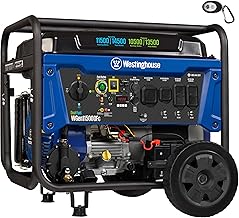
 Westinghouse 12500 Watt Dual Fuel Home Backup PortableWGen9500DF27.2 x 26.1 x 26.5 inchesCheck on Amazon
 Westinghouse 18000 Peak Watt Home Backup Portable Generator34 x 31 x 35 Inches352 poundsCheck on Amazon
 Westinghouse 5000 Peak Watt Super Quiet Portable Inverter- Gas Powered24.5 x 17.5 x 20 inches104.7 poundsCheck on Amazon
 Westinghouse 14500 Peak Watt Dual Fuel Home Backup28.9 x 29.6 x 26.9 Inches230 poundsCheck on Amazon


What's inside
As an Amazon Associate I earn from qualifying purchases. This post may contain affiliate links at no extra cost to you.
Most generator regret comes from one of two mistakes: buying on peak watts printed on the box, or buying a quiet camping unit and then asking it to start a 15-amp table saw. A real jobsite generator buying guide has to start with load math and code compliance, because those two things decide whether the machine is useful on Monday morning or a 200-pound paperweight in the back of the trailer.
The framing crew, the remodeler, and the finish carpenter all need different machines. Below, each section leads with the single criterion that separates a good buy from a bad one, so you can skim to the part that applies to your work.
As an Amazon Associate we earn from qualifying purchases at no extra cost to you.


Sections
Start With Running Watts, Not Peak Watts
The criterion: your generator must cover the sum of running watts for everything on at once, plus the largest single starting surge on top of that. Peak or “starting” wattage on the label is a momentary rating, usually a few seconds. Sizing to it is how people end up tripping breakers all day.
Universal-motor tools (circular saws, routers, grinders) surge hard but briefly. Induction motors (air compressors, older table saws, pumps) can pull three to six times their running draw at startup. Anything with a capacitor start deserves respect in your math.
A workable approach: add up the running load, take your single worst starting surge, add the two, then add roughly 20 percent headroom. Generators lose output at altitude and in heat, and a unit running at 100 percent load all day will not last.
| Crew type | Typical loads | Practical running watts | Format that usually fits |
|---|---|---|---|
| Finish carpenter, one-man | Miter saw, track saw, LED lights, chargers | 2,000-3,000 | Inverter, single 120V circuit |
| Remodel crew of two or three | Table saw, vac, compressor, lights | 3,500-5,000 | Open frame or large inverter |
| Framing or exterior crew | Multiple saws, compressor, pumps | 5,500-8,000 | Open frame, 120/240V |
| Small addition or GC site | Temp power panel, several trades | 8,000-12,000+ | Wheelbarrow frame or towable |
OSHA, GFCI, and Why Bonding Matters
The criterion: on a construction site, all 125V, 15/20/30-amp receptacle outlets used by employees must have GFCI protection under OSHA 1926.404(b)(1)(ii). That is not optional, and “the tool has a ground pin” does not satisfy it. Many contractor-grade generators now ship with GFCI receptacles built in; budget and recreational units frequently do not.
If your generator lacks GFCI outlets, the fix is a GFCI-protected cord set or an inline portable GFCI at the source. Verify it trips using the test button, at the start of the shift, not at the end.
Second issue: bonding. Most portable generators sold in the US are built as separately derived systems with the neutral bonded to the frame, which is what makes their onboard GFCI work correctly. That same bonding causes nuisance tripping if you feed a transfer switch or a temp panel that also bonds neutral to ground. Some units offer a floating neutral for exactly that reason. Know which one you have before you connect anything more complicated than a cord, and involve an electrician for any panel connection.
Look also for UL 2201 certification for carbon monoxide safety shutoff, and for units meeting CARB requirements if you work in California or a state that follows its emissions rules. EPA compliance is universal; CARB is the stricter tier.
Inverter Versus Open Frame: The Real Trade
The criterion: total harmonic distortion (THD) and duty cycle. Inverter generators produce clean sine wave power, commonly rated under 3 percent THD, which matters for battery chargers, laser levels, laptops, and anything with sensitive electronics. Conventional open-frame units often run higher THD, sometimes well into double digits on cheap models, and manufacturers do not always publish the number. If they publish it, that is a good sign.
Inverters also throttle engine speed to load, so they burn less fuel at partial load and run dramatically quieter, often in the 50-60 dBA range at 25 percent load measured at 23 feet. Open-frame units run at a fixed 3,600 rpm and are simply loud.
What open frame buys you is watts per dollar, easier field service, and a frame designed to be thrown around. Above roughly 7,000 watts, open frame dominates the contractor market on price. Below 4,000 watts, inverters are usually the smarter buy for carpentry work.
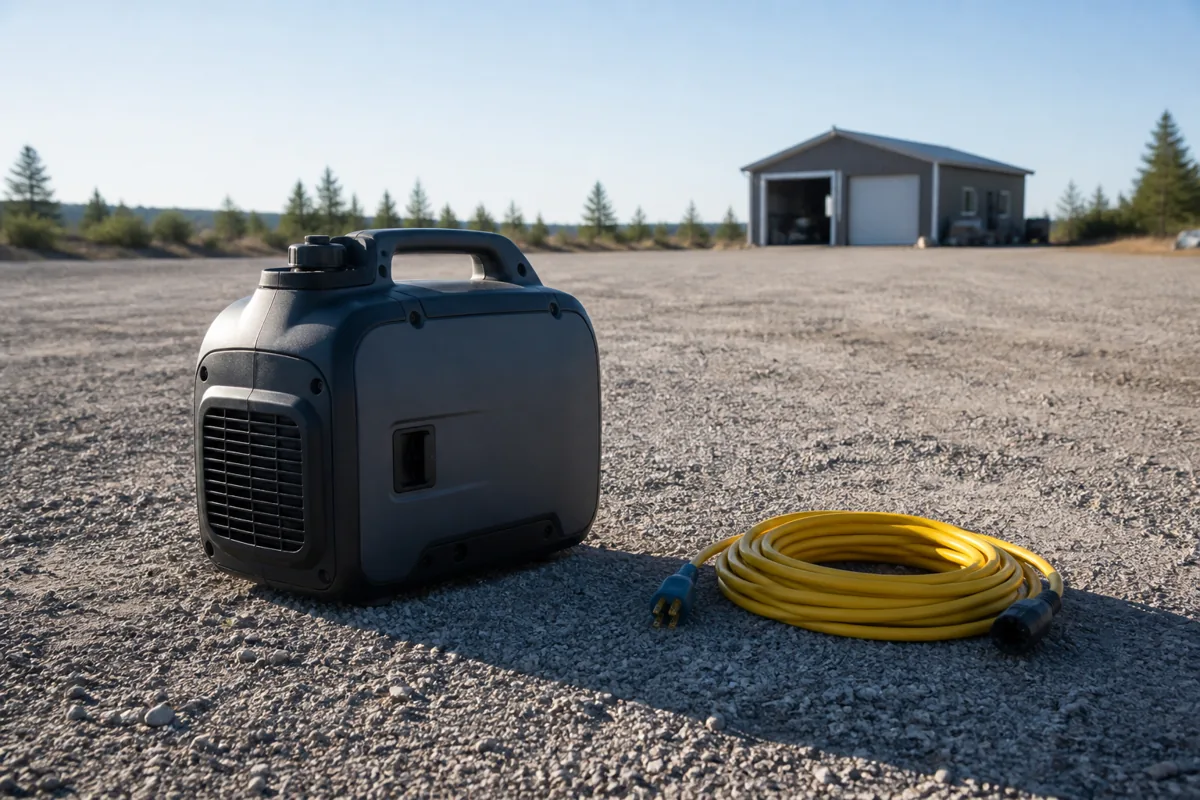
Contractor Inverter Generators (3,000-4,500W)
This is the sweet spot for remodelers and trim crews. You get clean power for chargers and lasers, tolerable noise in occupied homes, and enough surge to start a 10-inch table saw if nothing else is running. Prioritize models with built-in GFCI outlets, a fuel gauge, and a genuine 30-amp outlet rather than four 20-amp duplexes.
Fuel Type, Runtime, and Cold Starts
The criterion: runtime at 50 percent load, not at 25 percent. Manufacturers quote the flattering number. A unit advertising 12 hours may deliver six or seven under real jobsite load, which decides whether you refuel once or twice a day.
Gasoline is the default: cheapest to buy, widest availability, worst storage life. Ethanol-blended fuel degrades in as little as 30 to 90 days and gums carburetors, which is the single most common reason a jobsite generator will not start in spring. Use fuel stabilizer, run the carb dry before storage, or buy ethanol-free.
Dual fuel (gas plus propane) is worth the premium if the machine sits between jobs. Propane stores indefinitely, starts clean, and burns without varnishing anything, at the cost of roughly 10 percent lower output on LP. Tri-fuel adds natural gas, which is mostly a standby feature.
Diesel makes sense only at the high end, on towable units, or where you already run diesel equipment and want one fuel on the trailer.
On electric start: it is a genuine productivity feature in cold weather, but the battery is the failure point. If a unit has electric start, confirm it also has a functional recoil backup.
- ✔ Dual fuel eliminates stale-gas no-starts after seasonal downtime
- ✔ Propane runs cleaner and extends service intervals
- ✔ One fuel type can be shared with heaters and torches
- ✔ Runs are quieter and smoother on LP for most engines
- ✘ Roughly 10 percent power loss when running on propane
- ✘ Tanks are bulky and add weight to the trailer load
- ✘ Cold weather reduces propane vapor pressure and output
- ✘ Higher purchase price than gas-only equivalents
Outlets, Cords, and Voltage Drop
The criterion: the receptacle configuration has to match how you actually distribute power. Six 20-amp duplex outlets sound generous but each is still limited by its own breaker, and daisy-chained cords are where jobsite power goes to die.
For most carpentry crews the single most useful outlet is a NEMA L14-30 or 14-50 feeding a temp power distribution box, so one heavy cord leaves the generator and the splitting happens near the work. That also solves voltage drop, which is the quiet killer of tool performance: long runs of 16-gauge cord starve a saw, the motor draws more current, and it runs hot. Use 12-gauge for runs to about 100 feet at 15 amps, 10-gauge beyond that, and keep cords uncoiled.
Also check the NEMA enclosure rating on outlet covers and whether the panel is recessed. Open-face receptacles on a wet slab are a bad combination.
Open Frame Jobsite Generators (6,500-9,500W)
When multiple trades share power, buy watts and durability instead of quiet. Look for a full roll cage, a 120/240V twist-lock outlet, GFCI-protected 120V receptacles, never-flat wheels, and a low-oil shutdown. Cast iron cylinder sleeves and an accessible oil drain matter more than any spec on the marketing sheet.
Durability Details Worth Paying For
The criterion: serviceability. A generator lives outdoors, gets rained on, and rides in a trailer with lumber. Judge the frame, not the engine badge.
Things that predict a long life: a full tubular roll cage rather than a plastic shroud, rubber isolation mounts under the engine, an oil drain you can reach without tipping the machine, low-oil shutdown, a spin-on or easily accessible air filter, and a locking fuel cap. Never-flat or solid wheels are worth the upcharge because pneumatic tires deflate in storage.
Warranty length is a proxy for the manufacturer’s own confidence. Commercial-duty units commonly carry two to three years with a distinct commercial-use clause; check that clause, because some residential warranties are void the moment the unit earns money.
Finally, verify parts availability. Carburetors, AVRs, and recoil assemblies are consumables on hard-used machines. A brand with dealer support beats an unfamiliar import with better specs.
Jobsite Generator Buying Guide FAQ
Can a 2,000-watt inverter run a 10-inch table saw? Usually not reliably. A 15-amp saw pulls around 1,800 running watts and surges well past 3,000 on startup, especially under a blade already in contact with stock. A 2,000-watt unit will handle a miter saw, a router, or a track saw one at a time, but a full-size table saw wants 3,000 watts or more, or two inverters paralleled.
Do I need GFCI on the generator itself if my cords have it? OSHA requires GFCI protection on the 125V receptacle outlets used by employees, and a GFCI cord set or inline unit satisfies that. Built-in GFCI outlets are simply harder to lose, borrow, or forget. Test whichever you use at the start of every shift.
Is an open-frame generator safe for laser levels and battery chargers? Modern chargers and lasers use switching power supplies that tolerate more distortion than older electronics, so most survive fine. Even so, if you rely on rotary lasers, laptops, or measurement gear on site, a low-THD inverter or a good line conditioner is cheap insurance compared to replacing the instrument.
Matching the Machine to the Work
Buy for the load you actually run, confirm GFCI compliance before the first inspection, and pick inverter or open frame based on whether quiet or watts-per-dollar matters more on your sites. Everything else is refinement.
One-man trim shop: 2,200-3,000 watt inverter. Remodel crew: 3,500-4,500 watt inverter or a compact open frame with 120/240V. Framing and exterior work: 7,000-9,000 watt open frame feeding a temp distribution box. Compare current configurations and features side by side before committing, since outlet packages and GFCI equipment change between model years.
Check prices on Amazon →