Our Top Picks
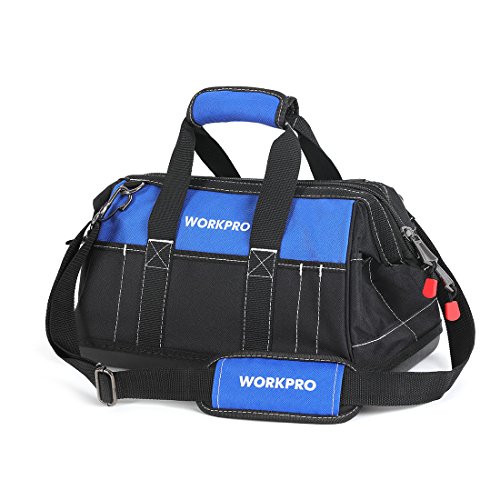 WORKPRO 16-inch Wide Mouth Tool Bag with Water-Proof16 Inch15.7 x 8.7 x 9.8 Inches0.8 PoundsCheck on Amazon


What's inside
As an Amazon Associate I earn from qualifying purchases. This post may contain affiliate links at no extra cost to you.
Most tool bags fail in the same two places: the bottom seam and the top zipper. Everything else on the tag is marketing. If you are shopping for the best tool bag for contractors, the question is not how many pockets it has, it is whether the base can sit in wet gravel loaded with 40 pounds of hand tools and still be intact next spring. A carpenter who moves a bag six times a day puts more cycles on it in one month than a homeowner does in ten years.
This is a catalogue-style breakdown by construction type, not a ranking. Each section leads with the single criterion that separates a bag worth buying from one that will be in the dumpster by the second remodel. Prices shift constantly across Amazon, Home Depot and Lowe’s, so treat any figure you see as a moving target and shop by category instead.
As an Amazon Associate we earn from qualifying purchases at no extra cost to you.


Sections
Quick comparison: contractor bag styles
The style you pick should follow how you carry tools to the work, not how the bag looks on the shelf.
| Style | Best for | Watch out for |
|---|---|---|
| Open-top carpenter tote | Fast access, framing and trim, tools you grab constantly | No weather protection, tools tip out in a truck bed |
| Zip-top tech bag | Service trades, electrical, HVAC, mixed hand tools | Zipper is the first failure point, check gauge and pull |
| Rolling tool bag | Heavy loads, long walks from parking to unit, commercial sites | Wheels and telescoping handle steal interior volume |
| Backpack | Ladders, scaffolds, attics, service calls where hands must be free | Poor visibility of contents, back panel sweat |
| Molded-base bucket or open tote | Wet and muddy sites, concrete and mud work | Heavier empty weight than fabric bases |
Criterion one: the base decides the lifespan
Separating good from bad starts at the bottom panel. Fabric bases with a stitched perimeter seam wick water and abrade through on concrete. What you want is a molded thermoplastic or hard rubber base that wraps up the sidewall by at least an inch, so the wear surface is plastic and not thread. Brands describe this as a molded base, hard base or rigid base. Set the bag on the store floor and press down in the center. If the base flexes and the sides fold inward, it will slump under load and your tools will pile in a wedge at one end.
Second in line is the fabric itself, and here there is a real spec to read. Denier measures yarn weight in the fabric, so a 1680D or 1800D ballistic polyester body is meaningfully tougher than the 600D fabric on discount bags. Anything under roughly 1000D on a contractor bag is a consumer bag with a pro label. Also check whether the stress points are bar tacked or riveted rather than simply sewn, and whether the thread is a bonded polyester rather than cotton wrapped.
Molded-base contractor tool bag
Filter for a molded or hard base plus 1680D or heavier fabric, then compare capacity. This combination is the single best predictor of a bag that survives multiple years of daily job site use, and it is available across most of the pro brand lines rather than being a premium feature.
Criterion two: honest load rating and carry hardware
A loaded contractor bag is commonly 30 to 60 pounds. Very few fabric bags publish a rated load, which is exactly why the hardware matters. Look for a shoulder strap anchored to a steel D-ring or a webbing loop that passes through the sidewall and is bar tacked, not a plastic clip riveted to the fabric face. The strap webbing itself should be at least two inches wide with a nonslip pad, because a one-inch strap under 50 pounds will cut into your trapezius on a long walk.
Handles are where you can spot a serious bag quickly. The best designs run the handle webbing down the full height of the bag and under the base so the load path goes through webbing rather than through stitched fabric. If the handles are stitched only to the top rim, the top rim is your weak link. On rolling bags, ask about the wheel diameter and material. Small hard plastic wheels stall on gravel and grout debris, while larger rubberized or tread wheels roll over cords and thresholds. Telescoping handles should have no rattle when extended.
Zippers are worth naming directly. Look for a heavy coil or molded tooth zipper with a metal pull, a storm flap over the track, and reverse coil orientation if the bag is meant to shed water. A zipper that binds on a mostly empty bag will fail entirely on a full one.
Criterion three: layout that matches the trade
Pocket count is a bad metric. Usable geometry is the right one. Carpenters need a long open channel for a framing square, a level or a cat’s paw, plus deep exterior sleeves for a hammer and chisels. Electricians want many narrow vertical pockets sized for drivers, pliers and testers, ideally with elastic retention so tools stay upright when the bag tips. HVAC and plumbing techs need a large center cavity for a torch, gauges or a press tool, with fewer but larger pockets.
Three details separate thoughtful layouts from decorative ones. First, interior pocket walls should be tall enough that a screwdriver does not fall over and drift into the main cavity. Second, exterior pockets should be sewn to the frame rather than the outer face so a loaded pocket does not pull the sidewall out of shape. Third, look for a hard divider or an internal rib panel if you plan to carry a cordless drill and impact together, because unrestrained tool bodies chew through interior liners fast.
If you are running a system of batteries and drivers rather than hand tools, consider whether a modular stacking box setup serves you better than a bag. Platform systems such as Milwaukee Packout, DeWalt ToughSystem and Makita’s stacking cases interlock with each other, and most of them offer a fabric tote or zip bag that clicks into the same base. Mixing a bag into a platform you already own is usually a better long-term decision than buying an orphan bag.
Rolling tool bag for long carries
Worth it if you routinely walk more than a hundred feet from the truck or work multi-unit commercial sites. Prioritize wheel diameter and a handle with minimal play, and accept that the wheel housing will cost you interior space. Not the right pick for anyone climbing stairs or ladders all day.
Tradeoffs to accept before you buy
- ✔ Molded bases and heavy denier fabric routinely give multiple years of daily service
- ✔ Open totes give the fastest tool access of any format
- ✔ Platform-compatible bags integrate with stacking box systems you may already own
- ✔ Backpacks free both hands for ladder and attic work
- ✘ Heavy-duty construction adds meaningful empty weight before a single tool goes in
- ✘ Zippers remain the most common failure point on any closed bag
- ✘ Rolling bags lose interior volume to the wheels and handle assembly
- ✘ More pockets often means less usable main cavity, not more capacity
Water resistance, safety and warranty
Very few tool bags are truly waterproof, and none of the fabric ones should be treated as such. What you can reasonably expect is a water-resistant coated fabric, a molded base that will not wick, and a storm flap over the zipper. If tools must stay dry, a sealed hard case with a gasket is the honest answer, and some are rated to an IP standard or advertised as watertight. Read that claim carefully, since a gasket rating applies to the case body and not to a bag hanging off the side.
Two more checks belong on your list. High-visibility trim or reflective piping is genuinely useful on roadside and low-light sites where ANSI/ISEA 107 high-visibility apparel is already required, since a bag left on the ground is a trip hazard. And check the warranty language before you pay a premium. Several pro tool lines cover storage products under a limited lifetime warranty against defects in material and workmanship, which is a real value on a bag you intend to abuse. Wear from normal use is typically excluded, so keep your receipt and expect to argue about the difference.
Zip-top tech bag for service trades
The right pick if you drive between calls and need tools to stay put in a van. Buy on zipper quality and vertical pocket count rather than headline capacity, and choose a size that fits your actual daily kit instead of your full tool inventory.
FAQ: best tool bag for contractors
What size tool bag should a contractor buy? Most trades are served by something in the 14 to 18 inch range, which holds a daily hand tool kit plus one or two cordless tools without becoming too heavy to carry one-handed. Bags in the 20 inch and larger class are better as truck storage than as carry bags, because a fully loaded one gets awkward fast. Buy for your daily kit, not your whole collection.
Is a tool backpack better than a tool bag? It depends entirely on vertical work. If you spend real time on ladders, scaffolds or in attics and crawl spaces, a backpack is clearly better because it keeps both hands free and keeps the load close to your body. If you work at ground level and grab tools constantly, an open tote or zip-top bag is faster since you can see everything at once.
Are expensive tool bags actually worth the money? The premium buys you a molded base, heavier denier fabric, better zippers, reinforced load paths and usually a stronger warranty, and those are the specific things that fail on cheap bags. What the premium does not reliably buy is a smarter layout for your trade. A mid-priced bag with the right pocket geometry often beats a costlier bag designed for a different trade.
Shop the base and the fabric weight first, confirm the strap and handle load path, then pick the layout that matches your trade. That order will get you a bag you replace on your own schedule rather than on the job site’s.
Check prices on Amazon →