What's inside
As an Amazon Associate I earn from qualifying purchases. This post may contain affiliate links at no extra cost to you.
An open tool tote and a zipped site bag solve different problems. A tote puts tools within reach while you move around a bench or room. A zipped bag keeps dust, rain and loose contents contained during travel and storage. For daily carpentry, the better choice depends less on capacity than on where the kit spends its working hours.
As an Amazon Associate we earn from qualifying purchases at no extra cost to you.

Sections
Our Top Picks

Quick answer
Choose an open tote if you work from a stable indoor setup, carry a compact selection of hand tools, and want to see and grab each item quickly. Choose a zipped site bag if you travel between jobs, carry tools in a van or on public transport, or need to keep grit and moisture off precision tools. If you do both, a small open tote inside a larger zipped bag is often more practical than asking one bag to do everything.
What daily use demands
A carpenter’s hand-tool kit can mix heavy, sharp and delicate items: chisels, a block plane, a marking knife, pencils, a tape, a combination square and a small level. They do not all benefit from being loose in one compartment. A chisel edge can knock against a plane sole; a pencil can end up under the sawdust; a square can bend if the bag gets crushed.
Think about your routine. If you set up beside a workbench and return to the same tools all day, open access saves repeated unzipping. If you pack up at the end of every shift, walk across a muddy site or leave the bag in a vehicle, closure and protection matter more. A bag carried up ladders also needs a secure closure: an open tote can spill when tilted, and a long chisel can catch on the rim.
Open tote vs. zipped bag
| Consideration | Open tool tote | Zipped site bag |
|---|---|---|
| Access | Fast; contents stay visible | Slower; open and close the bag |
| Dust and rain | Exposed to debris and splashes | Better containment, but not necessarily waterproof |
| Organization | Good with separate pockets or tool rolls | Good with internal pockets; loose tools can still pile up |
| Transport | Can spill when tipped or carried awkwardly | More secure for vehicles and travel |
| Best fit | Bench work and frequent tool changes | Daily commuting and changing job sites |
When an open tote works better
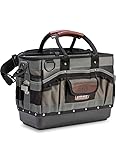
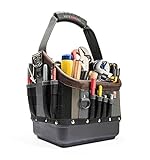
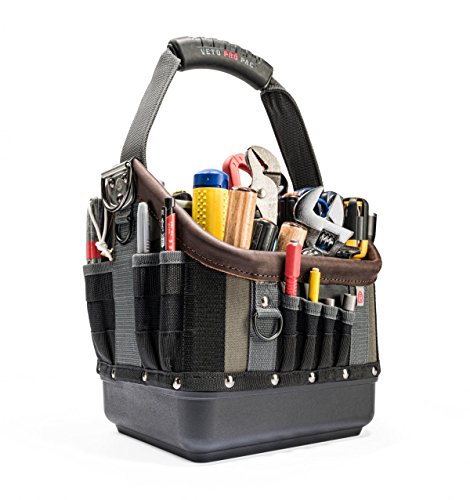
A tote is useful when you can park it near the work and keep it upright. Wide openings make it easy to spot a marking gauge or grab the right chisel without unloading half the kit. Exterior pockets can separate pencils, a tape and small layout tools from heavier items. For a modest indoor kit, a carpentry tool tote is often the simpler and cheaper option.
Its weakness is exposure. Fine sawdust can settle on plane beds and in chisel handles; damp conditions can start rust on unprotected steel. Keep edged tools in a roll or individual sheaths, and wipe them before storage. Don’t use an open tote as a step, overload the handles, or carry it with tall tools sticking above the rim if you need to squeeze through doorways. Check the base and stitching periodically: a failure under a heavy kit can dump sharp tools onto the floor.
When a zipped bag earns its space
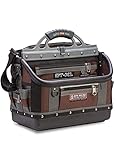
A zipped bag is a better travel container when tools ride in a van with other kit, or when you move between indoor and outdoor work. The closure keeps small items from bouncing out and reduces the amount of site dust that reaches your tools. A zipped tool bag can also be easier to stack than an open tote, depending on its shape.
Do not assume “zipped” means waterproof. Many fabric bags resist light splashes but allow water through seams or a wet zipper. Keep a plane and chisels in a separate wrap if the bag may sit on a damp floor. A full-length zipper can snag on a crowded compartment, and forcing it over a handle or blade can damage the teeth. Before buying, check whether the opening is wide enough to lift tools out without scraping them against the zipper track.
Fit the bag to the tools
Capacity figures are not a reliable guide to whether a bag suits a hand-tool kit. Lay out the tools you actually carry and measure the longest item. Allow room for a plane or square without forcing it diagonally into a narrow opening. Then check for separate pockets or add a tool roll so chisels cannot strike one another. A stiff bottom is useful for heavier tools, while a very deep compartment can bury small marking tools.
For a tool belt, carry only what the task needs: commonly a tape, pencil, knife and a few fasteners or marking tools. A belt is not a substitute for a tote or bag; loading it with a plane, multiple chisels and a square gets tiring and can make sharp tools harder to control. If you work from a belt often, look for a carpenter’s tool belt with separate pouches sized for the items you use, rather than one deep pocket that mixes everything together.
A sensible buying choice
For a fixed workshop or clean indoor renovation, start with the cheaper open tote if it holds your essentials securely and has useful pockets. There is little benefit in paying for a large enclosed bag that stays open beside the bench all day. Add a simple tool roll for chisels and a sleeve for a plane rather than buying a more expensive bag just for padding.
For a daily commute or changing sites, prioritize a secure closure, a sturdy base, comfortable handles and an opening that clears your longest tool. A zipped bag costs more than a basic tote, but the added protection and containment may save time and prevent damage. If you need quick access on site as well as protected transport, carry a small tote inside the zipped bag and transfer only the day’s tools. That adds one item to pack, but avoids the common compromise of an open carrier that spills or a closed bag that stays inconveniently shut.