What's inside
As an Amazon Associate I earn from qualifying purchases. This post may contain affiliate links at no extra cost to you.
Sections
Our Top Picks
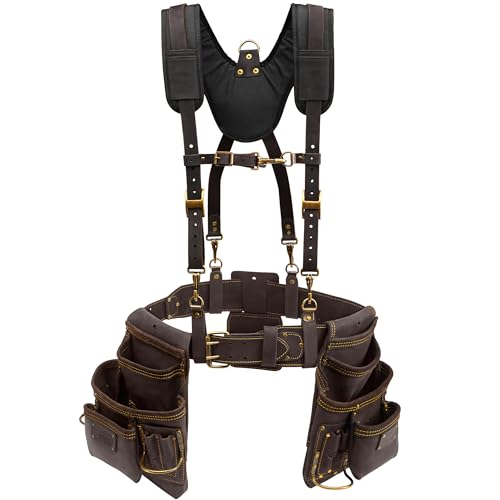
 Carhartt Station Tool Belt Suspender Carhartt BrownOne Size22.44 x 22.44 x 1.18 inchesCheck on Amazon
 MELOTOUGH Tool Belt Suspenders Construction Bag Suspenders HeavyTool Belt Suspenders1.3 poundsCheck on Amazon

Why suspenders matter with a loaded tool belt
A carpenter’s belt can get uncomfortable well before it is full. A hammer, tape, square, fasteners and a few hand tools can put several pounds on your hips; add a pry bar, chisels or a hand plane and the belt may sag or press into your lower back. Suspenders transfer some of that weight to your shoulders and help keep the belt from sliding down when you bend or reach.
They are not a cure for an overloaded belt. If your pouches swing, tools jab your ribs, or the belt pulls hard on one side, first move heavy tools closer to your hips and remove tools you do not need for the task. Suspenders work best when the belt already fits and its load is balanced.
As an Amazon Associate we earn from qualifying purchases at no extra cost to you.


What to look for when buying
For a regular carpenter’s belt, look for wide, adjustable straps, sturdy stitching and attachment points that match your belt. Straps around 2 inches wide spread pressure better than narrow elastic, especially during a long day. Elastic panels can make bending more comfortable, but too much stretch lets a heavy belt bounce. A mix of elastic and less-stretchy webbing is a practical compromise.
Check how the suspenders attach before ordering. Clips are easy to move between belts, but can slip off a thin or smooth belt edge. Leather tabs or loops threaded through belt slots are more secure, but only work if your belt has compatible slots and may take longer to install. Some suspenders require a particular belt system. Do not assume that a clip will fit every padded belt or that belt loops will line up with your pouch layout.
If you carry sharp chisels, marking knives or a plane, make sure the straps do not interfere with their sheaths or make you twist to reach them. Suspenders should stabilize the belt, not block access to the tools you use most.
Suspender styles compared
| Style | Best for | Trade-off |
|---|---|---|
| Clip-on | Occasional use or switching between belts | Quick to attach, but clips may slip or damage a belt edge |
| Loop or tab attachment | A belt with compatible slots or attachment points | More secure connection, but less convenient to move |
| Wide padded straps | Heavy loads and long shifts | More shoulder comfort, but extra bulk under a jacket or harness |
| Light elastic straps | Moderate loads and frequent bending | Flexible and simple, but can stretch and let a heavy belt bounce |
For most people carrying a full carpenter’s belt, a wide, adjustable set designed for tool belts is the sensible starting point. Compare wide tool-belt suspenders by attachment style, strap width and whether they include a back connector. A rear connector can keep shoulder straps from sliding outward, but it is not essential if the straps stay put without one.
Fit and setup that prevent sagging
Fit the belt before adjusting the suspenders. Put on the belt at the height where you actually work, tighten it so it sits securely without cutting into your waist, then load your usual tools. Adjust the shoulder straps until they support the belt without pulling it upward. If the belt rises when you stand straight or hangs loosely when you bend, readjust rather than tightening the belt until it pinches.
Keep heavy items balanced left to right. A hammer and fasteners on one side, for example, can make the belt rotate even with suspenders attached. Position the belt’s front attachments far enough apart to support its load; attachments clustered in the middle can allow the sides to droop. After adjustment, squat, reach overhead and bend forward. Check that the belt stays stable and that tools remain secure.
When wearing a tool pouch over a jacket, leave enough room for the shoulder straps to lie flat. Twisted straps and hard buckles under a pack or harness can create pressure points. If you work in hot weather, breathable webbing and washable padding matter more than thick cushioning that traps sweat.
Common problems and when cheaper is fine
Cheap suspenders can be adequate for a light belt used occasionally. If you carry only a tape, pencil, hammer and a small fastener pouch, basic adjustable straps may do the job. Pay attention to stitching and hardware: loose seams, bent clips and adjusters that creep during wear are reasons to return a set, not minor annoyances.
For heavier daily use, flimsy elastic is a common failure point. It may stretch enough that the belt bounces while climbing or kneeling, and narrow straps can dig into your shoulders. A weak clip can also release when you lean over, dropping the belt or pulling a pouch sideways. Check the attachment points after the first few shifts, particularly if the belt is heavily loaded.
Suspender attachments are not a substitute for a belt that fits. If the belt still slides, inspect its size, buckle and condition. Worn leather may stretch; a belt with poorly placed or overloaded pouches may twist. Repositioning tools, choosing a compatible attachment system or replacing a worn belt may solve the problem better than buying more elaborate suspenders. If you want a coordinated setup, compare loop-attachment tool-belt suspenders with your belt’s actual slots before buying.
A practical buying choice
Choose clip-on suspenders if you want one set to move between compatible belts and your load is moderate. Choose loops or tabs when the belt has matching attachment points and security matters more than quick removal. For a heavy belt worn most days, prioritize wide straps, durable stitching and low-stretch support over extra pockets or complicated adjustment hardware.
Before relying on a new set on a ladder or scaffold, wear it at ground level with your normal tools. Make sure clips stay engaged, the belt does not swing, and you can still reach your tape, square and marking tools without fighting the straps. The right pair should make a loaded belt feel more stable—not encourage you to carry more than the job requires.