Our Top Picks
 Amazon Basics 42-Piece Impact Screwdriver Bit Set withOne Size5.9 x 3.75 x 1.6 inches0.84 poundsCheck on Amazon
 DYRECELVE 12-Pack Square Drive Bit SetSQ0, SQ1, SQ2, SQ3, SQ43.94 x 2.76 x 0.66 Inches0.35 poundsCheck on Amazon
 DEWALT 18 pc. Compact Magnetic Drive Guide SetOne Size5.7 x 3.9 x 0.8 inches0.35 PoundsCheck on Amazon


What's inside
As an Amazon Associate I earn from qualifying purchases. This post may contain affiliate links at no extra cost to you.
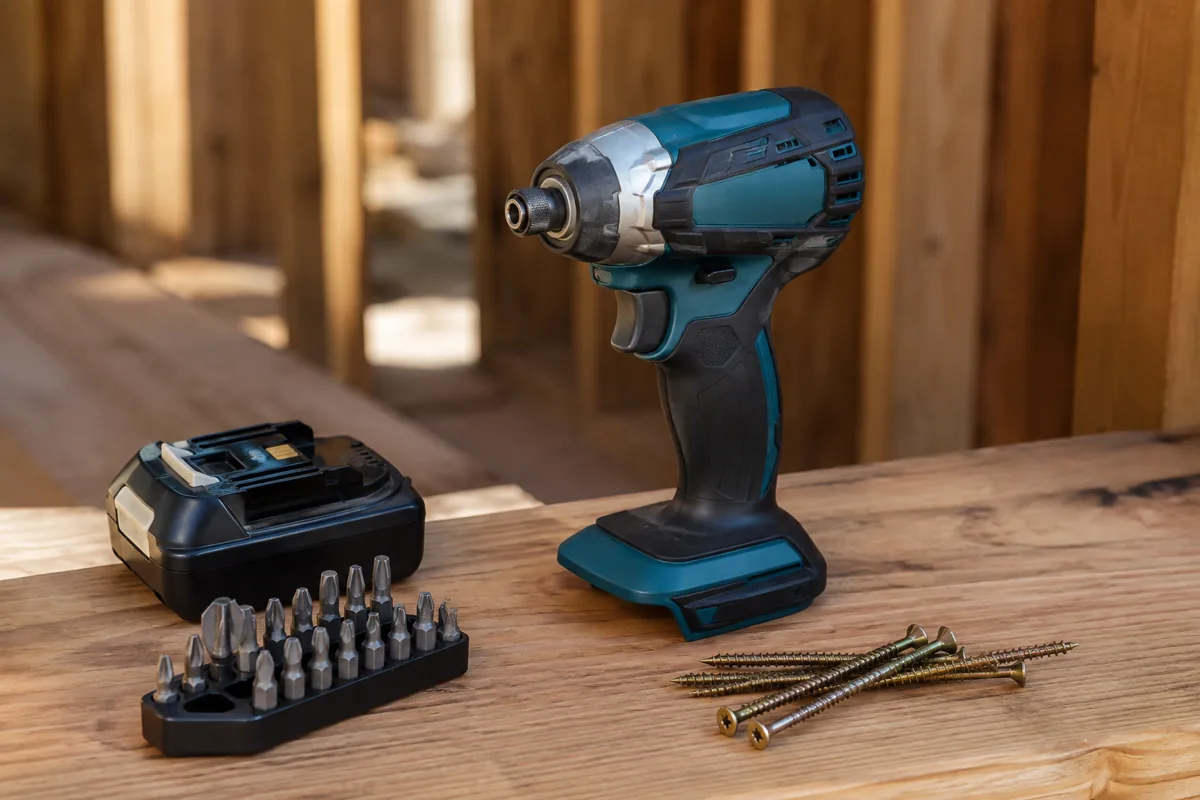
Most bits do not wear out. They snap. You put a 1/4 inch hex driver bit in a modern brushless impact driver, lean into a structural screw, and the tip either shears at the shank or the Phillips point rounds over in a dozen fasteners. That is not bad luck, and it is usually not the driver either. It is a bit that was designed for a drill and sold to someone using an impact tool. Finding the best impact driver bit set is mostly about learning to read the handful of specifications that separate a bit engineered for 1,800 impacts per minute from a bit that is just hardened steel with a hex shank.
This guide is organized the way a good tool counter would walk you through it: the criterion first, then what to look for, then who each type of set actually suits. Impact-rated bits are a genuinely different product category from standard insert bits, and the difference is visible in the spec sheet if you know which lines matter.
As an Amazon Associate we earn from qualifying purchases at no extra cost to you.


Sections
The Criterion That Matters Most: Impact Rated Versus Merely Hardened
The single line that separates a good set from a bad one is whether the manufacturer states the bits are impact rated. This is not marketing fluff. Standard insert bits are typically made from S2 tool steel heat treated for maximum hardness, which is exactly what you want for a drill that applies smooth rotational torque. An impact driver does something different: it delivers thousands of short hammer blows per minute, and each blow sends a shock wave down the shank. Very hard steel is brittle steel, and brittle steel fractures under shock loading.
Impact-rated bits solve this by trading a little surface hardness for toughness. Look for language about differential heat treatment, S2 modified or proprietary steel formulations, and above all a torsion zone: a deliberately narrowed, thinner section of the shank behind the tip. That narrow band is designed to flex and absorb the impact energy so it never reaches the tip. It looks like a weak point. It is the opposite.
The other spec worth checking is compliance with ANSI/ASME B107.4, the American standard covering hand driver bits and their dimensional tolerances for Phillips, slotted, hex and square drives. Tip geometry tolerance is what determines how deeply a bit seats in a recess, and how deeply it seats determines whether it cams out. A bit made to loose tolerances will wobble in a fresh Phillips head from the first fastener. Reputable brands state B107.4 conformance or reference the corresponding ISO standard; house brands often say nothing at all.
Marking matters too. Bits sold for use on Torx fasteners should reference the recognized T-size series, and square drive should be labeled by the standard R0 through R3 numbering rather than a vague “square” callout.
| Feature | What to look for | Why it matters | ||||
|---|---|---|---|---|---|---|
| Impact rating | Explicitly stated “ | impact rated” | or “ | impact ready” | Standard bits are heat treated for hardness, not shock resistance | |
| Torsion zone | Visible narrowed section behind the tip | Absorbs impact energy so the tip does not fracture | ||||
| Steel | S2 modified or proprietary tough alloy | Balances surface hardness against brittleness | ||||
| Tip standard | ANSI/ASME B107.4 conformance | Controls tip tolerances, seating depth and cam-out | ||||
| Shank | 1/4 in hex with ball detent groove | Locks into the driver collet instead of creeping out | ||||
| Coating | Black oxide, or a titanium or diamond tip treatment | Corrosion resistance and grip in the fastener recess | ||||
| Case | Injection-molded with labeled, positive-retention slots | A bit you cannot find is a bit you do not own |
Choosing the Best Impact Driver Bit Set for Your Actual Work
The criterion here is fastener variety, not piece count. Marketing leans hard on big numbers, and a 100-piece set often gets there with drill bits, nut setters in sizes you will never touch, and four copies of a Phillips #2. Count the useful line items instead.
For general remodeling and deck work, the honest core is Phillips #1 and #2, square R1 and R2, Torx T15 through T25, and a 1/4 inch and 5/16 inch magnetic nut setter. Everything else is a bonus. Buy that in a small set with multiple duplicates of Phillips #2 and square R2, because those are the two you will destroy.
For cabinet and furniture installation, tip finish and length become the deciding factors. Longer 2 inch and 6 inch power bits reach into face frames and recessed pockets, and a magnetic bit holder with a sliding sleeve lets you start a screw one-handed on a ladder. Pocket-hole joinery is worth calling out specifically: Kreg-style systems use a square R2 drive, and jigs generally require a 6 inch bit to clear the guide.
For electrical and mechanical work, the mix shifts toward slotted, combination Phillips-slotted, hex metric and SAE, and Torx security bits. Insulated ratings do not apply to impact bits, so treat any “electrician’s” impact set as a convenience selection rather than a safety product.
Impact-Rated Driver Bit Set with Torsion Zone
This is the search to start with if you own one impact driver and want one set to cover it. Filter for kits that state impact rating in the title and show a visibly narrowed torsion zone in the product photos. A 30 to 40 piece kit from an established line such as DeWalt, Milwaukee, Makita or Bosch will cover almost all residential fastener types, and replacement bits stay available for years, which is the part cheap sets never deliver.
Length, Holders and the Cam-Out Problem
The criterion for bit length is leverage, not reach. A 1 inch insert bit in a magnetic holder is the shortest, most controllable combination and the least likely to wander, which makes it the right default for repetitive work like subfloor screws or drywall. A 2 inch power bit gives you clearance around obstructions with a modest loss of precision. A 6 inch bit reaches deep, but every inch of shank is extra flex, and flex under impact means the tip walks in the recess. Use long bits when geometry forces you to, not as a default.
Cam-out, the tip climbing out of the recess under load, is the biggest single cause of stripped screws and destroyed bits. Three things reduce it: correct tip size for the fastener, adequate axial pressure, and a tip treatment that increases friction. Diamond-coated and knurled tips grip noticeably better in soft screws, at the cost of slightly chewing the recess. Phillips is designed to cam out by intent, which is why square and Torx have taken over structural fastening in the US. If you can specify the fastener, specifying Torx solves the bit-breakage problem better than any bit purchase will.
- ✔ Torsion zones dramatically reduce tip fracture under impact loads
- ✔ Standardized 1/4 in hex shanks work in every impact driver and most bit holders
- ✔ Small focused sets cost less than the fasteners you will strip without them
- ✔ Impact-rated bits also work fine in a standard drill or driver
- ✘ Piece counts are inflated with sizes most users never need
- ✘ Impact-rated bits are softer at the surface, so tips can wear faster in abrasive work
- ✘ Cheap plastic cases fail long before the bits do
- ✘ No bit compensates for using the wrong tip size on a fastener
Kit Sizes, Cases and What You Are Really Paying For
The criterion for kit size is replacement economics. A 10 to 15 piece set of quality impact bits with duplicates of the sizes you use daily generally outperforms a 60 piece assortment at the same price, because the second half of a big kit is dead weight and the first half is thinner steel. Systems that let you buy individual replacement bits in the same tip standard are worth a premium, since you will replace Phillips #2 several times over the life of the case.
Cases deserve real attention in a catalogue sense. Look for injection-molded cases with individually labeled slots, positive bit retention so the case can be dropped without emptying, and a latch that is riveted or molded rather than a friction tab. Bit holders sold as part of a set should have a proper spring-loaded sleeve; magnet-only holders lose grip once they collect steel swarf. Some manufacturers size their cases to fit their own tool-box ecosystems, which is a genuine convenience if you already own that system and irrelevant if you do not.
On price bands, small quality sets sit in the low tens of dollars, mid-size mixed kits in the twenties to forties, and large contractor assortments run higher. Anything priced far below those bands is nearly always non-impact-rated stock with a hex shank.
Torx and Square Drive Impact Bit Assortment
If most of your fastening is structural wood screws, ledger screws or composite decking, skip the general assortment and buy depth in T20, T25, T30 and R2 instead. Duplicates of the two sizes you use constantly will outlast a broad kit, and you avoid paying for nut setters and metric hex bits you already have elsewhere.
Magnetic Impact Bit Holder and Power Bit Set
A quick-release holder with a sliding magnetic sleeve is the accessory most people underrate. It holds the screw for you, lets you swap tips without reaching for the collet, and keeps short insert bits usable. Look for impact-rated holders specifically, since standard holders can shear at the hex.
Frequently Asked Questions
Can I use regular driver bits in an impact driver? Mechanically yes, and they will work for light fastening. Under real load they fracture at the shank or shoulder because standard bits are heat treated for hardness rather than shock resistance. The risk is not just a wasted bit but a broken fragment left in the fastener. If a project involves structural screws, use impact-rated bits.
Do impact-rated bits work in an ordinary drill? Yes. The torsion zone simply does nothing when the load is smooth rotation, so there is no downside other than cost. Many people buy one impact-rated set and use it across every tool they own, which is a reasonable simplification.
Why does my Phillips #2 keep stripping screw heads? Usually one of three causes: the fastener actually takes a #1 or a square drive rather than a #2, you are not applying enough straight-line pressure, or the tip is already rounded from earlier use. Phillips geometry is designed to cam out under high torque, so check tip condition first and switch to square or Torx fasteners for high-torque applications where you have the choice.
What to Buy
Buy impact rating and tip standards, then buy depth in the three or four sizes you actually drive. Confirm the listing states impact-rated construction, look for the narrowed torsion zone in the photos, prefer sets that reference ANSI/ASME B107.4 tip tolerances, and add a spring-sleeve magnetic holder if your work involves overhead or one-handed fastening. Skip the hundred-piece assortment unless the extra sizes solve a problem you have already run into.
Check prices on Amazon →