Our Top Picks
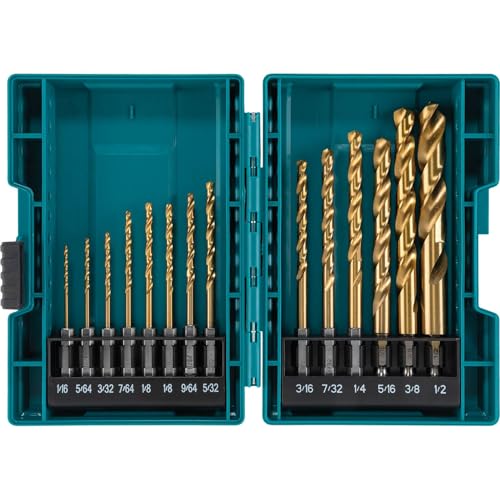 Makita B-65399 Impact Gold 14 Pc. Titanium Drill14-Piece4.9 x 6.3 x 2.1 Inches1.05 PoundsCheck on Amazon

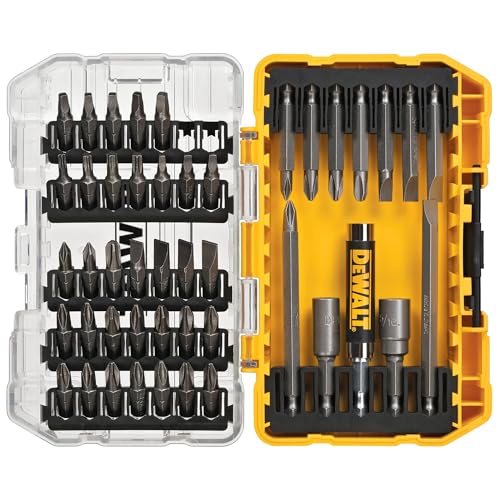

What's inside
As an Amazon Associate I earn from qualifying purchases. This post may contain affiliate links at no extra cost to you.
Most homeowners do not need more drill bits. They need the twenty or so sizes they actually reach for, built well enough to survive a framing stud, a stainless hinge screw, and a masonry anchor without walking off the mark. The best drill bit set for homeowners is almost always a mid-count combination kit, not the 200-piece case where half the count is driver bits and nut setters.
One test separates a good set from a padded one: every bit should have a real job in a house, the shanks should fit the drill you already own, and the case should still latch after a year in a bucket. Here is how the main categories compare.
As an Amazon Associate we earn from qualifying purchases at no extra cost to you.




| Set type | Best for | What to watch |
|---|---|---|
| Titanium-coated HSS combo | General home use in wood, plastic, thin steel | Coating is microns thick, gone after sharpening |
| Black oxide HSS | Budget wood and mild steel drilling | Dulls quickly in stainless |
| Cobalt M35 or M42 | Stainless, cast iron, hardened fasteners | More brittle, higher cost per bit |
| Brad point | Splinter-free holes in lumber and plywood | No use in metal |
| Carbide-tipped masonry | Brick, block, mortar, anchors | Poured concrete needs SDS-plus |
Sections
Start With Size Coverage, Not Piece Count
The criterion that separates a useful kit from shelf filler is usable size coverage. In US homes, fasteners and anchors are specified in fractional inches, so the range that matters runs from about 1/16 in. to 1/2 in. The classic index is a 29-piece fractional set stepping in 64ths, which covers pilot holes for wood screws, clearance holes for bolts, and shank sizes for common plastic and sleeve anchors.
Geometry is standardized in your favor. Jobber-length bits sold here follow ANSI B94.11M, with DIN 338 as the metric equivalent, so a replacement 1/8 in. bit from any reputable brand seats correctly in the index you own. Treat a set as a consumable rack. Small sizes do most of the pilot-hole work and break first, so duplicates of 1/16 in. and 3/32 in. beat a 1/64 in. bit you will never chuck up.
Materials and Coatings, Ranked by What They Do
Here the criterion is the hardness of what you are drilling; coatings only buy heat resistance and lubricity at the cutting edge. Standard high-speed steel, usually M2, is hardened to roughly 62 to 65 HRC and handles wood, plastic, drywall, and mild steel. Black oxide is a surface treatment rather than an alloy, adding mild corrosion resistance and holding a film of oil for a few dollars more.
Titanium nitride is the gold coating on most homeowner kits. It is harder than the steel beneath it and cuts friction, but it is microns thick, so the first resharpening removes it. Cobalt is different in kind: M35 carries about 5 percent cobalt and M42 about 8 percent, alloyed through the whole bit, so hardness survives the heat of stainless, cast iron, and hardened screws. The trade is brittleness and snapped tips when a drill is leaned over at an angle.
The most useful spec on the box is point angle. Conventional bits are ground at 118 degrees and want a center punch. A 135-degree split point self-centers, which is what you need drilling a hinge plate freehand.
Titanium-coated HSS combination set with 135-degree split points
The sensible default for a household kit: one case for wood, plastic, and mild steel, with self-centering tips. Confirm the fractional range reaches 1/2 in.
Picking the Best Drill Bit Set for Homeowners by Job
Wood, Cabinets, and Trim
Twist bits work in lumber, but brad points define a clean hole. The center spur locates the bit while outer spurs sever fibers before the flutes lift them, so plywood veneer does not blow out. Above 1/2 in., move to a spade or auger bit.
Metal and Hardware
Bit material and speed decide this one. Use cobalt, or at minimum a 135-degree split point, with low RPM, steady pressure, and cutting oil. Stainless work-hardens when a bit dwells, so pilot small and step up rather than forcing one large bit through.
Masonry, Brick, and Tile
Carbide is non-negotiable. Round-shank carbide-tipped bits in a hammer drill handle brick, block, and mortar for anchors to about 1/2 in. Poured concrete and deeper holes call for a rotary hammer with an SDS-plus shank, a different tool rather than a different bit. In porcelain or glazed tile, switch hammer mode off and cool the bit with water.
Assembly and Driving
With an impact driver, buy impact-rated bits using the 1/4 in. quick-change hex shank defined by ISO 1173 and DIN 3126 form E 6.3. Those shanks are torsion-relieved so they flex instead of shearing. Round-shank bits belong in a drill/driver chuck.
Cobalt M35 drill bit set for stainless and hardened fasteners
Buy this as a supplement, not a replacement. A small cobalt index in the 1/8 in. to 3/8 in. sizes covers stripped screws, appliance repairs, and stainless railings.
Shanks, Cases, and the Details That Decide Longevity
Fit is the criterion. Most homeowner drills have a 3/8 in. keyless chuck, which caps round shanks at 3/8 in. unless a larger bit has a reduced shank, and honest listings say so. A 1/2 in. chuck opens up spade bits and hole saws. Hex shanks are convenient, but the flats can slip in a worn keyless chuck under real torque.
Cases matter more than buyers expect. Look for molded size markings at each socket instead of a printed label that rubs off, a latch that engages on both sides, and sockets that grip well enough for the case to ride on its side. Metal indexes survive drops, blow-molded plastic is lighter, and either works as long as bits stay put. Keep ANSI Z87.1 eye protection in the same drawer, because bits fail in metal and throw fragments.
- ✔ One case covers wood, plastic, mild steel, and masonry
- ✔ Fractional sizing matches US fasteners and anchors
- ✔ Low cost per bit for occasional use
- ✔ Individual replacement sizes are easy to find
- ✘ Piece counts inflated by driver bits and nut setters
- ✘ Tiny bits snap under hand-drill pressure
- ✘ Coatings disappear at the first sharpening
- ✘ Plastic case latches are usually the first failure
Impact-rated hex shank drill and drive set
Worth owning if your main tool is an impact driver. Quick-change shanks let you swap between pilot bits and drivers without touching a chuck.
Frequently Asked Questions
How many drill bits does a homeowner actually need? A 29-piece fractional twist set from 1/16 in. to 1/2 in., a few brad points for woodwork, four or five carbide masonry sizes matched to your anchors, and a small cobalt index. That covers nearly every household job.
Are titanium bits better than cobalt bits? They solve different problems. Titanium nitride is a thin coating over standard HSS that reduces friction and wears off. Cobalt is alloyed through the bit and holds its edge at higher temperatures, which is why it suits stainless and hardened steel.
Can I use regular drill bits in an impact driver? Only bits with a 1/4 in. hex shank will fit, and standard shanks are not built for impact pulses, so they can shear at the collar. Save round-shank bits for a drill/driver.
Buy for the sizes and materials in your house, check that the shank matches your chuck, and treat bits as consumables. A mid-count combination kit with 135-degree split points, backed by a small cobalt index and the right masonry sizes, beats a bigger case at the same price.
Check prices on Amazon →