What's inside
As an Amazon Associate I earn from qualifying purchases. This post may contain affiliate links at no extra cost to you.
Chamfering an edge on site is a small job, but a block plane can leave a crisp, repeatable bevel without the dust and setup of a powered tool. The right choice depends on how many edges you need to treat, how much control the timber requires, and whether the plane will live in a tool belt or a site box. A sharp, properly adjusted budget plane is often enough; a premium plane mainly buys smoother adjustment, better fit and finish, and less time spent correcting the tool.
As an Amazon Associate we earn from qualifying purchases at no extra cost to you.


Sections
Our Top Picks
 Rockler Bench Dog No. 60-1/2 Low Angle Block60-1/2 Block Plane6.25 x 1.6 x 6.25 inches0 PoundsCheck on Amazon
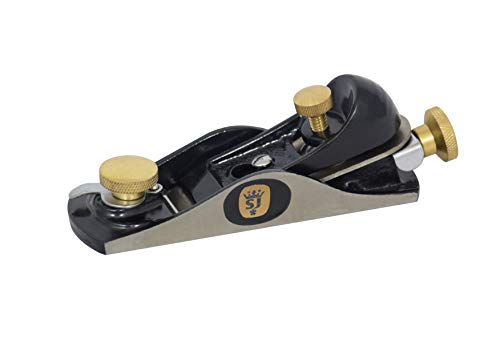 Spear & Jackson CBP95 9 1/2 Carpenters Block9 1/2 In6.89 x 1.77 x 2.76 Inches1.98 poundsCheck on Amazon

Choose by the job
For a handful of exposed edges on a door, shelf, or trim board, a standard low-angle block plane is the most versatile choice. Its compact body is easy to steer, and the low cutting angle handles end grain better than many standard bench planes. A basic low-angle block plane is a sensible starting point if you are willing to sharpen and tune it.
If you chamfer lots of identical edges, a dedicated chamfer plane with a fence can hold a more consistent width. It is less useful for general trimming, though, and a fence can be awkward around corners or irregular stock. For occasional site work, a block plane and a marking gauge or pencil line usually make a more flexible kit.
Block plane options compared
| Type | Best for | Trade-off |
|---|---|---|
| Basic adjustable block plane | Occasional chamfers and general trimming | May need blade sharpening and sole or mouth adjustment before it cuts cleanly |
| Better-finished low-angle block plane | Frequent work, end grain, and finer control | Costs more; does not remove the need to keep the iron sharp |
| Block plane with adjustable mouth | Switching between rougher cuts and fine shavings | More settings to manage; a narrow mouth can clog with thick shavings |
| Dedicated chamfer plane with fence | Repeated bevels of a set width | Less versatile for general site adjustments |
What to look for when buying
Check that the iron adjusts laterally and for depth without excessive play. A blade that shifts when you tighten the cap is frustrating because it can leave one side of the chamfer deeper than the other. The sole should sit flat on a known-straight surface; a visibly rocking plane may need work before it can produce a consistent bevel. On site, also consider the adjustment mechanism: a simple, secure setup is easier to trust when the tool is carried in a box or belt.
An adjustable mouth is useful but not essential. Open it enough to pass a thicker shaving when you are removing material, then close it for a finer cut if the design permits. If the mouth is too tight for the shaving, the plane can clog or start lifting the grain instead of cutting it. A fixed-mouth plane can still chamfer well when its iron is sharp and its cut is kept light.
For a more durable, better-controlled option, compare better-finished low-angle block planes. Pay for one if you use it often or need reliable fine adjustment; for a few edges a year, a cheaper plane that can be sharpened is usually enough.
Set up for an even chamfer
Start by marking the bevel width at both ends of the edge. For a small eased corner, a chamfer around 2–3 mm is often enough; a more visible 5–6 mm bevel may suit heavier trim. The exact size is a design choice, but matching marks at each end prevents the common failure of a bevel that starts narrow and grows wider as you plane.
Set the iron to take a thin shaving, then make a test cut on scrap of the same timber. Keep the sole stable and take strokes along the edge, checking the marks frequently. If the workpiece is long, support it well so it cannot flex or move. A bench hook or clamp is safer than holding a short offcut in one hand while planing with the other.
When the bevel approaches your marks, lighten the cut. Heavy strokes can tear the grain at the far end, especially on knotty softwood or timber with changing grain direction. On end grain, a sharp low-angle plane helps, but short, controlled strokes and a backing block at the exit edge reduce breakout. If the cut still tears, reverse direction and work from the other end, or pare the last sliver with a sharp chisel.
Site care and common mistakes
A plane that worked yesterday may not be ready after sitting in a damp van. Wipe the sole and iron dry, and apply a light protective film if rust is a risk. Check the edge for a nick: a small defect can leave a repeated ridge along every chamfer. Sharpen when the plane starts needing more force or leaves torn, crushed fibres rather than clean shavings. Do not compensate for a dull iron by taking a deeper cut; that increases tear-out and makes the tool harder to control.
Keep the plane in a pouch or wrapped so its iron cannot strike screws, chisels, or loose fixings. If you need to buy a carry solution, a small tool pouch for a block plane helps protect the cutting edge in a site kit. For one-off chamfers, a sharp chisel or sanding block can do the job, but it is harder to keep a long bevel straight and consistent. A block plane earns its space when the finish needs to be clean, repeatable, and quick to touch up.