What's inside
As an Amazon Associate I earn from qualifying purchases. This post may contain affiliate links at no extra cost to you.
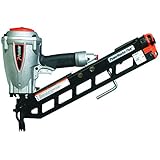
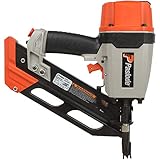
If you frame every day, a Paslode fuel-cell nailer (like the CF325XP) still wins on weight and cold-weather speed; if you nail a few hundred times a month or less, a battery framing nailer saves you the roughly $9–$11 per 1,000 nails you’re spending on gas cells and avoids the burnt-cell waste entirely. That’s the short version of the Paslode framing nailer decision — the rest of this article breaks down why, with real numbers.
As an Amazon Associate we earn from qualifying purchases at no extra cost to you.


Sections
How the Two Powertrains Actually Work
Paslode’s cordless framers burn a measured dose of butane/propane from an orange fuel cell inside a combustion chamber. A small lithium-ion battery only powers the spark, fan, and electronics — the bang comes from the gas. Battery-only framing nailers (Milwaukee M18 FUEL, DeWalt 20V MAX, Metabo HPT MultiVolt) instead use a brushless motor to compress air or spin a flywheel, and the battery does all the work.
That mechanical difference drives everything else: weight, cost per nail, winter behavior, and how much maintenance you’ll actually do.
Head-to-Head Spec Table
| Spec | Paslode CF325XP (fuel cell) | Battery framing nailer class (Milwaukee M18 FUEL / DeWalt DCN692 type) |
|---|---|---|
| Bare tool weight | ~7.4 lb (3.4 kg) | ~9–10 lb (4.1–4.5 kg) with battery |
| Nail capacity | 48 nails per strip, 30° paper tape | ~51 nails, 30° paper tape (DeWalt) or 21° plastic (Milwaukee) |
| Nail length range | 2″–3¼” (50–83 mm) | 2″–3½” (50–90 mm) |
| Rate of fire | ~2–3 nails/sec, near-instant | ~1–2 nails/sec; brief spin-up on flywheel types |
| Shots per battery charge | ~9,000 (battery only runs electronics) | ~400–700 nails per 5.0 Ah pack |
| Shots per fuel cell | ~1,000–1,300 | n/a |
| Consumable cost per ~1,000 nails | $9–$11 (fuel cell) | ~$0.05–$0.15 (electricity) — effectively zero |
| Operating temp floor (rated) | ~14°F (-10°C) with warmed cells | ~0°F (-18°C) depending on pack; no cell to warm |
| Typical tool price | $330–$430 | $300–$450 bare; more with batteries |
Cost Per Nail: the Worked Math
Fuel cells are the hidden line item. At roughly $30 for a twin-pack of cells rated around 1,000–1,300 shots each, you’re paying about a penny per nail on top of the nail itself. A 2,500-nail framing week costs roughly $25 in gas — about $1,200 a year for a full-time framer.
A battery nailer flips that: a 5.0 Ah charge costs a few cents of electricity, but the packs themselves are consumables. Figure a $100+ battery every 2–4 years under heavy daily use — still far cheaper than gas cells. The crossover point sits around 1,500–2,000 nails per month: above that, either system works but fuel gets pricey; below it, fuel cells go stale before you empty them and battery is clearly cheaper.
Cold-Weather Reliability
This is where the comparison gets interesting, because it cuts both ways:
- Fuel-cell nailers lose pressure below ~40°F (4°C). Cells must be kept warm — framers keep them in a jacket pocket and swap frequently. Below 14°F, misfires rise sharply even with warm cells. On the plus side, a fresh warm cell delivers full power instantly, with no battery voltage sag.
- Battery nailers see runtime drop 30–50% near 0°F, and flywheel-type tools can ramp more slowly, but they never fail because a cell is cold — they fail when the pack is dead. A second warm battery fixes the problem completely.
Verdict: battery wins in sustained cold; fuel cells are fine above freezing and actually snappier between 20–40°F than a lagging flywheel.
Maintenance and Ownership Realities
This is the section product listings skip. Fuel combustion leaves carbon deposits in the combustion chamber, cylinder, and exhaust. Paslode’s own schedule calls for cleaning roughly every 10,000–15,000 shots (or when the fan sounds labored and misfires appear):
- Remove the battery and cell, remove the combustion chamber cap and filter.
- Spray the chamber, cylinder, and spark plug area with Paslode’s cleaning solution (or a quality carburetor-free cleaner).
- Re-lubricate the cylinder ring with 4–5 drops of the specified oil — skip this and the o-ring wears early, the single most common cause of weak firing.
- Clean or replace the air filter monthly under jobsite dust.
Battery nailers need none of this — no combustion, no oil, no filter. Their wear points are the driver blade return spring and, on flywheel models, the driver bumper; both are cheap parts swapped in minutes. Common fuel-cell user mistakes: leaving a cell installed so it bleeds dry in storage, using cells past their date code, and shooting clipped-head nails in a full-round-head tool.
Which One for You: Decision Matrix
| Your situation | Best choice | Why |
|---|---|---|
| Professional framer, production pace, mild climate | Paslode fuel cell | Lightest tool, fastest bump-fire rhythm, no ramp-up |
| Pro framer in cold northern states | Battery (with spare warm packs) | No cold-cell misfires below ~20°F |
| Remodeler/contractor, mixed tasks, 1–2 framing jobs a month | Battery | Zero consumables; cells won’t expire sitting in the truck |
| DIYer, occasional shed/deck/fence framing | Battery, sharing a platform you already own | A $100 battery beats buying fuel cells you use twice a year |
| Working off a ladder or overhead all day | Paslode fuel cell | The ~2 lb weight advantage is real by hour six |
| One job with 5,000+ nails scheduled | Either — but a pneumatic hose setup may beat both | A $150 coil of hose and compressor is cheapest per nail at volume |
Practical Tips Either Way
- Buy cells close to their use date. Paslode cells carry a “use by” window of about a year; expired cells are the top cause of “the gun won’t fire” calls.
- Never leave a cell installed overnight in the gun. It can slowly discharge; remove it at day’s end.
- Match the strip angle to your nailer. Paslode 30° paper-tape nails don’t fit 21° or 28° battery tools — check before buying a case.
- For battery tools, bump to a 5.0 Ah+ pack. Smaller packs deliver noticeably weaker drive into engineered lumber like LVL.
FAQ
Can a battery nailer fully replace a Paslode for professional framing?
For most production work, yes — modern brushless battery framers sink 3¼” nails into LVL reliably. You lose some speed in rapid bump-firing and gain about 2 lb; whether that trade hurts depends on your pace and your shoulders.
Are fuel cells refillable or recyclable?
No — they’re single-use and must be fully discharged and disposed of as hazardous waste in many areas. This is another hidden ownership cost versus battery.
Does the Paslode battery die as fast as a battery nailer’s?
No — a Paslode’s lithium pack only runs electronics and lasts roughly 9,000 shots per charge, versus 400–700 nails per charge on a battery-only nailer.
Bottom line: pick the Paslode fuel cell if you’re a working framer who values weight and firing speed and can accept cleaning and cell costs; pick battery if you nail intermittently, work in real cold, or already own a battery platform. The Paslode framing nailer remains the lighter, faster tool — you’re just paying for that performance a penny at a time.