What's inside
As an Amazon Associate I earn from qualifying purchases. This post may contain affiliate links at no extra cost to you.
Sections
Our Top Picks
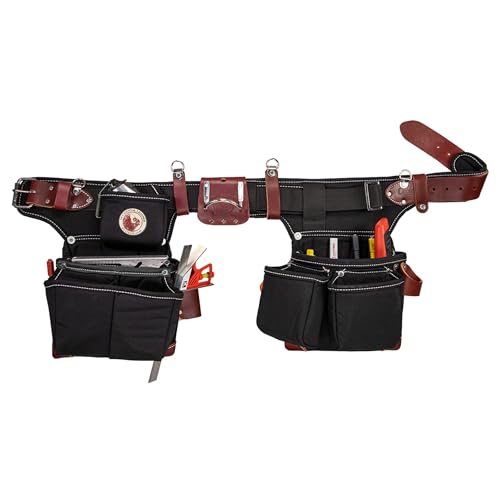 Occidental Leather Adjust-to-Fit OxyLight FramerAdjust-to-Fit – Right Hand14.5 x 14.4 x 4.4 inches4.15 PoundsCheck on Amazon


How durability actually fails on a jobsite
A tool belt doesn’t wear out from age. It wears out from abrasion, load, moisture, and UV. For a carpenter carrying hand tools – chisels, block plane, combination square, tape, utility knife, nail set – that’s roughly 6 to 10 lbs hanging on the belt all day, plus the constant in-and-out of tools, brushing against lumber, and kneeling on concrete or subfloor.
The two materials handle those stresses very differently. Leather fails slowly by drying, cracking, or stretching if you don’t maintain it. Synthetic (nylon, polyester, or poly blends) fails faster at stress points – stitching, rivets, and buckle attachment – but resists weather and needs zero maintenance. Neither is objectively tougher everywhere. The difference is where they break down and how easy they are to keep alive.
As an Amazon Associate we earn from qualifying purchases at no extra cost to you.


Leather: strengths and weaknesses
A good carpenter’s leather belt is made from 8-10 oz top-grain or full-grain leather, usually vegetable-tanned. That thickness is why it holds its shape. Pockets stay open when you reach for a chisel or marking gauge, and the belt doesn’t sag or fold over when you load one side with a hammer and a cat’s paw.
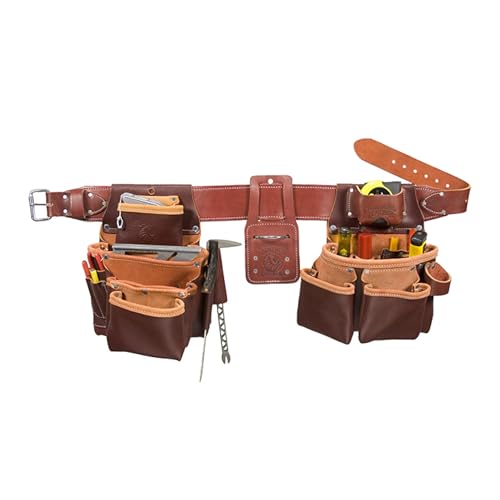
Leather’s main advantage is abrasion resistance and structure. It resists punctures from awls, chisel edges, and utility blades better than any woven fabric. Riveted and double-stitched seams on quality belts will go years before they loosen, and if a stitch does pop, a cobbler can repair it. A well-made leather carpenter tool belt that is cleaned and oiled two or three times a year will easily last 10 to 15 years of daily use. Many framers still use the same Occidental or similar belt they bought a decade ago.
The downsides are weight, break-in, and moisture. Leather is 30 to 40% heavier than a comparable nylon rig – expect 4.5 to 6 lbs empty versus 2.5 to 3.5 lbs for synthetic. It needs 2 to 3 weeks to break in; until then it will be stiff and can cause hip bruising. And leather hates being wet repeatedly. If you work outdoors through rain, leave it in a damp van overnight, or sweat heavily in summer without conditioning, the fibers dry out and crack at the fold points behind the pouches. Once cracked through the grain layer, there is no real fix. Salt from sweat will also darken and stiffen the belt back if you don’t wipe it down.
Maintenance is not complicated but it is required: wipe off sawdust and grit, let it air dry slowly (never on a heater), and apply a light coat of neatsfoot oil or leather balm when it starts to feel dry. Over-oiling is just as bad – it softens the belt too much and it will stretch under load.
Synthetic: strengths and weaknesses
Most synthetic belts are built from 600D to 1680D ballistic nylon or polyester with foam padding and plastic buckles. The fabric itself is excellent against water and mildew. You can leave a synthetic rig in the rain, hose off drywall dust, and put it back on the next morning without thinking about it. For outdoor work, concrete work, or humid sites, that is a real advantage.
Weight and comfort are where synthetic wins outright. The padded belt and suspenders distribute load better for many users, and the whole rig is lighter from the start. There is no break-in. You can adjust the fit with a quick-release buckle instead of punching new holes. Price is also lower – a solid nylon tool belt costs $40 to $90, while a decent leather setup starts around $150 and a full leather pouch + belt + suspenders often runs $250 to $400.
Durability is good, but different. The fabric resists tearing, but the failure modes are stitching pull-out, fraying at pocket edges, and melted or cut fibers from sharp tools. A chisel slipped edge-down into a nylon pouch will slice the weave and start a fray that spreads. Heat is also an issue near torch or grinding work. The plastic buckles and ladder locks are the weakest link in cold weather – they become brittle below freezing and can crack if you drop the belt off a tailgate onto concrete. UV is the other slow killer. Nylon left on a dashboard or in direct sun day after day for two summers will fade and lose tensile strength, even if it looks fine.
Lifespan for a daily-use synthetic belt is typically 3 to 6 years before pouches lose their shape and pockets collapse. You can’t really re-stitch or repair them economically once the fabric frays. You replace them.
Head-to-head comparison
If you carry mostly hand tools and want pouches that stay rigid for one-handed access, leather has the edge. If you prioritize light weight, all-weather use, and low cost, synthetic makes more sense. This table sums up the practical differences after a year or more on site, not just out of the box.
| Factor | Leather | Synthetic (Nylon/Poly) |
|---|---|---|
| Empty weight | 4.5-6.0 lbs | 2.5-3.5 lbs |
| Abrasion / puncture resistance | Excellent; resists blade cuts | Good; cuts and melts easily, then frays |
| Water / sweat resistance | Poor if not maintained; needs drying and oiling | Excellent; dries fast, no conditioning |
| Shape retention | Holds open, easy one-handed holstering | Softens and collapses after 1-2 years |
| UV / heat resistance | Good; darkens but stays strong | UV degrades nylon over 2-3 years; melts with heat |
| Typical lifespan (daily use) | 10-15 years with maintenance | 3-6 years |
| Repair options | Re-stitch, re-rivet, replace hardware | Rarely worth repairing |
| Cost | $150-$400 for belt and pouches | $40-$120 for belt and pouches |
One detail carpenters notice quickly: leather suspenders and belts stretch a little and then settle. Nylon webbing stretches continuously under load, especially when wet, so you will be re-tightening a synthetic rig more often during the day.
Which should you buy for carpentry hand tools
Buy leather if you are on site five or six days a week, carry sharp edge tools, and want a belt that becomes part of your kit for the next decade. The upfront cost is higher, but the cost per year is lower. It is the better choice for shop-adjacent carpentry, finish work, and anyone who values rigid pockets that don’t sag when you pull a 12-inch combination square or a block plane. If you go this route, get a rig with a separate belt and pouches rather than a stitched one-piece – you can replace a worn pouch without scrapping the belt.
Buy synthetic if you work outdoors in all weather, need to keep weight down, or you are outfitting an apprentice or a second rig for rough tasks like demo, formwork, or deck framing. For occasional use, DIY, or if you know you will abuse the belt and replace it anyway, synthetic is the sensible cheaper option. There is no shame in running a $60 nylon setup for two years and tossing it – the labor you save not conditioning leather may matter more.
A common middle ground is a leather pouch set on a padded nylon belt, or adding padded suspenders to a leather belt to spread the load on long days. That hybrid gives you the puncture resistance where tools sit and the comfort where weight sits on your hips and shoulders.
Whatever you choose, fit matters more than material for durability. A belt that is too loose will swing and wear through stitching at the attachment points. It should sit on your hips, not your waist, with the pouches balanced front to back. Load your heaviest tools – hammer, nail puller – on your dominant side and lighter marking tools on the other. And empty the sawdust at the end of the day; grit trapped inside pouches acts like sandpaper on both leather and nylon.