What's inside
As an Amazon Associate I earn from qualifying purchases. This post may contain affiliate links at no extra cost to you.
Sections
Our Top Picks
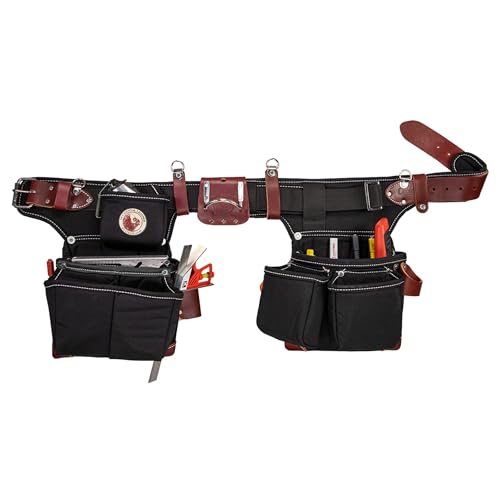 Occidental Leather Adjust-to-Fit OxyLight FramerAdjust-to-Fit – Right Hand14.5 x 14.4 x 4.4 inches4.15 PoundsCheck on Amazon
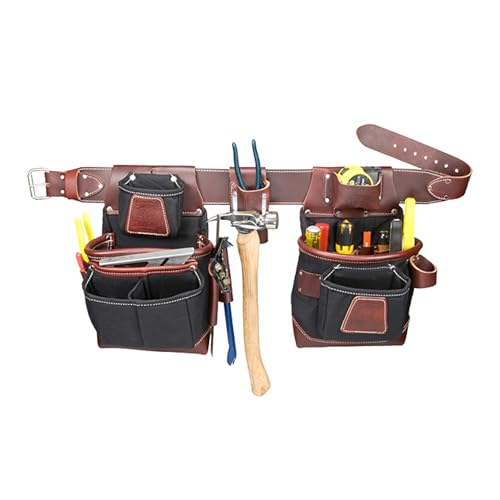
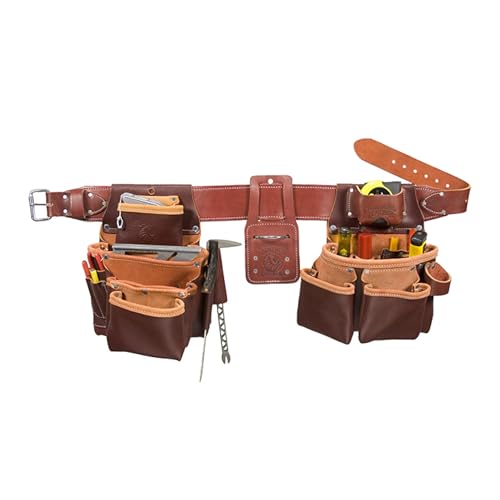
Choosing an All-Day Leather Tool Belt
A leather tool belt earns its keep when it carries the tools you actually use without pulling your trousers down or forcing you to twist for every nail. For carpentry, that usually means a tape measure, pencils, knife, combination square, chisels, fasteners, and perhaps a small block plane or driver. The best setup is not the one with the most pockets. It is the one that keeps weight close to your hips and leaves your dominant hand clear.
Expect a useful leather belt to weigh roughly 3 to 6 pounds empty, depending on the number of bags and suspenders. Add a hammer, tape, four chisels, a square, pencils, knife, and fasteners, and the load can reach 10 to 15 pounds. That is enough to cause hip and lower-back fatigue during a full framing or trim day, especially if everything hangs on one side.
As an Amazon Associate we earn from qualifying purchases at no extra cost to you.


For a general-purpose starting point, compare leather carpenter tool belts with suspenders. Suspenders are not mandatory for a light trim kit, but they make a clear difference once the working load passes about 10 pounds.
What to Look For
Leather and Stitching
Full-grain leather generally handles abrasion and repeated flexing better than thin bonded leather. A 10- to 14-ounce leather belt is a useful range for durability without becoming a rigid board. Thick leather may feel uncomfortable for the first week, but it should soften at the bend points while retaining its shape around the tool pockets.
Inspect the stitching rather than trusting a “heavy duty” label. The pocket mouth, belt loop, hammer holder, and suspender attachment points take the most abuse. Bar-tacked or riveted stress points are preferable to a single line of stitching. Rivets should have smooth heads and backing washers; exposed sharp edges can catch clothing or mark finished work.
Fit and Weight Distribution
Measure your waist where the belt will sit, not at your trouser waistband. Leave room for winter clothing and an undershirt. A belt adjusted near its smallest or largest holes will not distribute weight as well as one sitting near the middle of its range.
A wide belt—about 2-1/2 to 3 inches—is more comfortable than a narrow strap because it spreads pressure across the hips. Suspenders should attach securely and cross between the shoulder blades. They should support some of the load, not tighten the belt until it restricts breathing.
| Use case | Useful setup | Main advantage | Trade-off |
|---|---|---|---|
| Light trim and finish carpentry | Single pouch, belt, hammer loop, small fastener pocket | Low weight and easy movement | Limited space for spare tools |
| General site carpentry | Two pouches, tape clip, knife slot, suspenders | Balanced storage for daily work | More bulk around doorways and ladders |
| Framing and structural work | Heavy double pouch system with suspenders | Holds fasteners and larger tools | Can exceed 15 pounds when fully loaded |
| Furniture and bench work | Small belt pouch or apron with separate tool tote | Keeps sharp tools organized without overloading the hips | Less convenient when moving around a site |
Pocket Layout for Carpentry
Put the tape measure and pencil on your dominant-hand side. A tape should come out without catching on a chisel handle or hammer loop. Keep the combination square, marking knife, and awl in narrow vertical slots where they cannot fall sideways. A deep open pocket is useful for a utility knife or pliers, but it is a poor place for sharp chisels.
Chisels deserve particular attention. Their edges can cut pocket leather, and loose chisels can puncture your leg when climbing or kneeling. Choose a belt with dedicated narrow slots, or use a compact leather chisel roll carried in a site tote. Do not carry a finely sharpened bench chisel edge-down in an open pocket.
Hand planes are usually too large and vulnerable for a tool belt. A small block plane can fit in a broad pouch, but the sole may pick up grit and the plane can bruise finished trim. For better protection, carry it in a separate leather tool tote for carpentry until it is needed.
The Best Belt Types by Job
Double-Pouch Leather Belts
A double-pouch rig is the most practical all-round choice for site carpentry. Keep fasteners on the non-dominant side and measuring and marking tools on the dominant side. This balances the load and reduces repeated reaching across your body. Choose a design with removable bags if possible; you may want a lighter setup for trim work.
Single-Pouch Belts
A single pouch is enough for punch-list work, installing hardware, or carrying a few hand tools between a bench and a job site. It is also the sensible cheaper option for occasional DIY use. A basic leather pouch can last years if it is not overloaded and is stored dry. There is no reason to buy a large suspender rig for a belt that will carry a tape, pencil, knife, and a handful of screws.
Suspenders and Accessories
Buy leather tool belt suspenders when the belt pinches, rotates, or pulls down as you climb. Suspenders are especially useful with a hammer, speed square, and a full fastener load. They are less useful in tight interior spaces, where straps can catch on framing or door hardware.
A tape clip, dedicated pencil slots, and a metal hammer loop are worthwhile. A built-in phone pocket is convenient but should not replace a protected pocket for sharp tools. Avoid loading every accessory: each extra holder adds weight and another snag point.
Break-In, Maintenance, and Failure Signs
Break in a new belt gradually. Load it with your normal tools for short sessions, then flex the belt by hand around the hip area. Do not soak leather to soften it; water can distort pocket openings, loosen finishes, and encourage mildew. A small amount of suitable leather conditioner is enough, applied sparingly so the belt does not become greasy.
Brush out sawdust and grit regularly, particularly around rivets and pocket corners. Grit acts like abrasive paper against both leather and tools. Store the belt hanging or flat in a dry room, away from direct heat.
Replace or repair the belt when holes elongate, stitching separates at a load-bearing seam, rivets pull through, or the leather becomes cracked and hard. A temporary repair may hold a light trim kit, but not a loaded framing rig. If the belt twists so tools fall out when you kneel, the problem is usually poor fit, uneven loading, or a worn pocket—not something to ignore.
A Practical Buying Choice
For most working carpenters, choose a full-grain leather double-pouch belt with a 2-1/2-inch or wider waist strap, reinforced stress points, secure chisel storage, and optional suspenders. Keep the daily load under 12 pounds where possible. For occasional repairs, buy the cheaper single-pouch belt and carry chisels, planes, and spare tools in a separate tote. That arrangement costs less, moves better, and avoids turning a useful belt into a portable toolbox.