What's inside
As an Amazon Associate I earn from qualifying purchases. This post may contain affiliate links at no extra cost to you.
Wet, muddy jobsites punish tool belts. Leather absorbs water, gets heavy, and can stiffen or mildew when it is put away damp. Fabric belts avoid those problems, but not every synthetic belt is suitable for carpentry. Cheap nylon can sag under a hammer and a handful of chisels, while oversized pouches collect mud and sawdust that eventually work into tool pivots and plane mechanisms.
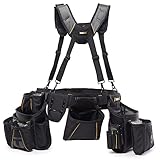
The best choice is a synthetic belt with coated or solution-dyed fabric, reinforced stitching, a supportive waistband, and drainage at the bottom of the pouches. It should also be easy to rinse and quick to dry. For most site carpenters, a modular nylon or polyester belt is a better wet-weather investment than a bargain canvas rig.
As an Amazon Associate we earn from qualifying purchases at no extra cost to you.


Sections
Our Top Picks


What to Look For in a Wet-Weather Tool Belt
Start with the material. 1,000-denier nylon or polyester is a useful target for daily site work, though denier alone does not guarantee quality. A polyurethane-coated fabric sheds rain and mud better than untreated cloth, but coatings can crack after years of folding and abrasion. Solution-dyed synthetic fabric keeps its color and resists fading, but it is not automatically waterproof.
Look closely at the pouch bottoms. Drain holes or mesh panels let water and fine grit escape instead of holding a muddy slurry against your tools. Rivets and bar-tack stitching should reinforce the corners, where a tape measure, utility knife, and chisel handles repeatedly pull on the fabric. Plastic parts are acceptable for dividers and trim, but a belt that relies on thin plastic loops for its main load is a poor choice.
A wide, padded waistband matters more than extra pockets. A 4-inch or wider belt spreads the load across your hips. If you carry 15 to 20 pounds of tools, a narrow belt will dig in and pull the pouches downward. Suspenders are worthwhile once the load approaches 20 pounds, especially when climbing ladders or walking over uneven ground.
The Best Synthetic Belt Types
| Belt type | Best use | Wet-job strengths | Main drawback |
|---|---|---|---|
| Modular nylon belt with removable pouches | General carpentry and changing site tasks | Easy to rinse, repair, and configure | More adjustment and hardware to maintain |
| Polyester or nylon framing rig | Heavy daily loads and structural work | Strong stitching, large capacity, often compatible with suspenders | Bulky and easy to overfill |
| Compact electrician-style pouch system | Trim work, punch lists, and light carpentry | Less fabric to become soaked or muddy | Limited room for planes, larger chisels, and fasteners |
| Low-cost canvas or light nylon belt | Occasional indoor or fair-weather work | Low purchase cost | Slow drying, sagging, weak pocket bottoms |
For a mixed carpentry kit, a modular nylon carpenter tool belt is usually the most flexible option. You can remove a fastener pouch when installing trim, or shift the tape and knife pockets to avoid interference with a hand plane.
Build a Wet-Site Carpentry Loadout
Do not carry every tool simply because the belt has room. A practical wet-weather loadout might include a 25-foot tape, carpenter pencil, marking knife, combination square, utility knife, small pry bar, hammer, two or three commonly used chisels, and a small fastener pouch. Keep a hand plane and less-used layout tools in a waterproof tool bag rather than hanging them from your hips all day.
Chisels are particularly easy to damage in a muddy pouch. Grit can scratch the bevel and jam a fitted wooden handle. Use a synthetic chisel roll or individual tool guards, and keep sharp edges facing inward or covered. A roll is also useful for marking tools, since graphite, grit, and wet timber debris quickly contaminate pencil sharpeners and knife blades.
Hand planes generally do not belong in a belt. Even a small block plane adds uncomfortable weight and can collect abrasive mud around its mouth and sole. Carry it in a rigid case or a dedicated compartment. Wipe the sole and iron dry before storage; a thin film of camellia oil or another suitable rust preventative is sensible when the tool will sit overnight in a damp vehicle.
Fit, Weight, and Movement
Put the belt on over the work trousers you normally wear. Leave enough adjustment for a winter layer, but do not depend on the buckle to compensate for a poor fit. Pouches should sit just below the hip bones, not on the lower back. If they swing when you climb, the belt is either too loose or overloaded.
Keep dense items near the hips and balance the two sides. A hammer, pry bar, and full fastener pouch on one side will twist the belt and make walking tiring. Suspenders help with weight, but they do not correct bad organization. Choose a synthetic carpenter tool belt with suspenders if you routinely carry more than 15 pounds or work from ladders.
Check the belt while kneeling and bending. A wide padded belt that feels comfortable standing may press into your abdomen when you crouch. Likewise, tall rear pouches can catch on scaffolding or a ladder. Compact side pouches are safer for framing and exterior work where you move through tight spaces.
Cleaning and Maintenance After Muddy Work
Empty the belt at the end of every shift. Shake out grit before rinsing, because rubbing wet sand into the fabric accelerates wear. Use clean water and a soft brush; mild dish soap is acceptable for oily residue, but strong solvents can attack coatings and synthetic webbing.
Hang the belt open in moving air. Do not put it in a sealed tool box, vehicle trunk, or plastic tub until it is completely dry. In warm weather, a well-drained synthetic belt may dry in a few hours. Heavy padded belts can take overnight. If it still feels cool or smells musty, it is not dry enough to store.
Inspect the buckle, stitching, rivets, and belt edge every few weeks. Replace a belt when load-bearing stitching is separating, the webbing has been cut, or the buckle slips under body weight. A torn cosmetic pocket is not urgent; a damaged hammer loop or waistband is.
When the Cheaper Option Is Fine
A basic synthetic belt is perfectly adequate for occasional indoor repairs, light trim installation, or a homeowner who carries only a tape, pencil, knife, and hammer. There is no reason to pay for suspenders, molded pockets, or heavy framing capacity for a two-hour punch-list job.
Spend more when the belt will be worn daily in rain, mud, or abrasive construction conditions. The useful upgrades are reinforced load points, a supportive waistband, washable fabric, drainage, and replaceable or movable pouches. Features such as excessive pockets, decorative padding, and oversized fastener bags add weight without protecting chisels or improving layout work.
For a compact setup, look at a compact synthetic carpenter tool pouch. For full-time exterior framing, choose a larger rig only if you will actually use the capacity and pair it with a reliable suspension system.