What's inside
As an Amazon Associate I earn from qualifying purchases. This post may contain affiliate links at no extra cost to you.
Sections
Our Top Picks


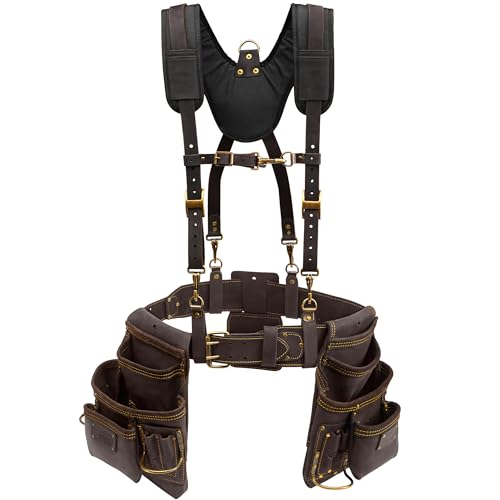
What Wet Work Does to a Tool Belt
A tool belt doesn’t fail because it gets wet once. It fails because it gets wet repeatedly, dries poorly, and carries weight while damp. On a wet site – framing in drizzle, roofing after rain, or interior work with no roof on – your belt will soak through, sit in a damp van overnight, and then get loaded with 3-5 kg of hammer, tape, square, chisels and fasteners the next morning. That cycle is what tests materials.
Three failure modes matter most. First, fiber breakdown: leather rots, canvas rots, and stitching rots if it stays damp. Second, hardware corrosion: rivets, buckles and D-rings rust and stain everything they touch. Third, shape loss: pockets sag, belt holes stretch, and the belt no longer rides where it should. A belt that stretches 25mm when wet will drop your hammer onto your knee all day.
As an Amazon Associate we earn from qualifying purchases at no extra cost to you.


Leather in Wet Conditions: Strong Until It Isn’t
A good leather belt is typically 8-12 oz (3.2 – 4.8mm) bridle or latigo leather, often vegetable-tanned. Dry, it is the most abrasion-resistant and stable option. It holds its shape, doesn’t sag under a 28oz framer, and resists punctures from utility knives and chisel edges far better than any fabric.
Wet changes the math. Leather absorbs 30-50% of its weight in water. When saturated, it loses up to 20-30% of its tensile strength until it dries, stretches around buckle holes, and goes limp. If you let it dry too fast – next to a heater or in direct sun – it stiffens, cracks, and shrinks unevenly. If you leave it damp in a tool bag, it mildews in 24-48 hours and the fibers start to break down from the inside.
The critical difference is leather type and treatment. Cheap chrome-tanned or split leather (often sold as “genuine leather”) falls apart fastest. Oil-tanned and waxed leather resists water far longer because the oils displace water. But no leather is waterproof without maintenance. Expect to clean, dry slowly at room temperature, and re-oil with neatsfoot or leather balm every 2-4 weeks if you work wet regularly. Skip that and a leather belt that should last 8-10 years will start cracking at stress points – belt slots, pouch rivets, hammer loop – in under two wet winters.
For carpentry hand tools, leather has one more advantage: it protects edges. Chisels and marking knives won’t slice through a leather pouch bottom in a month the way they can with canvas. If you carry sharp edge tools daily, that matters more than water resistance.
Canvas and Nylon: Dries Fast, Wears Faster
When people say “canvas” tool belts, they usually mean one of two things: cotton duck canvas (18-24 oz) or 600D-1000D polyester/nylon ballistic fabric. They behave very differently when wet.
Cotton canvas absorbs water almost as badly as leather – up to 25% of its weight – and takes a long time to dry. Untreated cotton will mildew, shrink, and fade. Waxed canvas is better, shedding light rain for a few hours, but the wax wears off with abrasion and needs re-waxing twice a year. Once the coating is gone, you’re back to wet cotton.
Modern nylon tool belts dominate wet sites for a reason. 1000D nylon absorbs less than 5% water by weight, dries in 2-3 hours instead of 12-24, and doesn’t rot or mildew. It also weighs 30-40% less than leather – a full nylon rig is typically 1.1-1.4 kg vs 1.8-2.4 kg for leather – which matters on a 10-hour day. The downside is abrasion and heat. Nylon pouches wear through at corners and where hammer claws rub, and a dropped chisel will puncture 600D nylon immediately. Most makers add leather or plastic reinforcement to pouch bottoms for this exact reason.
Stitching is the hidden failure point on fabric belts. Cotton thread rots in a season if it stays damp. Good nylon belts use bonded nylon thread which doesn’t. Check the stitching before you buy. If you see white cotton-like thread and the tag says “canvas,” assume it will pop first.
Hardware, Stitching and Construction Matter More Than Material
In wet conditions, your rivets will rust before your belt rots. Look for solid brass, nickel-plated, or stainless hardware, not just “plated steel.” On cheap belts, the buckle and the rivets holding the pouches to the belt are the first red rust spots. Once rust starts, it wicks into the fabric or leather and accelerates tearing.
Stitching should be double-needle, bonded nylon, with bar tacks at stress points. Single-line stitching around pouch mouths will unravel when wet and loaded. For leather, rivets should be copper or brass with caps, not aluminum pop rivets.
Belt design also affects drying. A 2-inch wide, single-layer leather belt dries far faster than a 3-inch padded belt with foam sandwiched between layers. That foam acts like a sponge and traps moisture against your back. Similarly, nylon belts with a separate padded liner take 2-3x longer to dry than a single-layer belt. If you work wet every week, simpler and thinner dries better.
Head-to-Head: Durability in Wet Site Conditions
| Feature | Oil-Tanned Leather | Cotton / Waxed Canvas | 1000D Nylon / Polyester |
|---|---|---|---|
| Water absorption | High (30-50% by weight) | High (20-25%), waxed sheds light rain temporarily | Very low (<5%) |
| Dry time (saturated, 18C indoors) | 12-24 hours, must dry slowly | 10-18 hours | 2-4 hours |
| Mildew / rot resistance | Low unless oiled and dried properly | Low, cotton rots | Excellent, will not rot |
| Abrasion / puncture resistance | Excellent | Good | Good abrasion, poor puncture without reinforcement |
| Stretch / sag when wet | Stretches 10-20mm at holes, sags | Sags and shrinks when drying | Almost none |
| Maintenance | Clean, condition, oil every 2-4 weeks in wet use | Re-wax every 6 months, wash and air dry | Rinse, air dry, no conditioning |
| Typical lifespan with weekly wet use | 6-10 years with care, 1-3 years without | 2-4 years | 4-7 years, pouch bottoms wear first |
| Weight (belt + 2 pouches) | 1.8-2.4 kg | 1.3-1.7 kg | 1.1-1.4 kg |
Which Should You Buy for Wet Work?
Choose based on how often you’re actually wet and what you carry.
If you work outdoors through winter, get framed out in the rain, or your belt lives in a damp van, nylon is the practical choice. It tolerates neglect. You can hang it up wet overnight and wear it damp the next day without damaging it. Look for a nylon rig with leather-reinforced pouch bottoms and a separate leather hammer loop. Add suspenders if you carry more than 4 kg – nylon rides lower when wet because it has less friction against clothing than leather.
If you work mostly indoors or under cover, and you carry edge tools daily, leather is still the better long-term investment. A well-made oil-tanned leather belt with brass hardware will outlast two nylon rigs if you maintain it. The key is honesty about maintenance: if you won’t wipe it down and oil it monthly during the wet season, don’t buy it. It will cost twice as much and die sooner.
Waxed cotton canvas sits in the middle and is rarely the best choice for durability. It looks good and is comfortable, but it offers neither the edge protection of leather nor the dry-time of nylon. It’s fine for light site kit or finishing work where you are seldom soaked, but not for daily wet framing.
For mixed use, the most durable setup many carpenters settle on is hybrid: a leather belt for stability and a nylon pouch system that can be swapped off to dry. You get a belt that doesn’t stretch when wet and pouches that don’t hold water overnight. Whatever you choose, rinse off cement and plaster dust after wet days – both hold moisture against the fibers and corrode hardware far faster than rain alone.