Our Top Picks


What's inside
As an Amazon Associate I earn from qualifying purchases. This post may contain affiliate links at no extra cost to you.
Every experienced trades person has driven back to the shop for something small and stupid. This list is the small and stupid things.
Nobody forgets the miter saw. What costs you an hour is the second work light, the thick cord, the box of screws you were sure you restocked, and the pencil that walked off in somebody else’s pouch. That is the whole logic of a jobsite essentials checklist: the cheapest items on the truck are the ones whose absence stops the expensive work. A spare blade costs less than lunch and it keeps a saw and an hourly crew moving.
As an Amazon Associate we earn from qualifying purchases at no extra cost to you.


The sections below run in the order a day usually falls apart. Power, then something solid to work on, then the consumables that run out mid-cut, then the welfare gear nobody thinks about until somebody is bleeding or overheating.
Sections
Power and lighting
The criterion that separates good from bad: wire gauge weighed against the length you actually unroll. Nearly everything else printed on the packaging is decoration.
Voltage drop is the quiet tool killer. A long, thin cord starves the motor, the motor pulls more current to make up the difference, and it runs hot until the windings quit. Gauge numbers run backwards, so smaller means thicker: 12 AWG is a working cord, 14 AWG is tolerable on short runs and light loads, and 16 AWG is a lamp cord with ambitions. Two fifty-foot cords also beat one hundred-footer, because you can feed two work areas without dragging half a coil across the room to plug in a charger.
Check two details before you pay. The jacket should be outdoor rated and stay flexible when it is cold, because a stiff cord kinks and the copper eventually breaks where it flexes. The ends should be moulded and chunky, because everyone unplugs a cord by yanking the cord. If the building has no protected outlets, an inline GFCI adapter is the cheapest insurance you will ever buy, and it earns its money on the day you are standing on wet concrete.
Lighting is where remodelers underspend. One light gives you glare on the wall and a shadow exactly where your hands are, which is why the list says more than one: two moderate lights set at an angle beat one enormous one. Buy into the battery platform you already own, favour a stand or a magnetic base over anything that sits on the floor collecting sawdust, and keep a headlamp in the bag for the cabinet you have to lie inside.
- ✔ Heavy-gauge extension cords — 12 AWG for tools, not the thin household ones
- ✔ A GFCI adapter if the site has no protected outlets
- ✔ Portable work lights, more than one
- ✔ Spare batteries, charged, in the truck
- ✔ A power strip that can take a soaking
Jobsite work lights
Cordless area lights and a headlamp. Half of remodeling happens in unlit basements and attics.
Heavy duty extension cords
Thin cords cause voltage drop, which cooks motors. 12 AWG for anything over 50 feet.
Skip the generator if you work occupied remodels and light commercial, where a live outlet is always somewhere in the building. Carry one if you frame, build decks, or work rural lots where the power arrives after you do.
Work support
Sawhorses that fold, a portable workbench, clamps, and something flat to work on. Cutting on the ground is slow and dangerous, and it shows in the work.
The criterion that separates good from bad: how fast the support gets from truck to level and loaded. A bench that needs ten minutes and an instruction sheet gets used once, then lives in the van.
Steel folding horses with a wide stance are the honest default. Look for a stated load rating, feet that will not sink into soft ground, and a slot on top for a sacrificial 2×4 so you can cut into the horse instead of around it. Plastic horses are fine for light stock and awful the first time a full sheet lands on one corner. Clamps decide whether the setup is a bench or a wobble, so carry more than feels reasonable.
Folding sawhorses and work supports
A pair of folding horses and a sheet of ply is the fastest jobsite bench there is.
Consumables that stop work when missing
Spare saw blades. Impact-rated bits. Chalk refill. Pencils, more than you think. Utility knife blades. Screws in the sizes you actually use. Tape — masking, painter’s and duct.
The criterion that separates good from bad: whether you carry a duplicate of the cheap thing, not whether you own the finest version of it.
Blades are the classic case. Low tooth count for framing rips, high tooth count for finish cuts, and a spare of each in the truck, because a dull blade burns the wood, wanders off the line and pushes back at you. Driver bits must be impact rated if they go in an impact driver; ordinary bits shatter, and they shatter near the hand holding the work. The common mistake is buying the two-hundred-piece set when you only use six of the bits in it. Buy refills of those six instead.
Blade and bit refill kits
A blown blade at 3pm ends the day if you have no spare. Keep duplicates of everything cheap.
Safety and welfare
The criterion that separates good from bad: whether the kit has been opened, checked and restocked since the day you bought it. A sealed van kit is a comfort object.
- ✘ A first aid kit that has been checked this year, not one that came with the van
- ✘ Eye wash for dust and chemical splashes
- ✘ Fire extinguisher if any hot work happens
- ✘ Water and shade in summer — heat illness ends more shifts than injuries
- ✘ Sunscreen for outdoor crews
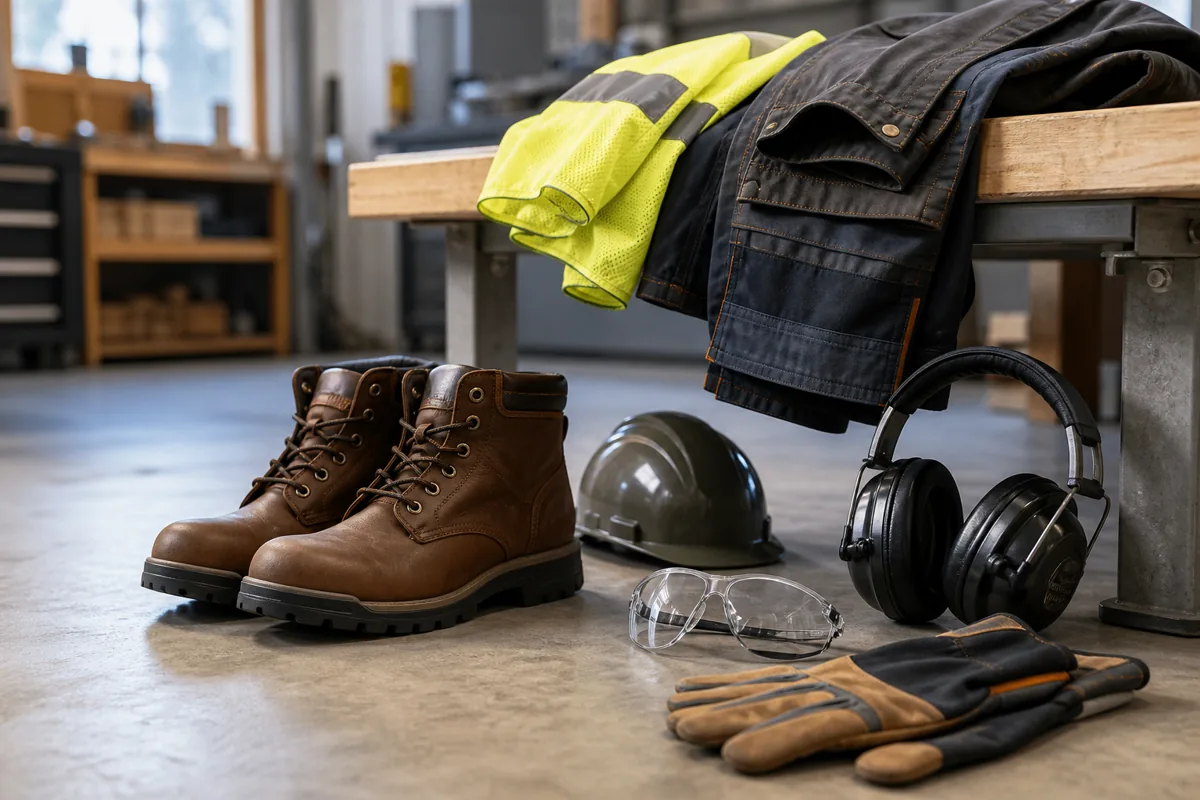
Add hearing protection you will actually wear, safety glasses in multiples because they scratch and vanish, and a respirator rated for the dust you are making. Renovation work means silica from masonry and possibly lead in old paint, and a nuisance dust mask does nothing for either. Check the eye wash and the extinguisher for date and pressure at the same time each year, and keep the extinguisher near the exit rather than near the work.
Site admin
A clipboard or tablet, a marker for labelling, a camera (your phone) used constantly, and a plan for rubbish. Sites that stay tidy finish faster, and clients notice.
Photograph every wall before it closes, with a tape in frame for scale — that is the record that settles later arguments about where the blocking went. Label circuits, valves and offcuts rather than trusting memory. Decide where the rubbish goes on day one, because a pile with no destination grows until it costs you an afternoon.
What more money actually buys
The cheap end
Cheap is fine for pencils, chalk, tape and knife blades. It is a false economy for anything carrying current, where it shows up as thin gauge, brittle jackets and ends that pull apart.
The middle
Where most working kits belong. Mid-priced cords, lights, horses and first aid supplies from names you recognise, bought once and replaced when they fail. The step from budget to middle buys durability; the step from middle to premium usually buys features.
The top end
Worth it for what you handle all day or trust with a load: lights, clamps, work support. Rarely worth it for spares that sit in a bin waiting to be needed.
Mistakes that cost the day
- One long cord for everything. Keep it uncoiled under load, and match gauge to length.
- Charging batteries at home. A charger in the van turns dead time into a charged pack.
- Restocking only what ran out. Go through the whole bin monthly, not the one item that stopped you.
- Keeping the checklist in your head. Tape a printed copy inside the van door and read it before you shut it.
Who needs what
Full-time remodelers need every line here, dust control included, because the work happens in someone’s home with the power off. Trim carpenters can run lighter on cords and heavier on lighting, clamps and clean work support. Weekend DIYers can skip the extinguisher layer if there is no hot work, but not the cord gauge or the eye protection. Exterior and deck crews carry the generator, the water and the sunscreen, and should treat shade as equipment.
End of day, every day
Five minutes here is what makes tomorrow start on time.
- ✔ Tools accounted for and back in their boxes
- ✔ Cords coiled properly, not tangled
- ✔ Rubbish removed, floor swept
- ✔ Batteries on charge
- ✔ Tomorrow’s materials staged where you will need them
FAQ
What is most commonly forgotten? Extension cords, spare blades, and the first aid kit.
How many batteries should be in the truck? Enough that you never wait on a charger — usually six or more on a working kit.
Is a generator worth carrying? On sites without power, yes. Otherwise cordless plus long cords is lighter and quieter.
How often should the checklist be audited? Restock consumables weekly, look over cords and batteries monthly, and go through safety gear once a year for dates, pressure and missing contents.
Stock the truck →