Our Top Picks


What's inside
As an Amazon Associate I earn from qualifying purchases. This post may contain affiliate links at no extra cost to you.
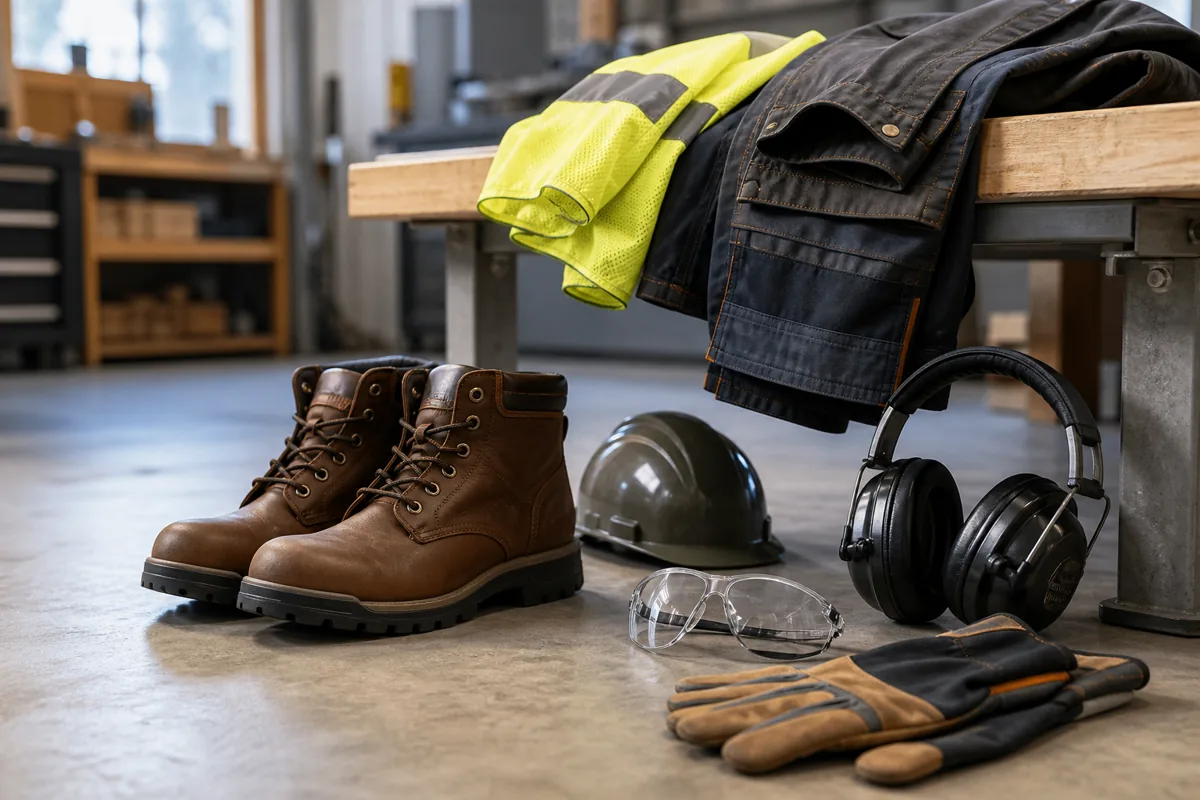
Most PPE failures are not dramatic. A carpenter buys boots that hurt by hour six, so he wears sneakers on the deck framing job. Safety glasses fog on the second cut, so they end up on the brim of a hat. Earplugs are in the truck, not in the ears. The gear that prevents claims is the gear that gets worn all day, and comfort is a safety spec as much as impact rating is.
This guide covers jobsite ppe by category, and in each section it leads with the one criterion that actually separates good from bad. Ratings matter here more than brand loyalty, so learn the marks: ASTM F2413 for footwear, ANSI Z87.1 for eyewear, ANSI/ISEA 105 for gloves, NRR for hearing, ANSI/ISEA 107 for hi-vis. Anything sold without a stamped standard is apparel, not protection.
As an Amazon Associate we earn from qualifying purchases at no extra cost to you.



Sections
PPE Categories at a Glance
Use this as a spec sheet, not a shopping list. The rating column is what you check on the box or the tongue label before anything else.
| Category | Rating to Look For | Replace When | Typical Price Tier |
|---|
| Category | Rating to Look For | Replace When |
|---|---|---|
| Work boots | ASTM F2413 safety toe, EH, slip rating | Midsole compressed, tread worn smooth, toe cap exposed |
| Safety glasses | ANSI Z87.1, Z87+ for impact | Scratched in the sight line, coating hazed |
| Hearing protection | NRR 22-33 dB, or electronic muffs | Foam plugs are single use, muff cushions annually |
| Gloves | ANSI/ISEA 105 cut level A2-A5 | Palm worn through or stiffened |
| Hi-vis | ANSI/ISEA 107 Class 2 or 3 | Fabric faded or soiled beyond bright |
| Knee pads | Gel or foam with hard cap | Cap cracked, strap stretched |
| Respirator | NIOSH N95 minimum, P100 for silica | Breathing resistance rises or filter is loaded |
Work Boots: Fit and Midsole Beat Toe Cap Marketing
The criterion that separates good from bad boots is not the toe, it is the platform under your foot and the volume around it. Every safety boot on the shelf will stop a dropped framing hammer. Very few will still feel acceptable at hour ten on a slab.
Composite toe versus steel toe is mostly a temperature and metal detector question. Composite is lighter, does not conduct cold, and passes airport style detectors. Steel is thinner for the same protection, so the toe box profile is slimmer. Both meet ASTM F2413 impact and compression when marked, and that mark is the only thing that matters for compliance.
The specs to check in order: width availability, shank support, outsole compound, and height. If a maker only offers D width, walk away if you are EE or B. Get a heat resistant outsole rated for roofing if you are on hot shingles, and a wedge sole if you spend the day on flat subfloor, since lug soles concentrate pressure. For ladder work, a defined heel is genuinely safer than a flat wedge because it catches the rung.
Electrical hazard (EH) rating is secondary insulation, not primary protection. It is a reasonable default for anyone working near live circuits, but it degrades when the sole is wet or worn.
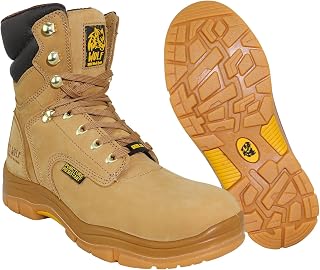
Composite Toe Work Boots for All-Day Carpentry
Filter for ASTM F2413 marked models offered in multiple widths, then buy two pairs and rotate them so each dries fully. Rotating boots does more for foot health and boot lifespan than spending double on one pair.
Eye, Hearing and Respiratory: The Three Most Skipped Items
Eyewear is decided by anti-fog performance, because fogging is why glasses come off. Look for Z87+ marked lenses with a dual coating, and buy in packs of three so a scratched pair goes in the trash instead of back on your face. Clear for interior, gray for exterior, amber for low light framing at dusk. Over the glasses (OTG) styles exist and fit better than trying to stack a standard pair over prescription frames. For overhead demolition or nailing, a sealed goggle or a full face shield over glasses is the right call, since side entry debris is the usual injury path.
Hearing protection is decided by whether you will actually keep it in. NRR is measured in ideal lab conditions, so treat the number as relative ranking: foam plugs typically land 29-33 NRR, passive muffs 22-31, banded plugs lower. A circular saw, router, or planer is loud enough that even short unprotected exposure adds up over a career. Electronic muffs that amplify speech until a threshold and then clamp are the single best upgrade for anyone who works with a helper, because you can talk without removing them.
Respiratory protection is decided by the hazard. Sanding drywall or cutting engineered wood needs a NIOSH N95 at minimum. Cutting concrete, masonry, or tile releases respirable crystalline silica, and that needs a P100 cartridge on a half mask plus water or vacuum dust control. Nuisance dust masks with no NIOSH stamp are worthless for anything you care about.
Electronic Hearing Protection Muffs
Pick a low profile shell if you wear a hard hat, and check the headband clearance before buying. Slim cups are quieter to wear all day and do not knock against the brim every time you look up.
Hands, Knees and Visibility
Gloves are decided by cut level matched to task, not by thickness. ANSI/ISEA 105 runs A1 through A9. General carpentry and material handling sits comfortably at A2 to A3. Handling sheet metal, glass, or utility knives all day justifies A4 to A5. For anything involving fine fastener work, a thin nitrile coated palm with a bare fingertip design beats a heavy leather glove that gets removed constantly. Never wear loose gloves near a table saw, router table, or drill press, because entanglement is a worse injury than a splinter.
Knee pads are decided by cap shape. A hard cap with a slightly rounded profile lets you pivot on a subfloor. A flat rubber cap grips and torques your knee when you turn. Gel inserts are better on concrete, layered foam is fine on wood. Strap placement above and below the joint prevents the slide that makes people give up on them entirely.
Hi-vis is decided by traffic exposure. Class 2 vests are the baseline for parking lots and site roads. Class 3 with sleeves is for anything near moving traffic above roughly 50 mph or low light. A Class 2 vest over a hoodie in winter meets nothing if the reflective bands are covered, so buy a hi-vis outer layer for cold weather rather than layering over it.
- ✔ Ratings are printed on the product, so quality is verifiable before purchase
- ✔ Most PPE is inexpensive relative to a single injury or lost workday
- ✔ Comfortable gear gets worn, and worn gear is the only gear that protects
- ✘ Unmarked lookalikes are common in online listings and easy to buy by accident
- ✘ Comfort is personal, so boots and glasses often need returns before you land on a keeper
- ✘ PPE wears out on a schedule most people ignore, especially foam and lens coatings
Ladders and Fall Protection: Duty Ratings Nobody Checks
Ladders are technically equipment rather than PPE, but they cause the claims, so the ratings belong here. Duty rating is total load: you, your tools, and the material in your hand. Type III is 200 lb and belongs in a house, not on a job. Type II is 225 lb, Type I is 250 lb, Type IA is 300 lb, and Type IAA is 375 lb. A 220 lb carpenter carrying a nail gun and a bundle of trim is over a Type II rating. Buy IA or IAA and stop doing math on the ladder.
Fiberglass side rails are the default for anyone near electrical work. Aluminum is lighter and fine for roofing and siding when no conductors are in play. Extension ladders need the 4 to 1 setup ratio and three feet of extension above the roof edge, which means measuring the wall height before buying a length. For anything above roughly six feet on a leading edge, a harness and anchor point is the answer, and a harness is only as good as its inspection: check webbing for cuts, chemical stiffness, and stitching every time you put it on.
Type IAA Fiberglass Step Ladder
Overbuy the duty rating and you never think about it again. Fiberglass costs more and weighs more than aluminum, and it is the correct choice for anyone who might be near a live conductor.
Who Each Setup Is For
Remodeler and trim carpenter: composite toe boots in a wedge sole, A2 gloves with bare fingertips, Z87+ glasses in three packs, foam plugs in every pocket, N95 for sanding days.
Framer and deck builder: heeled lug sole boots with a stiff shank, A3 gloves, electronic muffs, Class 2 hi-vis, Type IAA ladder, harness for anything on a leading edge.
Concrete and masonry: waterproof boots you can hose off, P100 half mask, sealed goggles, gel knee pads, A4 gloves for rebar and block.
Weekend DIY: one good pair of safety glasses, muffs, A2 gloves, and a Type IA ladder. Boots can wait until the project involves a nail gun or a slab.
Jobsite PPE FAQ
Is composite toe as protective as steel toe? Yes, when both carry the ASTM F2413 mark. The standard sets the impact and compression threshold, and the material used to meet it is irrelevant to compliance. Composite is lighter and does not conduct cold, steel is slimmer for the same rating.
How often should I replace safety glasses and earplugs? Foam earplugs are single use, and any scratch in the sight line of a lens means the glasses are done, since scratches both blur vision and weaken impact resistance. Practically, treat glasses as a consumable and buy multipacks rather than one premium pair.
Do I need a respirator for woodworking, or is a dust mask enough? A NIOSH N95 handles wood dust and drywall sanding. If you cut concrete, tile, brick, or fiber cement, you are dealing with respirable silica and need a P100 cartridge on a half mask plus dust control at the blade. Unstamped nuisance masks are not protection.
Buy the marked version of everything, buy comfort seriously, and replace consumables on a schedule instead of when they fail. That is the whole strategy.
Check prices on Amazon →