Our Top Picks
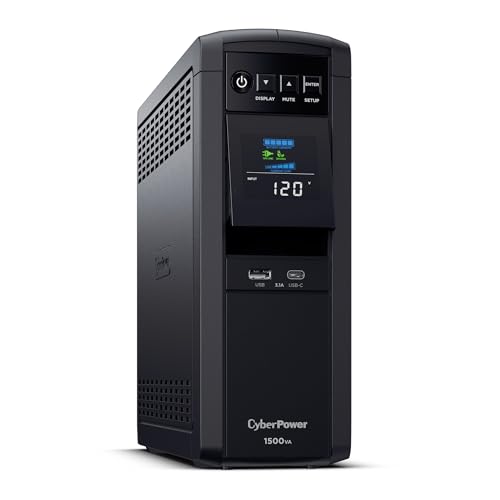 CyberPower CP1500PFCLCD PFC Sinewave UPS Battery Backup and1500VA14 x 3.9 x 11 inches24.9 poundsCheck on Amazon
 WEN 8000-Watt 120V/240V Dual Fuel Portable Generator8000W, Dual Fuel + CO Alarm28.54 x 24.61 x 24.96 InchesCheck on Amazon

What's inside
As an Amazon Associate I earn from qualifying purchases. This post may contain affiliate links at no extra cost to you.
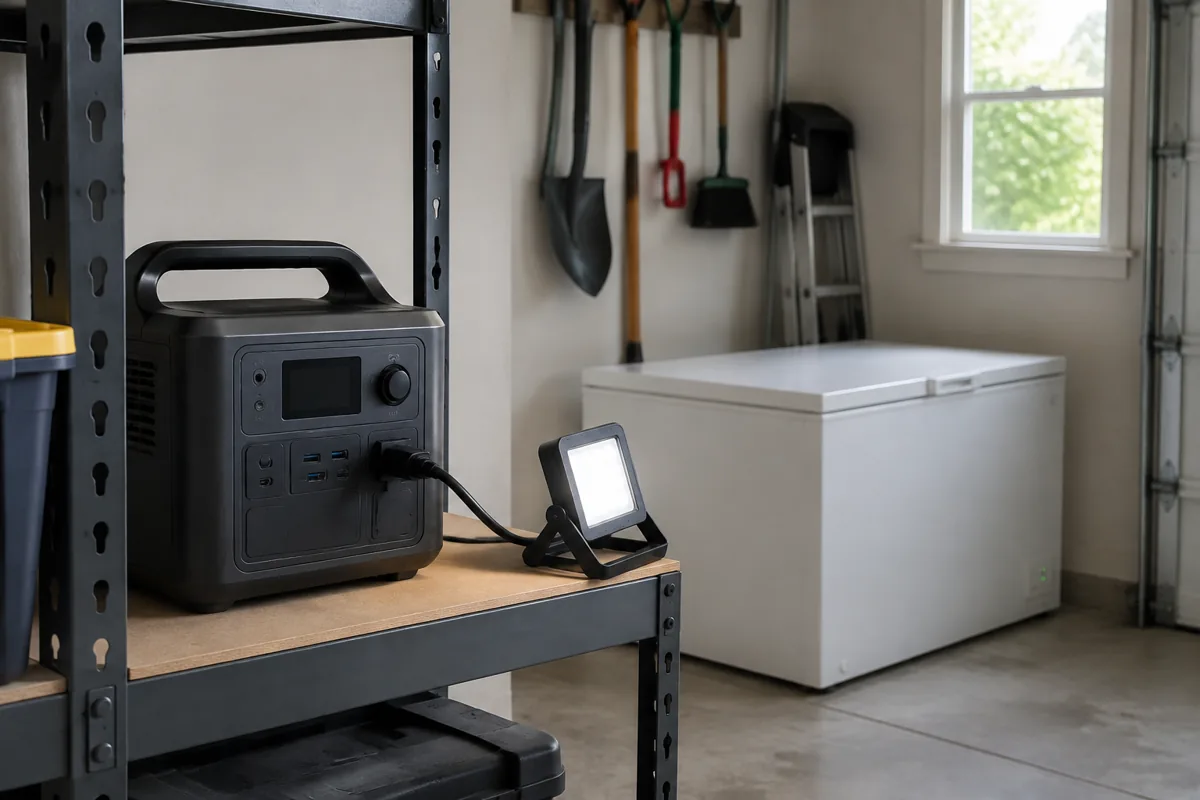
The garage is the worst room in the house to lose power and the most common one to forget when planning for it. A chest freezer full of meat sits out there. So does the well pump breaker in a lot of homes, the sump pump on the low side of the slab, and the door opener that keeps you from crawling under a stuck panel in the rain. Choosing emergency backup power for garage use is not the same problem as backing up a kitchen, because the garage combines long-duration low draws with short brutal surges from motors.
The criterion that separates a good purchase from an expensive paperweight is this: match the surge capacity to your largest motor, then match the runtime to your realistic outage length. Most people buy backwards, sizing for total wattage on a spec sheet and discovering the unit trips the second the compressor kicks on.
As an Amazon Associate we earn from qualifying purchases at no extra cost to you.


Sections
Emergency Backup Power for Garage: The Four Real Options
The separating criterion here is fuel and siting. Anything that burns fuel must live outside, period. Anything that stores electrons can live on a shelf next to the bench.
| Option | Best for | Surge behavior | Siting |
|---|
| Option | Best For | Typical Surge Headroom | Where It Lives |
|---|---|---|---|
| Portable battery power station | Freezers, lights, chargers, laptops | Modest, inverter-limited | Indoors, on a shelf |
| Inverter generator (gas) | Mixed loads, quiet operation | Good, clean sine wave | Outdoors, 20+ ft from openings |
| Open-frame portable generator | Well pumps, compressors, sump | Highest per dollar | Outdoors only, on a pad |
| Dual-fuel or propane standby | Multi-day outages, whole-panel | Excellent with transfer switch | Permanent exterior pad |
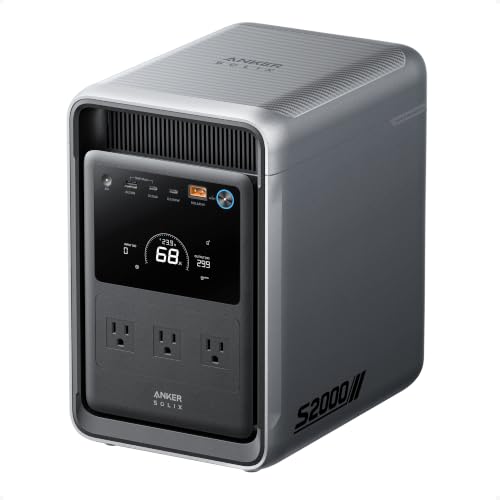
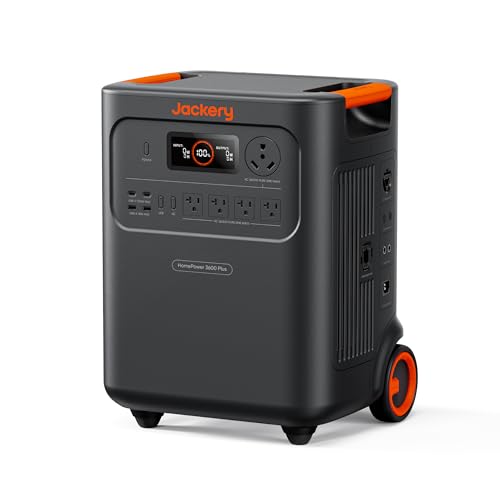
Battery stations have taken over the low end of this category for good reason. No carbon monoxide risk, no fuel to stabilize, no pull cord, and they can be charged from a wall outlet or panels. Their limit is inverter surge. A unit rated for continuous output in the mid hundreds of watts may still refuse a freezer compressor start, while a larger unit with an oversized inverter handles it without blinking. Read the surge figure, not the capacity figure, when the load has a motor.
Sizing: Surge Watts First, Then Runtime
The criterion that decides everything: your single largest starting load sets the minimum size of the unit. Everything else is arithmetic.
Induction motors draw several times their running current for a fraction of a second at startup. A garage freezer, a bench compressor, a submersible well pump and a table saw are all in this family. A resistive load like a work light or a battery charger draws what it says on the label and nothing more. So the sizing exercise is: identify the biggest motor you actually need during an outage, find its locked-rotor or starting draw, and require the generator or inverter to exceed it.
A reasonable planning approach for a garage:
Tier one, ride-out loads. LED lighting, phone and tool battery chargers, a router, a fan. These add up to very little and a mid-size battery station covers them for many hours.
Tier two, protect-the-asset loads. Chest freezer or garage refrigerator plus the sump pump. Freezers cycle, so average consumption over a day is far below nameplate, but the surge requirement is real. This tier is where the larger battery stations and small inverter generators live.
Tier three, keep-working loads. Well pump, air compressor, corded saws, a space heater. This is generator territory. Cordless platforms, DeWalt XR, Milwaukee FUEL and Makita LXT, cover the cutting and driving side better than any generator does, so the honest question is whether you need line power for anything besides pumps and compressors.
Portable Power Station with High Surge Inverter
If the goal is keeping a garage freezer cold and the lights on with zero fumes, this is the category to shop. Filter for LiFePO4 chemistry, a listed surge rating well above your compressor’s start, and at least one 30A-capable or high-wattage AC port. Pass-through charging matters more than people expect, since you can top it off from a generator during the day and run silently overnight.
Carbon Monoxide, Codes and the Non-Negotiables
The criterion is simple and it is a safety criterion, not a preference: a fuel-burning generator never runs inside a garage, attached shed, breezeway or open doorway, even with the door up. Carbon monoxide accumulates in attached structures and moves into living space through shared walls and ceilings.
Look for the CO shutoff feature that has become standard on portable units. Two consensus standards cover it: ANSI/PGMA G300 for portable generator safety and UL 2201, which certifies low CO emissions plus automatic shutdown when CO builds up. A unit carrying either mark is a meaningfully safer purchase, and both are now common enough that there is little reason to buy without one. Independent of the generator, put a listed CO alarm in the garage and one in the adjacent room.
Battery stations sidestep CO entirely. For chemistry, LiFePO4 is the standard to prefer in a garage: better thermal behavior, far longer cycle life, and much better tolerance of the temperature swings an unconditioned garage delivers. Check the stated operating and charging temperature range, because most lithium chemistries refuse to charge below freezing and a Northern garage in January will hit that.
Getting the Power Where You Need It
Here the criterion is whether power crosses into the house wiring. Extension cords to appliances require nothing. Feeding a circuit requires hardware and, in nearly every jurisdiction, a permit and an electrician.
Never backfeed a panel through a dryer outlet or a homemade double-male cord. That energizes the utility drop, endangers line crews, and defeats every protection in the panel. The legitimate options are a manual transfer switch, an interlock kit rated for your specific panel, or a generator inlet box feeding a subpanel. All three isolate utility from generator so the two can never be connected at once.
For cords, gauge is the spec that matters. Long runs at high current on undersized cord drop voltage, which motors experience as heat. For a 15A load, step up to 12 AWG past 50 feet and 10 AWG past 100. Outdoor-rated jacket, and never coil a loaded cord on a reel.
- ✔ No CO risk and silent operation from battery stations
- ✔ Cordless tool platforms already cover cutting and drilling
- ✔ Transfer switches and interlock kits are inexpensive relative to the generator
- ✔ Dual-fuel units let you store propane indefinitely
- ✘ Battery capacity that runs a freezer for days costs real money
- ✘ Gas generators need monthly exercise and fuel stabilizer
- ✘ Cold garages limit lithium charging
- ✘ Any panel connection means permits and an electrician
Who Should Buy What
The criterion is outage length and what fails first at your address.
Short urban outages, a few hours, no well. A mid to large battery station and two good extension cords. Store it charged, cycle it a couple of times a year.
Suburban storm belt, half a day to two days, city water. An inverter generator in the 2000 to 4000 watt class for the freezer, sump and a few circuits, paired with an interlock kit. Quiet enough to run at night without complaints.
Rural, well pump, multi-day risk. Open-frame or dual-fuel portable with enough surge for the pump, on a transfer switch, plus a small battery station for silent overnight lighting. The hybrid approach is the best value in this category and almost nobody plans for it up front.
Dual-Fuel Portable Generator with CO Shutoff
When a submersible pump is in the load list, surge capacity stops being negotiable and this is the category that delivers it per dollar. Prioritize electric start, a 30A 120/240V outlet that matches your inlet box, and a CO shutoff certification. Propane capability is worth the small premium because it stores for years without degrading.
Maintenance That Determines Whether It Starts
The criterion separating a working backup from a decoration is a maintenance interval you actually keep. Gas generators fail from stale fuel more than anything else. Run yours under load for 20 minutes every month or two, store fuel with stabilizer or run propane, and keep a spare spark plug and air filter on the shelf. Change oil on the schedule in the manual, which is often far shorter than car intervals.
Battery stations want a partial charge for long storage rather than a full one, and a top-off every few months. Note the charge cycle on a piece of tape on the case. Test the whole system once a year the same way you test a smoke alarm: kill the main breaker on a Saturday, run the actual loads, and find the problems while the hardware stores are open.
Frequently Asked Questions
Can I run a generator in my garage with the door open? No. An attached garage is treated as part of the structure, and carbon monoxide accumulates there and migrates indoors even with the door raised. Place fuel-burning units outdoors, well away from doors, windows and vents, with exhaust directed away from the building.
How big does a power station need to be for a garage freezer? Look at surge rating before capacity. The compressor start is a brief multiple of the running draw, so an inverter with generous surge headroom is the requirement. For runtime, freezers cycle rather than run continuously, so a station in the one to two kilowatt-hour range typically carries one overnight, longer if you keep the lid shut.
Do I need a transfer switch? Only if you want to power household circuits rather than plug appliances in directly. If you do, a manual transfer switch or a panel-specific interlock kit is required, and backfeeding through an outlet is both illegal and dangerous. Cord-and-plug use needs no switch at all.
Decide the tier you are actually solving for, verify the surge number against your biggest motor, and buy the CO certification either way. Once those three are settled the rest is cords and calendar reminders.
Check prices on Amazon →