Our Top Picks



What's inside
As an Amazon Associate I earn from qualifying purchases. This post may contain affiliate links at no extra cost to you.
The spec sheet on a portable power station tells you almost nothing useful until you learn to read it. A unit advertised at 2000 watts will not run a 15-amp circular saw the way a gas generator does, and a 1000Wh battery will not power a jobsite radio, two chargers, and a work light for the eight hours the marketing photo implies. This battery powered generator review is built around the numbers that actually separate a good unit from an expensive brick: usable watt-hours, continuous versus surge output, battery chemistry, and inverter quality.
Two categories get lumped together under this name. The first is the tool-battery inverter, a small box that accepts DeWalt XR, Milwaukee M18, or Makita LXT packs and gives you a couple of outlets. The second is the lithium power station, a self-contained unit with an internal pack, an inverter, and solar input. They solve different problems, and buying the wrong one is the most common mistake in this space.
As an Amazon Associate we earn from qualifying purchases at no extra cost to you.


| Class | Typical capacity | Continuous output | Best use |
|---|
| Class | Typical capacity | Continuous output | Best use |
|---|---|---|---|
| Tool-battery inverter | Whatever your packs hold, roughly 90-220Wh each | 150W to 1500W depending on model | Trim work, chargers, lights on a site you already stock batteries for |
| Compact power station | 250Wh to 600Wh | 300W to 600W | Laptops, camera gear, CPAP, small fans |
| Mid-size power station | 700Wh to 1500Wh | 1000W to 1800W | Corded drills, small sanders, extended tool charging |
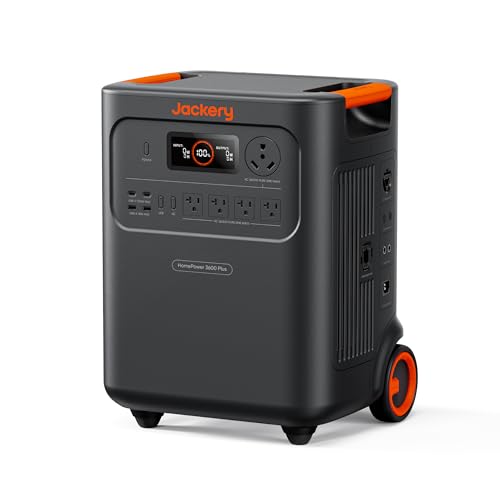
| Large power station | 2000Wh to 4000Wh+ | 2000W to 3600W | Fridge during outages, miter saw with light duty cycle, RV use |
Sections
The first criterion: usable watt-hours, not the number on the box
Capacity is printed in watt-hours (Wh), and that figure describes the cells, not what reaches your outlet. Inverter conversion from DC to AC costs you something, typically 10 to 15 percent, and cold weather costs more. A nominal 1000Wh station realistically delivers somewhere around 850 to 900Wh of AC work at room temperature. Plan around that number and you will not be surprised.
To convert capacity into runtime, divide usable watt-hours by the draw of the load. A 60W laptop charger on a 900Wh usable station runs a very long time. A 900W shop vacuum on the same station runs about an hour. Corded tools are the reality check: most full-size circular saws, routers, and benchtop planers draw 1200W to 1800W under load, which means a mid-size unit gives you minutes of cutting, not hours. Battery stations are excellent at low, steady loads and mediocre at heavy intermittent ones.
If the manufacturer lists capacity only in amp-hours, multiply by the pack voltage to get watt-hours. A “600Ah” claim on a small unit is measured at 3.6V cell level and is not comparable to a 12V number. This is a common trick and worth catching.
Surge headroom and inverter quality
The criterion here is simple: can the inverter survive the inrush current when a motor starts? Induction motors in fridges, compressors, and older corded tools draw several times their running wattage for a fraction of a second. A unit with 1500W continuous and only 1800W surge will trip on loads a unit with 1500W continuous and 3000W surge handles without noticing. Look for a surge rating at least double continuous, and treat vague “peak power” claims without a duration as marketing.
Insist on pure sine wave output. Modified sine wave inverters are cheaper and will run resistive loads like incandescent bulbs and heating elements, but they cause buzzing, heat, and premature failure in brushless motors, battery chargers with switching power supplies, and sensitive electronics. Total harmonic distortion under 3 percent is the number reputable manufacturers publish. If a listing does not mention waveform at all, assume the worse option.
Mid-size LiFePO4 power station, 1000-1500Wh class
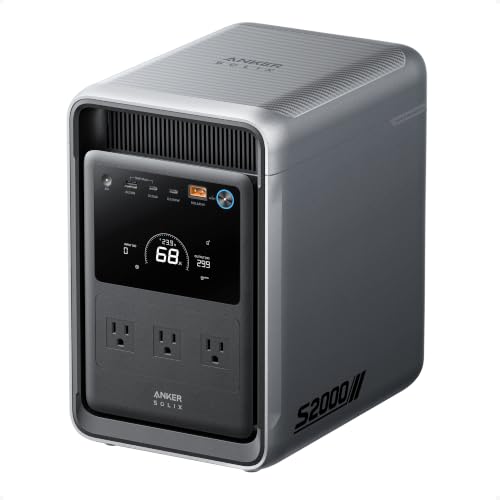
This is the sweet spot for most carpenters and homeowners. Enough capacity to keep a fridge cold through a short outage or run chargers and lights through a full day of finish work, and light enough that one person can move it. Prioritize LiFePO4 chemistry, a UL 2743 listing, and a surge rating at least twice the continuous figure. Expect to pay a premium over NMC units of the same capacity; the cycle life justifies it.
Battery chemistry: LiFePO4 versus NMC
The separating criterion is cycle life, and the gap is not subtle. Lithium iron phosphate (LiFePO4 or LFP) cells are typically rated for 2500 to 4000 cycles to 80 percent of original capacity. Nickel manganese cobalt (NMC) cells, the chemistry in most cordless tool packs and older power stations, generally land in the 500 to 800 cycle range. If you cycle a unit weekly, LFP lasts a decade and NMC lasts a couple of years.
LFP is also more thermally stable, which matters in a truck bed in July. The tradeoffs are weight and cold performance: LFP is heavier per watt-hour, and charging any lithium chemistry below freezing damages it, so look for a battery management system with low-temperature charge cutoff if the unit lives in an unheated garage or vehicle.
Tool-battery inverters use whatever chemistry your platform uses, and that is usually NMC. That is fine for their intended job. Just do not expect a stack of 5Ah packs to behave like a dedicated station: five 5Ah 20V packs total roughly 500Wh, and running them hard through an inverter shortens their life for tool use.
Certifications, ratings, and the labels that matter
Cite the standard, not the adjective. For portable power stations, UL 2743 is the relevant safety standard; some units also carry UL 1642 or UL 2054 for the cells and UL 9540 if they interface with home backup. FCC Part 15 covers electromagnetic emissions. A listing that says “safety certified” without naming a standard and a test lab has told you nothing.
Two more labels worth checking. First, ingress protection: most power stations carry no IP rating at all and are indoor or covered-use only, so an IP54 or better rating is a genuine differentiator for exterior work. Second, GFCI protection on the outlets, which the National Electrical Code requires for outdoor and wet-location receptacles and which many stations simply omit. If yours lacks it, run a GFCI adapter for any outdoor work.
Charging speed deserves the same scrutiny. USB-C Power Delivery at 100W is common and 140W is appearing on newer units, but the important figure is AC recharge time and whether fast charging is default or has to be enabled in an app. Solar input specs should list both maximum wattage and the voltage window; a panel outside that window produces nothing regardless of its rating.
Tool-battery inverter for your existing platform
If you already own six or eight packs on one platform, this is the least expensive way to get outlets on site. Buy the version matched to your battery family, and check the continuous rating carefully: the small ones top out around 150W to 200W, which covers phone chargers and a laptop but not a corded tool. Higher-output models exist but drain a pack quickly.
- ✔ No exhaust, so safe for indoor and enclosed use
- ✔ Near silent, which matters for interior work and neighborhood job sites
- ✔ Zero maintenance: no oil, no carburetor, no stale fuel
- ✔ Instant start and clean power for chargers and electronics
- ✔ Solar input allows genuinely off-grid operation
- ✘ Cost per watt-hour is far higher than gasoline
- ✘ Recharging takes hours, not the minute it takes to refill a tank
- ✘ Heavy loads like table saws drain even large units in minutes
- ✘ Capacity drops noticeably in cold weather
- ✘ Large units get heavy enough to need two people
Who each class is for
Choose a tool-battery inverter if you already have a deep battery collection and mainly need outlets for chargers, lights, and small electronics. Choose a compact station under 600Wh if the load list is a laptop, camera batteries, or a CPAP for a weekend. Choose a mid-size 1000 to 1500Wh unit if you want one tool that handles both jobsite duty and a short power outage. Choose a large 2000Wh-plus unit with expansion batteries if the goal is keeping a refrigerator and a few circuits alive for a day or more, and accept that you are buying something in the weight class of a full toolbox.
What none of these classes does well is replace a gas generator for sustained heavy work. Framing all day off battery power means either a very large station with solar or a bank of tool packs on rotation. Be honest about the load list before spending.
Battery powered generator review FAQ
Can a battery powered generator run a table saw? A full-size cabinet or contractor saw draws too much for most units, and the startup surge trips smaller inverters. A large station with 2000W-plus continuous and roughly 4000W surge can run a jobsite saw for light, intermittent cuts, but expect capacity to drain fast and check that the inverter tolerates the inrush.
Is it safe to use one indoors? Yes, and that is the main advantage over gasoline. There is no carbon monoxide and no exhaust, so a lithium station is safe in a basement or an enclosed room where a gas unit would be lethal. Keep it ventilated for heat, off flammable surfaces, and check that it carries a UL 2743 listing.
How long do these actually last? Cycle life is set by chemistry. LiFePO4 units are generally rated for 2500 to 4000 cycles to 80 percent capacity, while NMC units usually fall between 500 and 800. Calendar aging matters too, so store at a partial charge in moderate temperatures rather than full or empty, and avoid charging below freezing.
Match the unit to the load list, verify the safety standard by name, and pay for LiFePO4 if you plan to use it regularly. Those three decisions cover most of the difference between a purchase you keep for a decade and one you regret.
Check prices on Amazon →