What's inside
As an Amazon Associate I earn from qualifying purchases. This post may contain affiliate links at no extra cost to you.
A tool belt with a hammer loop and tape clip covers the two tools most carpenters reach for constantly. The right layout keeps a hammer from bouncing against your leg, holds a tape where you can grab it one-handed, and leaves enough room for pencils, a knife, a square, and a few fasteners. The wrong belt twists, dumps tools when you bend over, or places the tape clip where it catches on framing.
For general carpentry, a two- or three-pocket belt is usually enough. A larger rig makes sense for framing or roofing, but it becomes tiring when you are doing finish work or moving around a small room. Before buying, decide whether you need a comfortable everyday belt or maximum carrying capacity.
As an Amazon Associate we earn from qualifying purchases at no extra cost to you.


Sections
Our Top Picks


What to Look for in a Tool Belt
Hammer loop position matters. A loop behind your dominant hand is the fastest arrangement for most users. If you carry the hammer on your right, look for a loop on the right rear or right side. A loop directly in front can interfere with a tape, nail pouch, or your thigh when climbing ladders.
Leather loops are durable and quiet, but they can be stiff when new. Metal loops tolerate heavy framing hammers and are easy to reholster, though they can scratch finished surfaces and make more noise. Fabric or synthetic loops are lighter and often cheaper. They work well for a 16-ounce hammer, but very heavy hammers can pull the stitching loose over time.
A tape clip should hold the tape by its belt hook without requiring two hands. Check that the clip is open enough for a thick hook and has a rounded edge. A narrow clip may work with a basic 25-foot tape but reject tapes with reinforced or wide hooks. The clip should also sit high enough that the tape does not hang below your knee.
Pay attention to belt stiffness and adjustment range. A belt that folds under the weight of a hammer and tape will dig into your hip. For regular use, a padded or wide belt around 2 to 3 inches high is more comfortable than a narrow strap. Measure your waist while wearing work clothes; a listed “waist size” often assumes the belt is worn over trousers, not a T-shirt.
Best Tool Belt Types by Job
| Type | Best for | Advantages | Drawbacks |
|---|---|---|---|
| Leather belt and pouches | Frequent carpentry and framing | Long service life, good structure, repairs are possible | Heavy, expensive, needs occasional conditioning |
| Synthetic belt with fabric pouches | General repairs, remodeling, DIY | Light, washable, affordable, often well organized | Stitching and fabric wear faster under heavy loads |
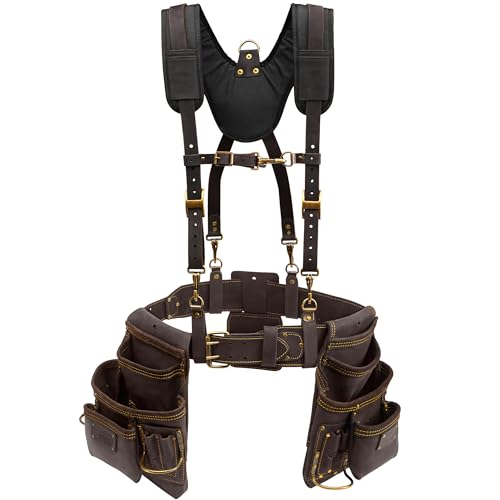
| Padded suspension rig | All-day framing or site work | Moves weight from the hips to the shoulders | More bulk, slower to put on, hotter in warm weather |
| Compact single pouch | Trim work, punch-list jobs, short tasks | Low weight and little interference when moving | Limited room for fasteners and extra tools |
For most homeowners and occasional carpenters, a synthetic carpenter tool belt with a hammer loop and tape clip is the sensible starting point. It usually costs less than heavy leather and is easier to adjust. The cheaper option is fine when you carry a hammer, tape, pencil, utility knife, and a small handful of screws rather than a full framing load.
Leather vs. Synthetic Construction
Leather is the better choice if the belt will be worn several days a week and regularly loaded with nails or framing hardware. Thick leather resists abrasion from sawhorses and rough lumber. It also holds pockets open, making it easier to return a tool without looking. Expect a break-in period of several workdays, and do not soak it or leave it in a damp truck.
Synthetic materials are not automatically poor quality. Good nylon or polyester pouches can take years of normal remodeling work. They are also less painful to replace when a pocket wears through. The common failure points are the bottom corners of nail pockets, the stitching around the hammer loop, and the rivet or seam holding the tape clip. Inspect these areas before buying and periodically during use.
Split the load between both sides of your body. Keeping the hammer, tape, and all fasteners on one hip creates a twisting load that makes the belt slide. A small leather carpenter belt with a reinforced hammer loop is worth considering for heavy use, but it is overkill for hanging a shelf or repairing a door.
Layout, Fit, and Comfort
Try to keep the tape clip on the hand you use to mark measurements. If you measure with your right hand and mark with your left, a right-side clip usually reduces reaching. Put pencils in a narrow sleeve rather than a deep pocket; retrieving a short pencil from a 6-inch pouch is irritating and wastes time.
Test the belt while bending, kneeling, and climbing a step ladder. The hammer should remain upright instead of swinging into your knee. The tape should not fall out when you lean forward. If the belt rides up more than about 2 inches during normal movement, tighten it, redistribute the load, or choose a wider belt.
For all-day use, a tool belt with suspenders, hammer loop, and tape clip can be more comfortable than buying an extremely stiff waist belt. Suspenders help when the total load approaches 10 to 15 pounds. They are less useful for a light trim kit and can snag on door hardware or lumber when working in tight spaces.
Practical Buying Advice
Count the tools you actually use for a typical job, then choose one or two extra pockets. More pockets do not improve a belt if they encourage you to carry unnecessary weight. A tape clip, hammer loop, pencil sleeve, utility-knife pocket, and one fastener pouch handle most basic carpentry tasks.
Look for bar-tacked or riveted stress points rather than single rows of straight stitching. Confirm that the hammer loop is firmly attached to the belt or a reinforced panel, not just sewn to thin pocket fabric. For wet sites, synthetic materials and stainless or coated hardware are safer choices than untreated leather and bare steel.
If you already own a good belt but dislike its layout, add a separate tool belt tape clip and hammer holder only if the belt has a firm load-bearing section. Clipping accessories to a soft fashion belt causes sagging and can tear the belt. Replace the whole belt when the main strap is cracked, stretched, or no longer stays adjusted.