What's inside
As an Amazon Associate I earn from qualifying purchases. This post may contain affiliate links at no extra cost to you.
Fitting a hinge, lock keep or stay into a timber window is mostly controlled paring, not heavy chopping. The best chisel is sharp, easy to steer and narrow enough to reach the corners of the fitting. For most repair and installation work, a good 12 mm or 19 mm bevel-edge bench chisel is more useful than a large set of inexpensive chisels.
As an Amazon Associate we earn from qualifying purchases at no extra cost to you.


Sections
Our Top Picks
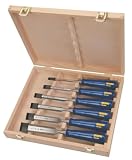
 IRWIN Tools Marples High-Impact Chisel Set3 Piece12.63 x 5.75 x 1.3 inches2.05 poundsCheck on Amazon


What the job demands
Window hardware usually sits in a shallow recess. A common butt hinge leaf is about 2–3 mm thick, but check the actual fitting rather than cutting to a remembered dimension. The recess should let the leaf sit flush with the timber: too deep and the hinge pulls the sash or frame out of line; too shallow and the hinge stands proud, which can stop the window closing cleanly.
Cut to a knife line where possible. Mark the fitting’s outline, score the waste side of the line, then pare in small increments. Chopping across the grain with a mallet can split a narrow stile or bruise the visible edge, especially in old, dry timber. Keep the bevel toward the waste when paring to a shoulder, and take a test cut on scrap if the grain runs awkwardly.
Which chisel type to buy
A standard bevel-edge bench chisel is the sensible first choice. Its tapered sides help it reach into the corners of a hinge recess, and a 12 mm blade is handy for small keeps and narrow fittings. A 19 mm blade removes waste efficiently from a typical hinge mortise. If buying only one, choose the width that matches the hardware you fit most often; if buying two, those widths make a useful pair.
For careful work on painted or delicate timber, a firmer grip and a blade that holds an edge matter more than a thick, heavy blade. A 12 mm and 19 mm bevel-edge chisel pair covers much of the work without filling a tool roll with sizes you rarely use.
| Chisel choice | Best use | Trade-off |
|---|---|---|
| Bevel-edge bench chisel, 12–19 mm | Hinge leaves, keeps and general fitting | Most versatile choice; narrow widths take longer to clear a large recess |
| Bevel-edge chisel, 6–10 mm | Small corners, narrow keeps and detail work | Useful for precision, but slower for removing broad areas |
| Budget bench chisel set | Occasional household repairs | Good value if sharpened properly; factory edges may need work |
| Heavy-duty framing chisel | Rough carpentry and hard chopping | Robust, but often too bulky for neat hardware recesses |
How much to spend
A cheaper chisel is fine for occasional jobs, provided its handle is sound and the blade can be sharpened. The main downside is often not the steel but the time needed to flatten the back and establish a usable edge. Some new chisels arrive with a rough or slightly rounded bevel. That is fixable; a chip or loose handle is a more serious reason to reject one.
For regular site use, step up to a reputable mid-range set or buy individual sizes. Better edge retention means fewer interruptions for sharpening, but even good steel will dull on abrasive paint, grit or hidden fixings. Avoid paying for a large boxed set if you mainly fit hinges: six well-maintained widths are not automatically better than two sharp ones. A basic bench chisel set can be economical for a first kit, especially if you are willing to tune the edges.
Blade and handle details
Look for a straight blade with a flat back near the cutting edge. The back is the reference surface for paring against a marked shoulder; a hollow or twisted back makes accurate fitting harder. For a small window fitting, a blade length around 100–130 mm is manageable. Longer blades can give a comfortable reach, but are less handy in cramped corners.
A wood or composite handle should fit securely, with no cracks or movement at the blade. If you will strike it, check that the handle is designed for mallet use and has a durable end cap. Use a wooden or plastic mallet for controlled blows. A steel hammer can mushroom or split a handle not made for it. For most hinge work, a light tap is enough; heavy blows are more likely to drive the cut past the line than to save time.
Sharpening and fitting technique
Start with a sharp edge. A practical setup is a 1,000-grit stone for sharpening and a finer stone or strop for honing. Many bench chisels work well with a bevel near 25 degrees; a small secondary bevel around 30 degrees can make touch-ups quicker. Exact angles matter less than a clean, even edge. If the chisel struggles to pare end grain or leaves a crushed surface, hone it before blaming the timber.
Score the outline with a knife, then make shallow cuts inside it to break up the waste. Pare down to depth from both ends where the grain allows, checking the fitting often with a straightedge. Don’t lever out a thick chip against a thin stile: that can tear fibres beyond the recess. In painted timber, paint can bridge the cut and peel beyond the line, so score the paint film carefully first. Stop if you find a nail, screw or other metal; striking the edge against it can chip the blade.
Care and storage
Wipe the blade dry after use and add a light coat of oil before storing it, particularly in a damp tool bag. Keep the edge covered so it cannot hit other tools. A nicked edge takes time to grind out, and a rusty blade can stain pale timber. Carry the chisel separately from loose screws and metal fittings, and check the edge before starting a visible cut.
For most people fitting timber window hardware, the best buy is a sound 12 mm or 19 mm bevel-edge chisel, plus a smaller chisel if the fittings have tight corners. Spend enough to get a secure handle and workable steel, then put the rest of the budget into sharpening gear. A sharp budget chisel will usually make a cleaner recess than an expensive one with a neglected edge.