What's inside
As an Amazon Associate I earn from qualifying purchases. This post may contain affiliate links at no extra cost to you.
Sections
Our Top Picks
 IRWIN Tools Marples High-Impact Chisel Set3 Piece12.63 x 5.75 x 1.3 inches2.05 poundsCheck on Amazon


Choosing the right chisel for a door keep plate
Fitting a timber door keep plate is a small job, but it demands more control than force. The usual task is to cut a shallow rectangular recess in the door frame so the metal plate sits flush, then remove a narrower channel for the latch or deadbolt tongue. A blunt, oversized, or poorly controlled chisel can split the frame, bruise the arris, or leave a recess that is too deep to support the screws.
For most interior and exterior doors, the best all-round choice is a bevel-edge wood chisel set with blades from 6mm to 25mm (1/4 to 1 inch). The 12mm or 19mm chisel will do most of the waste removal, while the smaller blade helps square the corners and clean around the latch opening.
As an Amazon Associate we earn from qualifying purchases at no extra cost to you.

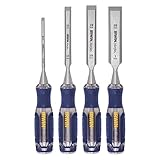

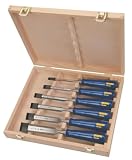
Do not choose a chisel based only on the width printed on the handle. Check the blade thickness, side bevels, handle shape, and whether it is intended for striking. A keep plate recess is often only 1.5 to 3mm deep. That makes a sharp edge and accurate control more important than a heavy construction chisel.
The useful chisel types
| Chisel type | Best use | Main advantage | Limitation |
|---|---|---|---|
| Bevel-edge bench chisel | General keep plate fitting | Versatile and easy to steer | Thin edges can be damaged by careless hammering |
| Heavy-duty bevel-edge chisel | Hardwood frames and stubborn waste | Takes mallet blows without fuss | Less delicate for shallow trimming |
| Paring chisel | Final cuts and corner cleanup | Excellent control and clean slicing | Not suitable for levering or heavy striking |
| Mortise chisel | Deep, narrow latch recesses | Strong blade and robust handle | Usually too thick and wide for a small plate recess |
A standard bevel-edge bench chisel is the sensible purchase for occasional door work. If you regularly fit locks, a heavy-duty bevel-edge chisel in 12mm or 19mm is worth adding. It will tolerate controlled mallet work in hardwood without the edge rolling as quickly.
Which sizes are worth owning?
A 6mm chisel is useful for the narrow latch slot and for cutting back into marked corners. A 12mm chisel removes most of the waste inside a typical keep plate outline. A 19mm or 25mm chisel covers wider plates and makes it easier to work with the grain rather than across it.
If you are buying only one, choose a 12mm chisel. It is narrow enough for common latch plates and broad enough to remove waste efficiently. A 19mm blade is a better single tool for large deadbolt keeps, but it can be awkward at the ends of a 16mm-wide plate. Sets are generally better value if they include useful intermediate sizes rather than a large collection of tiny chisels.
A short-bladed chisel is easier to control close to a door stop. Long paring chisels are excellent for trimming, but their handles and blades can foul the frame or adjacent casing. For site work, look for a compact handle with a flat striking end and a blade that is easy to resharpen.
How to cut the keep plate recess
Close the door against the frame and mark the latch or bolt position. Transfer the outline of the metal plate with a sharp pencil or marking knife. Check that the plate is centered over the latch tongue before cutting; a perfectly cut recess in the wrong place still produces a poor lock.
Score the outline to the plate’s full depth, normally around 2mm. A marking knife gives a cleaner boundary than a pencil, especially in softwood. Make several light passes rather than trying to force the blade to depth in one cut.
Hold the chisel with its bevel facing the waste when removing material near the edge. Tap gently with a wooden or nylon mallet, working across the grain in shallow bites. Do not twist the chisel to lever out large chips. That is a common cause of breakout at the frame edge and can loosen the fibers beneath the screw holes.
For the inside of the recess, start with the chisel nearly vertical and remove a series of 1mm-deep steps. Once the waste is reduced, use the bevel to level the bottom. At the corners, make a vertical cut first, then pare toward it from the waste side. This prevents the edge from running beyond the marked line.
Test the plate frequently. It should sit flush or fractionally below the frame surface, with no rocking. If it is too deep, the screws may pull the plate into the timber or leave the latch tongue misaligned. A thin packer under the plate can correct a slightly over-deep recess, but it is better to stop checking every few cuts.
Steel, handles, and striking ends
For normal softwood and hardwood frames, a properly sharpened carbon or alloy-steel chisel is sufficient. The important feature is edge retention without excessive brittleness. Very hard blades stay sharp longer but may chip if struck sideways or used on hidden screws. Avoid using any wood chisel to cut through metal fixings.
Plastic or polypropylene-handled chisels are practical for general site work because they resist oil, moisture, and dropped-tool damage. Beech or other wooden handles feel better for controlled paring and are easy to replace, but they need more care. A striking cap or reinforced end is useful only if the manufacturer allows hammering; never assume a delicate paring chisel can take mallet blows.
For occasional DIY use, a cheaper wood chisel set with a case is fine if the blades arrive straight and can be sharpened. Spending more makes sense for frequent lock fitting, hardwood frames, or tools that will be used daily. The cheapest sets often need honing before the first cut and may have handles that split under repeated striking.
Sharpness matters more than brute force
Hone the primary bevel to roughly 25 degrees, then add a small secondary bevel at about 30 degrees. A 1,000-grit stone followed by a 4,000-grit stone is enough for clean joinery; a leather strop can remove the remaining burr. A sharp chisel should pare end grain with hand pressure. If it needs hard hammering to make a clean cut, sharpen it before continuing.
Wear eye protection, keep both hands behind the cutting edge, and clamp or firmly support loose work. Clear old screws, nails, and staples before chiseling. The best keep-plate chisel is the one that lets you take controlled 1mm cuts, check the fit often, and leave the frame strong enough to hold the screws.