What's inside
As an Amazon Associate I earn from qualifying purchases. This post may contain affiliate links at no extra cost to you.
Sections
Our Top Picks
 IRWIN Tools Marples High-Impact Chisel Set3 Piece12.63 x 5.75 x 1.3 inches2.05 poundsCheck on Amazon

What the job demands
Fitting a door keep or strike plate is a small job with little room for sloppy work. The recess needs to be deep enough for the plate to sit flush, wide enough for its edges, and clean at the corners. A chisel that is too wide makes it harder to control the cut; one that is too narrow means more strokes and more chances to leave an uneven floor.
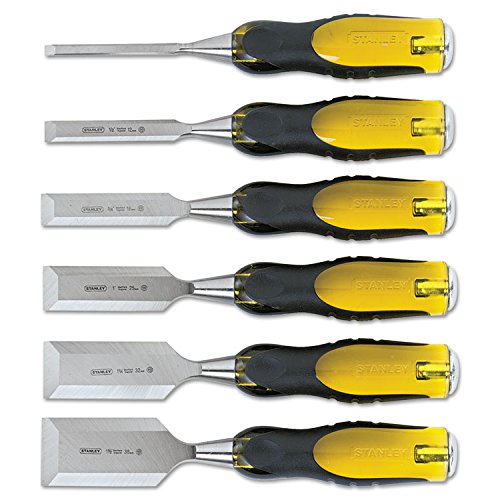
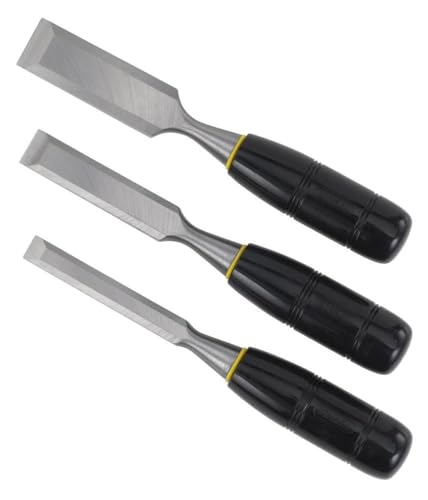
For most interior door hardware, a sharp 12 mm (1/2-inch) bevel-edge chisel is a useful starting size. A 6 mm (1/4-inch) chisel helps pare corners and trim narrow edges. If you fit hardware regularly, a small set covering roughly 6–25 mm (1/4–1 inch) is more flexible than a single chisel. Choose a set with sizes you will use, not a large assortment of thin blades that will spend their time in a drawer.
As an Amazon Associate we earn from qualifying purchases at no extra cost to you.


Which chisel type to buy
A bevel-edge bench chisel is the practical choice for fitting most strike plates. Its beveled sides reach into the corners of a rectangular recess, and its blade is thin enough for controlled paring. A firmer chisel has thicker sides and is better suited to heavier work, but those sides can make it awkward to clean tight corners. For a door keep, where accurate edges matter more than brute force, bevel-edge is usually the better fit.
Look for a blade that holds an edge and a handle intended for mallet use. A plastic or composite handle tolerates occasional tapping well. A wooden handle can also work, but check that it is securely fitted and in sound condition. A delicate carving chisel is not a substitute for a bench chisel; its handle and edge are not meant for the same impact.
If you need a first chisel or a replacement, compare a bevel-edge bench chisel with a small bevel-edge chisel set. A single good 12 mm chisel is enough for occasional work if you already own a narrow chisel for corners. A set makes sense when you are starting from nothing or want sizes for different plates and door jobs.
Chisel choices at a glance
| Choice | Best for | Trade-off |
|---|---|---|
| 12 mm bevel-edge bench chisel | General trimming and paring a typical strike-plate recess | Too wide for tight corners; pair it with a narrower chisel if needed |
| 6 mm bevel-edge bench chisel | Cleaning corners and trimming a narrow lip | Slow for removing material across a wide recess |
| Small set, about 6–25 mm | Several hardware sizes or a basic home tool kit | Costs more up front; unused sizes add little value |
| Cheap single chisel | Occasional work where a basic tool is already available | May need more frequent sharpening; poor edge geometry can make clean paring harder |
Blade, handle, and edge quality
Price alone does not tell you whether a chisel will fit a keep cleanly. A straight blade and a properly ground bevel matter more than decorative handles or a big size range. A budget chisel is fine for one or two doors if it sharpens readily, has no damage at the cutting edge, and stays secure in the handle. The trade-off is usually more time spent checking and restoring the edge.
Before buying a set, check whether the blades arrive ready to use or merely ground to shape. Many new chisels benefit from honing before the first cut. A sharp edge should pare a fine shaving from scrap wood without needing a heavy blow. If the edge folds, chips, or refuses to take a clean cut, stop and address the sharpening rather than forcing it into the door.
A basic honing setup is more useful than buying a premium chisel and leaving it dull. A flat sharpening stone or suitable sharpening system, plus a way to keep the bevel consistent, will help you maintain the edge. A chisel sharpening stone is a sensible addition if you do not already have one.
How to cut a clean recess
First, mark the plate outline with a sharp pencil or knife and confirm that the keep aligns with the latch. Check the plate thickness; common hardware may be around 2–3 mm thick, but measure yours rather than guessing. Make light cuts along the outline with the bevel facing into the waste. These cuts sever the surface fibres and reduce the chance of splintering past the marked edge.
Remove the waste in shallow layers, working across the recess rather than driving the chisel deeply in one go. For a recess about 20–25 mm wide, the 12 mm chisel can remove the middle while the 6 mm chisel tidies the ends and corners. Keep the bevel down when paring the floor so the blade is less likely to dive below the intended depth. Test the plate often: its face should sit flush with the timber, not proud and not sunk below it.
The common failure is cutting too deep near the outline. A plate that sits below the surface can look untidy and may leave its screws poorly supported. If the recess is slightly shallow, pare it gradually; if it is too deep, do not compensate by over-tightening the screws. A thin packing piece or a correctly sized repair is better than a plate held crooked in a ragged pocket.
Use and care on site
Clamp or hold the door securely before chiselling, and keep your free hand behind the cutting edge. Use a wooden or plastic mallet for controlled taps; avoid striking the handle with a steel hammer unless the chisel is specifically designed for it. A sharp chisel needs less force, which improves control and reduces the chance of a slip or split.
Wipe the blade after use and protect its edge in a roll, sheath, or tool case. A nicked edge leaves ridges in the recess and takes longer to repair than a quick touch-up after a job. For occasional DIY fitting, a sound budget bevel-edge chisel and a narrow companion are often all you need. For repeated door work, prioritize reliable edge retention, comfortable control, and a sharpening routine over buying the largest set available.