What's inside
As an Amazon Associate I earn from qualifying purchases. This post may contain affiliate links at no extra cost to you.
Fitting a strike plate or door keeper is small work, but it exposes weak chisels quickly. You are usually cutting a shallow, flat recess in a door jamb, often close to a painted edge or a thin stop. The best chisel is not the biggest one in your tool bag. It is a sharp, controllable bevel-edge chisel that matches the hardware and can survive a few careful taps without its edge folding.
As an Amazon Associate we earn from qualifying purchases at no extra cost to you.


Sections
Our Top Picks
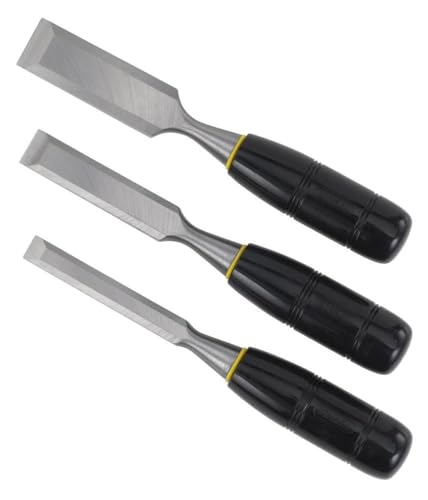
 IRWIN Tools Marples High-Impact Chisel Set3 Piece12.63 x 5.75 x 1.3 inches2.05 poundsCheck on Amazon

What makes a good strike-plate chisel
For most latch strikes, a 12 mm (1/2-inch) bevel-edge chisel is the most useful starting point. It is wide enough to clear a typical plate recess efficiently, but narrow enough to trim around the corners. A 6 mm (1/4-inch) chisel handles the corners and narrow keeper openings. A 19 mm (3/4-inch) chisel is useful for larger deadbolt plates, but can remove too much wood if you are working close to the jamb stop.
Look for a chisel with a reasonably thin blade and ground side bevels. The side bevels let you get into internal corners without leaving large uncut wedges. A thick, heavily tapered bench chisel can still work, but it is harder to place accurately in a shallow recess. For this job, a short or medium-length blade gives better control than an unusually long paring chisel.
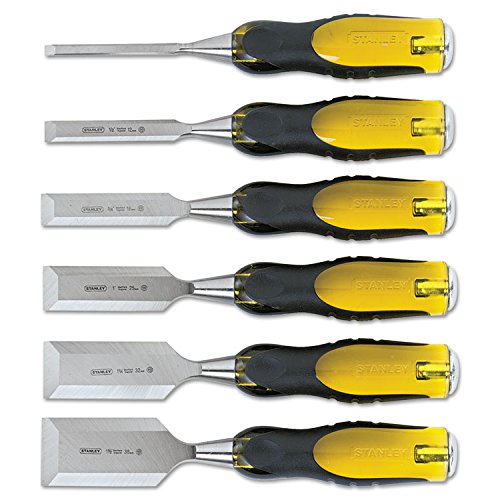
A bevel-edge chisel set covering 6, 12, 19, and 25 mm is a sensible buy if you do general carpentry. If you only fit an occasional replacement strike, a single 12 mm chisel plus a small 6 mm chisel is enough. There is no practical advantage in buying a premium full set solely for this task.
Useful sizes and their jobs
| Chisel width | Best use | Advantage | Limitation |
|---|---|---|---|
| 6 mm (1/4 in) | Lock openings, corners, narrow jambs | Precise and easy to control | Slow for removing broad waste |
| 12 mm (1/2 in) | Most latch and strike recesses | Best all-round balance | May not reach a wide deadbolt recess cleanly |
| 19 mm (3/4 in) | Large deadbolt plates and broad recesses | Removes waste quickly | Less forgiving near edges |
| 25 mm (1 in) | Heavy doors and unusually wide plates | Fast on open areas | Usually excessive for ordinary door hardware |
Which chisel type should you buy?
Bevel-edge bench chisels are the best general choice. They work with a light wooden or nylon mallet and can also be pushed by hand for final fitting. Choose a set with impact-resistant handles if you expect to strike them regularly. A plastic or composite handle is less traditional than a wooden one, but it tolerates site abuse and does not split when hit off-center.
Butt chisels are shorter versions designed for cabinet and door hardware work. Their compact length is convenient in a narrow jamb, especially when the door is still hung. However, a good standard bevel-edge chisel does the same cutting, and often costs less. Buy butt chisels for access and balance, not because they cut a different type of wood.
Paring chisels are excellent for shaving a high spot or cleaning the last fraction of a recess, but they should not be struck with a mallet. Their long blades are awkward in a door frame and easier to lever sideways. If you already own one, use it only for hand pressure and light trimming.
Mortise chisels are tough and tolerate heavy blows, but are normally too thick for strike plates. They can damage a narrow recess and make it difficult to sneak up on a clean fit. They make sense when cutting a deep mortise in a solid jamb, not for a typical 2–3 mm plate recess.
For a compact butt chisel for door hardware, the short format is helpful when clearance is poor. For occasional household repairs, though, a basic bevel-edge pair is the cheaper and more versatile option.
How to fit the recess without damaging the jamb
First, transfer the plate outline with a sharp marking knife. A pencil line is often too wide, particularly on painted softwood. Set the plate at the correct height, mark around it, and mark the latch or bolt opening separately. Do not assume the old recess is correctly positioned; a door that catches may need the strike moved, not simply enlarged.
Score the outline to a depth of about 1–2 mm. Hold the 12 mm chisel with the bevel facing the waste and tap down on the waste side of the line. Make a series of cuts across the recess, spaced roughly 3–5 mm apart. Do not try to split out the entire area with one deep blow. The scored perimeter prevents the fibres from tearing beyond the plate.
After establishing the edges, remove the waste in thin layers. Keep the chisel bevel down when paring across the bottom, and keep both hands behind the cutting edge. Test the plate frequently. Most strike plates need only a shallow recess: commonly around 2 mm, or just enough for the plate to sit flush. Cutting deeper than necessary weakens the jamb and can leave screws with less wood around them.
For the latch opening, drill or bore the bulk of the waste when it is substantial, then square the sides with a 6 mm chisel. On a shallow keeper, several controlled cuts are safer than twisting the chisel to pry out chips. Prying is a common cause of bruised jamb edges and bent chisel tips.
Edge quality matters more than brand
A sharp chisel cuts with light taps and leaves a clean shoulder. A dull one encourages harder blows, which can split the jamb or drive the blade through the face of thin trim. For this work, a 25–30 degree primary bevel with a small 30–35 degree honing bevel is practical. You do not need a mirror polish, but the back should be flat enough that the cutting edge does not have a hollow or burr.
Keep a two-sided sharpening stone or equivalent system nearby. A 1,000-grit side repairs a slightly tired edge; a 4,000-grit side refines it. Do not use a screwdriver as a substitute chisel. Its tip is not ground for wood, and it is more likely to slip, bruise the jamb, or break.
Buying advice for different users
For a homeowner fitting one or two locks, buy a sound 6 mm and 12 mm bevel-edge chisel, plus a small mallet. The cheaper option is fine if the blades arrive straight and can hold a reasonable edge. For a carpenter or installer, choose an impact-handled set, add a 19 mm chisel, and keep a spare 6 mm blade sharpened in the tool belt. A dedicated nylon-faced woodworking mallet reduces handle damage and gives more controlled blows than a steel hammer.
Premium chisels earn their price through better edge stability, handle comfort, and consistent grinding—not through magic cutting performance. If the chisel is sharp, the plate is accurately marked, and the waste is removed in stages, an inexpensive bevel-edge chisel will fit a strike plate just as well.