What's inside
As an Amazon Associate I earn from qualifying purchases. This post may contain affiliate links at no extra cost to you.
A short hand plane is useful on site: a block plane for easing edges, a low-angle plane for end grain, or a small smoother for fitting doors and drawers. The problem is that most carpenter tool bags are designed around drills, fasteners, and tape measures. A plane dropped into the wrong pocket can damage its iron, split a thin fabric divider, or make the bag uncomfortable to carry.
The best bag for carrying short hand planes has a wide, protected compartment, a firm base, and enough structure to keep sharp tools from colliding. It does not need to be a dedicated plane case, but a basic open tool tote is often a poor choice.
As an Amazon Associate we earn from qualifying purchases at no extra cost to you.
Sections
Our Top Picks

What to Look For in a Plane-Carrying Tool Bag
Measure the plane you actually carry. Many block planes are about 6 to 10 inches long, while compact bench planes can be 14 to 16 inches long and roughly 2 1/2 to 3 inches wide. Allow at least 1 inch of clearance in length and width so the tool can be removed without scraping against the bag opening.
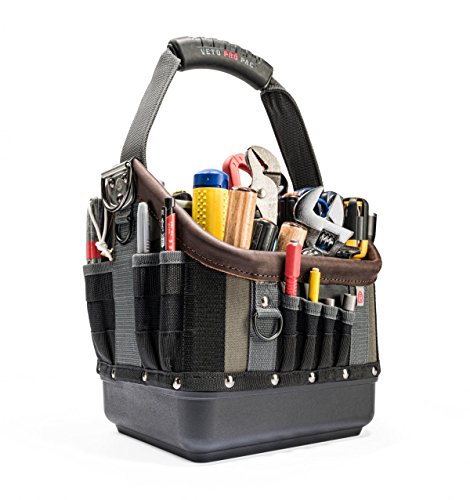
A rigid or semi-rigid base matters more than a large number of pockets. A loaded bag placed on a concrete floor can twist around the plane and press grit into the sole. Look for a molded plastic base, thick leather bottom, or heavily reinforced fabric. A completely soft-bottomed bag is acceptable for a cheap block plane, but it is a poor match for a tuned plane with a carefully flattened sole.
Protection around the blade is also important. The plane does not need to be wrapped in a thick case, but its iron should not sit against loose screws, nail sets, or chisel edges. A padded sleeve, internal divider, or separate hand-tool compartment prevents most damage. If the bag has none of these, place the plane in a simple fabric tool pouch before putting it in the main compartment.
For a typical short plane, a bag with an interior compartment at least 12 inches long, 5 inches wide, and 5 inches deep gives useful working room without becoming excessive. A taller 16-inch compartment is preferable if you carry a small smoother or a plane with a projecting tote.
The Best Bag Types for Short Hand Planes
| Bag type | Best use | Advantages | Limitations |
|---|---|---|---|
| Open tool tote | Block plane with a light site kit | Fast access, easy to load, good visibility | Little protection; tools can strike the plane |
| Wide-mouth tool bag | One or two planes plus chisels and marking tools | Flexible, enclosed, usually comfortable to carry | Soft sides may collapse onto the plane |
| Structured electrician or maintenance bag | Mixed carpentry kit with a plane | Firm dividers, reinforced base, useful pockets | Can be bulky and pocket-heavy |
| Tool backpack | Walking between rooms or carrying stairs | Even weight distribution and hands-free carrying | Planes may be hard to remove; interior space is limited |
| Small tool case | Protecting a valuable plane in transport | Best protection from impact and grit | Slower access and less convenient for active work |
For most carpenters, a wide-mouth tool bag or structured maintenance bag is the best compromise. Browse wide-mouth tool bags with reinforced bases if you want one bag for a block plane, chisels, a square, marking knife, and measuring tools.
Features Worth Paying For
A stiff opening is useful because it keeps the bag open while you put a plane away. Metal or molded plastic frames hold their shape better than a single strip of flexible plastic. This is a small feature, but it prevents you from dropping a plane into the bag at an angle and catching its iron on the rim.
Separate internal compartments are more valuable than exterior pockets. A plane should occupy the main compartment or a broad divider, while chisels and marking knives go into narrow pockets. Do not store a plane sole-down on loose drill bits or fasteners. Even small metal debris can create scratches, and sawdust mixed with grit can act like abrasive paste.
Choose a bag with handles rated for more weight than you intend to carry. A short-plane kit can easily reach 15 to 25 pounds once it includes a hammer, six chisels, combination square, tape, marking gauge, screwdriver, and fasteners. Box-stitched handle attachments and a padded shoulder strap are worth more than decorative pocket count.
Water resistance is useful but not the same as waterproofing. A coated fabric bag can keep off a brief shower, but it will not protect a plane left overnight in a wet van. Cast-iron planes should be wiped dry and given a thin coat of paste wax or rust preventive before storage. For a plane that stays in a vehicle, use a closed case or sleeve rather than relying on the bag fabric.
Practical Buying Choices
If you carry only a block plane and a few hand tools, a compact open tote is the cheaper option and is usually fine. Keep the plane in a sleeve, reserve one side of the main compartment for it, and avoid filling the tote with loose hardware. There is no reason to buy a large structured bag for a six-inch plane used occasionally.
If the bag will carry a plane every day, spend more on structure and padding. A structured tool bag with a wide opening and hard bottom is less likely to collapse, drag on the plane, or tip over when set down. It also handles the weight of chisels and measuring tools better.
For moving between floors or across a large jobsite, consider a tool backpack with a large bottom compartment. Put the plane in a padded sleeve at the bottom, with softer items around it. This works well for walking, but it is slower when you need the plane repeatedly and can force the tool against your back if the compartment is poorly arranged.
How to Pack and Maintain the Plane
Retract the blade slightly before transport, but do not rely on retraction alone. Put a leather, canvas, or thick felt guard over the iron. A folded shop towel works in a pinch, although it can collect abrasive dust. Keep the sole facing a padded divider or the outside wall, not a pocket containing metal tools.
Check the bottom of the bag regularly. Empty sawdust, screws, and shavings rather than allowing them to accumulate. Inspect the plane after a dusty or wet job. If the sole has picked up grit, wipe it clean before setting it on timber; embedded debris can leave scratches or dents that are more troublesome than the bag itself.
Finally, do not overload the bag. A plane is a precision tool, not filler for unused space. Carry the tools needed for the task, keep sharp edges separated, and use a dedicated case when transporting a valuable vintage or finely tuned plane. The right carpenter bag makes the plane easy to reach without treating it like ordinary hardware.