What's inside
As an Amazon Associate I earn from qualifying purchases. This post may contain affiliate links at no extra cost to you.
Sections
Our Top Picks
 Carhartt Station Tool Belt Suspender Carhartt BrownOne Size22.44 x 22.44 x 1.18 inchesCheck on Amazon
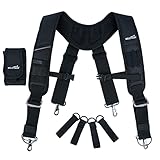
 MELOTOUGH Tool Belt Suspenders Construction Bag Suspenders HeavyTool Belt Suspenders1.3 poundsCheck on Amazon

The real difference
A padded tool belt puts the load on your waist. Suspenders transfer some of that load to your shoulders. That is the main distinction; neither setup makes a heavy kit weightless, and neither is automatically better for carrying chisels, planes, and measuring tools.
For a few frequently used hand tools, a basic belt is often simpler and cheaper. For a full day with a loaded pouch, suspenders can reduce pressure at the hips and help keep the belt from slipping. Padded belts add comfort where the belt contacts your body, but padding does not reduce the total weight your back and legs have to support.
As an Amazon Associate we earn from qualifying purchases at no extra cost to you.



Compare the setups
| Setup | Best fit | Main advantage | Trade-off |
|---|---|---|---|
| Basic belt | Light kit and short tasks | Low cost, quick to put on | Can dig in or sag when loaded |
| Padded belt | Moderate load worn for hours | Spreads pressure across the waist | Bulkier; padding cannot fix poor fit |
| Belt with suspenders | Heavy or unevenly loaded pouches | Transfers part of the load to the shoulders | More straps to adjust; may restrict movement |
| Padded belt with suspenders | Heavy kit worn most of the day | Support at both waist and shoulders | Most bulk and cost; can feel hot |
How much load are you carrying?
Count the tools you actually use, then weigh the loaded belt on a bathroom or luggage scale. A compact kit with a tape, pencil, knife, small square, and a few fasteners may weigh only a few pounds. Add a hammer, pry bar, several chisels, and a larger pouch of hardware and the load can reach 10 pounds or more. That is where belt fit and load distribution start to matter over a long shift.
Weight also depends on placement. A heavy pouch hanging from one side pulls the belt around your waist and can make it tilt. Suspenders help keep it up, but they do not correct an unbalanced layout. Put the tools you reach for most often near your dominant hand, and avoid filling every pocket just because it is there.
For a mostly hand-tool setup, look for a carpenter tool belt with suspenders if the belt slips or leaves sore pressure points despite correct adjustment. A simple belt may be enough if you carry only a few tools and can take it off between tasks.
Chisels, planes, and belt layout
Chisels need protection as well as access. Loose blades can cut you, damage a tape or pencil, or get nicked against other tools. Use a dedicated chisel roll or guarded pockets, and do not store sharp edges against your hip. A belt is not a safe substitute for a tool case when you are climbing, crawling, or moving through a crowded site.
Hand planes are usually poor belt tools. Even a small block plane is awkward and can be damaged by a fall or a collision with a framing member. Carry it in a protected pouch only when the job truly calls for it; otherwise, keep it in a tote or on a stable work surface. The same goes for precision squares and marking gauges: repeated knocks and grit can spoil edges or adjustments.
If your belt carries mostly layout tools, a small pouch may be more practical than a full carpenter’s rig. A compact carpenter tool pouch can hold a tape, marking knife, pencils, and a small square without adding empty pockets and excess weight.
Fit and adjustment matter more than padding
Wear the belt at the height you use on the job, then load it before judging the fit. It should stay level when you bend, reach overhead, and climb a step. If it slides down, first tighten or reposition it and move heavy tools closer to your hips. A thicker pad will not stop a belt that is the wrong size or loaded heavily on one side.
With suspenders, adjust the straps so they support the belt without pulling it high into your ribs. Straps that are too tight can rub the neck or restrict shoulder movement; straps that are too loose may not stop sagging. Check how they sit with your usual shirt, jacket, or harness. Some setups also need a compatible belt or attachment points, so verify that before buying.
A padded belt is worth considering if the belt edge creates a clear pressure line or discomfort after several hours. Try it with the actual pouches you plan to use: thick padding can make a belt feel stable, but it can also trap heat and make it harder to work in tight spaces. A padded carpenter tool belt is a reasonable upgrade for a moderate load, not a cure for carrying too much.
Common failure modes
Overloading is the most common problem. A belt that feels fine for ten minutes can become uncomfortable after several hours, and adding suspenders may simply move the discomfort to your shoulders. If your kit is heavy, remove tools used only occasionally and carry them in a nearby tote.
Another problem is poor pocket security. A loose chisel, pencil, or small rule can fall out when you bend down, while a deep pocket can make a frequently used tool frustrating to retrieve. Test your layout by squatting and reaching in several directions. Check stitching, rivets, and buckle adjustment regularly; a partially torn pouch can drop tools without warning.
What to buy
Choose a basic belt if your kit is light, you wear it for short periods, or you can keep heavier tools on a bench. Choose padding when waist pressure is the main complaint and the load is moderate. Choose suspenders when a correctly fitted belt keeps sagging under a heavier kit or leaves your hips uncomfortable. For all-day, heavy use, try the belt, suspenders, and loaded pouches together before committing; adjustability and pocket layout matter more than extra padding or a long feature list.
If you are unsure, start with the least complicated setup that holds the tools securely. You can add compatible suspenders later if the belt proves uncomfortable. Keep planes and delicate marking tools protected off the belt, and carry only the tools needed for the task at hand.