What's inside
As an Amazon Associate I earn from qualifying purchases. This post may contain affiliate links at no extra cost to you.
Sections
Our Top Picks


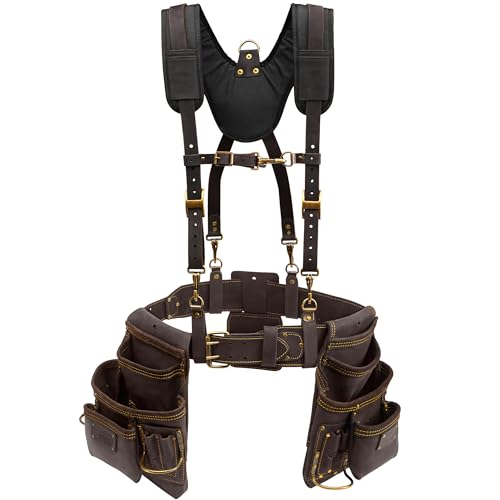
Choosing a Tool Belt for Site Carpentry
A site carpenter’s belt has to carry a working set of hand tools without turning every movement into a lifting exercise. The choice between one pouch and two pouches is mainly a choice between compactness and access. A single pouch keeps the load on one hip and works well for punch-list work, trim installation, and jobs where you repeatedly move between the bench and the building. Two pouches spread the weight, give each hand a natural place to reach, and make more sense when the belt is your primary toolbox for several hours.
Neither layout is automatically better. A badly balanced two-pouch belt can be more tiring than a well-organized single pouch, while a single pouch overloaded with chisels, a plane, fasteners, and a tape measure becomes a swinging weight that catches on door frames.
As an Amazon Associate we earn from qualifying purchases at no extra cost to you.


When a single pouch is the better choice
A single pouch is usually the cheapest and lightest solution. It is a good fit for a carpenter who carries a tape, pencil, knife, small square, a few chisels, and perhaps a small pry bar. For installing doors, setting hardware, scribing trim, or correcting defects, that is often enough.
The main advantage is freedom of movement. There is no second pouch to catch on studs, scaffold, or the edge of a workbench. You can also remove the pouch and leave the suspenders or belt on when you need to climb a ladder with both hands free. A compact single carpenter tool pouch is a sensible buy for occasional site work or for someone who already keeps larger tools in a nearby box.
The failure mode is overloading. Once a single pouch carries more than about 8 to 10 pounds, it tends to pull the belt down on one side and swing when you walk. Long tools also interfere with your arm. A 1-inch chisel, marking knife, and 16-foot tape are easy to manage; six chisels, a combination square, driver bits, and a hand plane are not. If you need a plane at your hip, choose a small block plane with a secure pocket or carry it separately. A full-size bench plane should not ride loose in a pouch.
Why use two pouches?
Two pouches divide the kit between your hips. A practical arrangement is measuring and marking tools on the dominant-hand side, with fasteners, chisels, knife, and small pry tools on the other. The separation reduces rummaging and keeps sharp tools away from the tape measure’s hook.
Two pouches are useful when you spend most of the day framing openings, installing trim, or moving through unfinished buildings without a convenient place to set tools down. They also reduce the sideways pull that causes a belt to rotate. With a properly fitted belt or suspenders, 12 to 18 pounds is manageable for many workers, though that is still a lot to carry continuously.
The drawbacks are bulk and temptation. Two large pouches encourage you to bring duplicates, excess fasteners, and tools that belong in a box. They can snag on door jambs and make it harder to sit, kneel, or climb. They are also more expensive. If your normal work requires only five or six tools, a two-pouch setup is paying for capacity you may not use.
| Factor | Single pouch | Two pouches |
|---|---|---|
| Best for | Trim, hardware, punch-list work | All-day site work and changing tasks |
| Typical useful load | About 4–8 pounds | About 8–18 pounds, depending on belt and suspenders |
| Movement | Less bulk and easier ladder access | More stable, but wider and easier to snag |
| Organization | Fast for a small kit; crowded when full | Better separation and quicker two-handed access |
| Cost | Usually lower | Usually higher, especially with suspenders |
Building a carpentry hand-tool loadout
Start with the tools used on nearly every task: a 16- or 25-foot tape, carpenter’s pencil, marking knife, combination square, utility knife, and a small set of screwdrivers or bits. Add two or three chisels that match the work rather than carrying a complete set. For general site carpentry, widths around 1/4 inch, 1/2 inch, and 1 inch cover many adjustments, but keep the edges capped.
A two-pouch leather carpenter belt can be durable and comfortable once broken in, but leather absorbs water and becomes heavy when wet. Synthetic pouches dry faster and often have more dedicated pockets, although thin fabric can wear through at the corners. For chisels and marking knives, look for deep sleeves that keep handles upright and prevent blades from contacting your hand.
Hand planes need special treatment. A block plane is compact enough to carry only if it has a firm pocket or holster and a covered iron. A low-angle block plane may weigh roughly 1.5 to 2 pounds; that is a significant fraction of a small belt load. For a bench plane, shoulder plane, or rabbet plane, use a tool bag or box and set it down on a stable surface before working. Dropping a plane on concrete can damage the iron, sole, or adjustment mechanism in one mistake.
Fit, balance, and suspension
Wear the belt above the hip bones, not loose around the top of the thighs. It should stay in place when you bend forward, but you should be able to slide two fingers under it. A belt that is too tight causes pressure points; one that is too loose makes the pouches swing and forces you to cinch harder.
For loads above roughly 10 pounds, carpenter tool belt suspenders are usually worth considering. They move some weight to your shoulders and stop the belt from sagging. Adjust the suspenders so they stabilize the belt rather than lift it aggressively. If the belt rides up every time you reach overhead, the adjustment is wrong.
Balance tools by weight, not just by category. Put a heavy pry bar or fastener load opposite the side holding the tape and square. Keep frequently used items between the front and side of the hip, where your hand can find them without twisting. Put rarely used items farther back or in a separate bag.
Which setup should you buy?
Choose a single pouch if you usually carry fewer than eight tools, work indoors, climb frequently, or already have a rolling box nearby. The cheaper option is entirely adequate for many finish carpenters and for homeowners doing occasional repairs.
Choose two pouches if you work away from the tool box for hours, switch between measuring and installation repeatedly, or find that one pouch constantly pulls sideways. Buy the smallest two-pouch arrangement that fits your actual kit, then add suspenders only when the load justifies them. A lighter belt that stays organized will outperform a large belt stuffed with tools you use once a day.