What's inside
- SKIL 3310 Table Saw: Core Specifications
- Cutting Capacity: What It Can and Can’t Do
- Fence and Table: The Make-or-Break Details
- Portability and Setup
- Ownership Realities: What Wears, What to Buy First
- Decision Matrix: Is the 3310 Right for Your Situation?
- Availability and Pricing
- Frequently Asked Questions
- Related Guides
- SKIL 3310 Table Saw: Core Specifications
- Cutting Capacity: What It Can and Can’t Do
- Fence and Table: The Make-or-Break Details
- Portability and Setup
- Ownership Realities: What Wears, What to Buy First
- Decision Matrix: Is the 3310 Right for Your Situation?
- Availability and Pricing
- Frequently Asked Questions
- Related Guides
As an Amazon Associate I earn from qualifying purchases. This post may contain affiliate links at no extra cost to you.
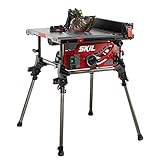
The SKIL 3310 table saw is a 15-amp, 10-inch benchtop saw aimed at DIYers and budget-conscious woodworkers who need real ripping capacity without spending contractor-saw money — and for most home-project work like shelving, trim, cabinet carcasses, and deck boards, it’s a competent fit. The 3310-02 configuration bundles SKIL’s folding stand, which is the version most buyers encounter. Below is what the numbers actually mean for your projects, where the saw falls short, and who should look elsewhere.
As an Amazon Associate we earn from qualifying purchases at no extra cost to you.


Sections
- SKIL 3310 Table Saw: Core Specifications
- Cutting Capacity: What It Can and Can’t Do
- Fence and Table: The Make-or-Break Details
- Portability and Setup
- Ownership Realities: What Wears, What to Buy First
- Decision Matrix: Is the 3310 Right for Your Situation?
- Availability and Pricing
- Frequently Asked Questions
- Related Guides
SKIL 3310 Table Saw: Core Specifications
The skil table saw 3310 sits in the “benchtop-plus” class — larger than a compact saw, smaller and lighter than a true jobsite saw with a wheeled stand. Here’s what the spec sheet translates to in practice:
| Specification | SKIL 3310 | What It Means in Practice |
|---|---|---|
| Motor | 15-amp, 120V | Handles construction lumber and hardwoods up to ~2″ without bogging, if fed steadily |
| Blade | 10″ carbide (24T included) | Standard blade size — cheap, widely available replacements and specialty blades |
| No-load speed | ~5,000 RPM | Comparable to other saws in its class |
| Max cut depth at 90° | 3-1/2″ | Cuts 4x4s in one pass; full through-cuts on 2x and 4x material |
| Max cut depth at 45° | ~2-1/2″ | Bevels 2x material; too shallow for 4×4 bevels |
| Rip capacity right of blade | ~25-30″ with table extension | Can center-rip a 4×8 plywood sheet — a key reason to buy this over a compact saw |
| Rip capacity left of blade | ~12″ | Adequate for most narrow rips and dado-adjacent setups |
| Table size | ~20″ x 26″ cast aluminum, extends wider | Small footprint, but the outfeed support is short — long boards need a roller stand |
| Weight | ~50 lbs (saw only) | One-person carry, but awkward; the bundled stand does the real portability work |
| Dust port | 2-1/2″ | Fits standard shop vac hoses; expect moderate dust capture without a shroud |
Cutting Capacity: What It Can and Can’t Do
The headline figure is the rip capacity. With the extension table deployed, the 3310 skil table saw can rip a full sheet of plywood or MDF down its length — something compact saws under ~22″ of rip capacity simply can’t manage. That alone makes it viable for cabinet boxes, closet organizers, and panel-based furniture.
The 3-1/2″ depth of cut at 90° covers every common dimensional lumber size. Where buyers get surprised is the 45° depth: at roughly 2-1/2″, you cannot bevel through a 4×4 in one pass, and thick hardwood bevels will require flipping the workpiece or a second operation. The 15-amp motor is adequate rather than generous — it will cut 2″ oak or maple, but feed rate matters. Forcing the cut trips the overload protection, which is frustrating mid-project but better than a burned motor.
Dado stacks: the 3310’s arbor accepts dados up to roughly 1/2″ wide (verify your unit’s arbor length before buying a stack). Grooves, rabbets, and tenon cheeks are feasible; full-width box joints get tedious but are doable.
Fence and Table: The Make-or-Break Details
The self-aligning rack-and-pinion-style fence on the skilsaw 3310 table saw is better than the clamp-style fences on cheaper benchtop saws — it locks parallel to the blade reasonably consistently and stays square through repeated repositions. That said, budget fences reward a habit: measure the fence-to-blade distance at the front and rear of the blade before critical cuts. A 30-second check with a tape or combo square catches the small drift that ruins a plywood panel.
The cast aluminum table is flat enough for project-grade work but won’t satisfy tolerance-critical joinery out of the box. Two setup steps pay for themselves immediately:
- Check blade-to-miter-slot parallelism. Mark a tooth, measure to the miter slot front and back, and adjust the trunnion bolts if it deviates more than ~1/32″. This is the single biggest accuracy fix on any benchtop saw.
- Square the fence to the miter slot (not the blade) so the two references agree — this prevents the binding and burn marks that owners often blame on the motor.
Outfeed support is the table’s weak point. The short deck means anything over ~3 feet wants to tip off the back edge at the end of the cut — a kickback trigger. A $30-60 roller stand or a leveled sawhorse solves it completely.
Portability and Setup
At ~50 lbs, the saw itself is a grunting one-person lift, and the motor housing makes it awkward to grip. The real portability story is the 3310-02’s folding stand: it sets up in under a minute, puts the table at working height, and folds flat for storage against a garage wall. For apartment-adjacent garages and shared driveways, the skilsaw table saw 3310 breaks down to a footprint roughly the size of a folded card table.
One honest caveat: the folding stand is stable for sheet goods and standard rips, but it’s not a wheeled jobsite stand. If you’re hauling a saw to job sites weekly, a heavier saw on a rolling stand (SKIL’s own wheeled-stand models, or comparable jobsite saws from DeWalt or Bosch) is worth the extra money and weight.
Ownership Realities: What Wears, What to Buy First
Long-term owners should budget for a few consumables and accessories — this is where skil table saw accessories earn their keep:
- Blades: The included 24-tooth ripping blade is a rough-cut blade. A 40-60T combination or crosscut blade (~$25-50) is the single biggest cut-quality upgrade — expect cleaner plywood edges and less tear-out within the first cut.
- Throat plate: Stock inserts can develop play or chip around the opening; a zero-clearance insert (aftermarket or shop-made from 1/2″ MDF) dramatically reduces tear-out and prevents small offcuts from dropping into the blade.
- Miter gauge: The included gauge is loose in most units’ slots. For accurate crosscuts, an aftermarket miter gauge with a solid fence or a shop-built crosscut sled is nearly mandatory for furniture-grade work.
- Push sticks and featherboards: Non-negotiable for narrow rips on any saw in this class.
- Blade guard and riving knife: Keep them installed. Removing the riving knife to make a non-through cut and forgetting to reinstall it is the most common safety mistake on saws like this.
Maintenance is simple: blow out sawdust from the motor housing and trunnion every few sessions (dust buildup is the top cause of elevation-crank stiffness), keep the cast top waxed to prevent oxidation and reduce friction, and check belt/blade alignment seasonally. The brushes and switch are the most likely wear items after several years of regular use.
Decision Matrix: Is the 3310 Right for Your Situation?
| Your Situation | Verdict | Why |
|---|---|---|
| Weekend DIYer, garage shop, plywood + dimensional lumber projects | Strong fit | Full sheet-rip capacity, adequate power, stores small |
| Apartment / small shared space, occasional projects | Good fit | Folding stand and ~50 lb weight make setup/teardown realistic |
| Fine furniture / precision joinery as primary work | Marginal | Workable with tuning + aftermarket miter gauge, but a contractor or hybrid saw serves better |
| Daily jobsite use, hauling between sites | Look elsewhere | No wheeled stand; step up to a rolling-stand jobsite saw |
| Frequent hardwoods over 2″ or production ripping | Look elsewhere | 15A motor will do it but slowly; a belt-driven saw sustains it better |
Availability and Pricing
As of 2026, the SKIL 3310 table saw remains in circulation through big-box home improvement retailers and online tool sellers, though regional stock fluctuates — it’s periodically listed as limited-availability, so checking multiple retailers is worthwhile. Expect street pricing in the $250-350 range for the saw-with-stand bundle, with seasonal tool sales shaving 10-20%. That positions it below premium jobsite saws ($450-650) and well below entry contractor saws — a fair gap given what it delivers. When comparing, confirm whether the listing includes the stand; saw-only and bundled SKUs both exist and price differently.
Frequently Asked Questions
Can the SKIL 3310 cut dadoes?
Yes, within limits — the arbor accommodates a stack up to about 1/2″ wide. Always use a compatible throat plate and confirm your arbor length before mounting a full stack.
Does the SKIL 3310 come with a stand?
The 3310-02 SKU includes SKIL’s folding stand; base configurations without it exist. Verify the bundle before buying, since the stand materially changes portability.
Can it rip a full sheet of plywood?
Yes — with the extension deployed, rip capacity right of the blade reaches enough to halve a 48″ sheet. Support the offcut with a roller stand or helper for safety.
Is the SKIL 3310 good for beginners?
It’s a reasonable first saw: standard 10″ blades, straightforward controls, and real sheet-goods capacity at a low price. Budget for the alignment checks and an upgraded blade described above, and learn push-stick and riving-knife discipline from day one.