What's inside
As an Amazon Associate I earn from qualifying purchases. This post may contain affiliate links at no extra cost to you.
Sections
Our Top Picks
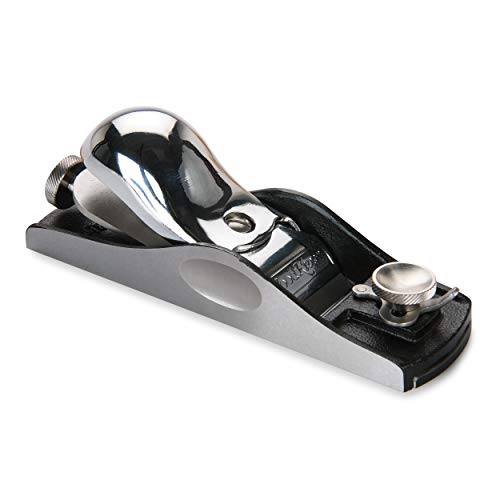 Woodriver Low Angle Block Plane With Adjustable Mouth7.85 x 3.15 x 2.75 Inches2.04 poundsCheck on Amazon
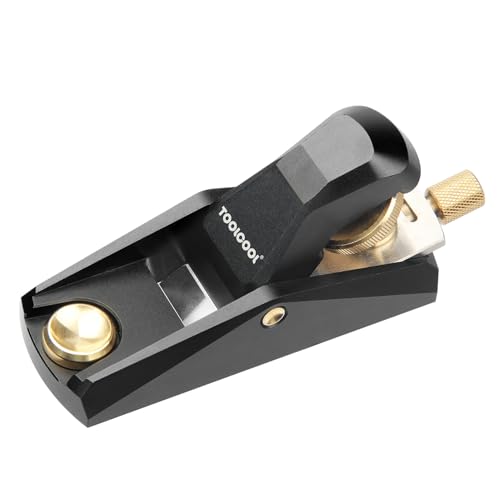
The short answer
For planing end grain, a low-angle plane is usually the easier tool to control. Its lower bed angle reduces the cutting angle, so the blade slices more cleanly instead of pushing hard into the fibers. A low-angle block plane is particularly useful for trimming small parts, easing edges, and shooting miters.
A standard-angle bench plane still works well, especially when it has a sharp blade, a tight mouth, and a heavier body. It is also the better all-round purchase if you need one plane for face grain, edge grain, and occasional end grain. The choice is mainly between easier end-grain cutting and greater general-purpose versatility.
As an Amazon Associate we earn from qualifying purchases at no extra cost to you.

What the angles mean
Most standard bench planes use a bevel-down blade on a frog angled at about 45 degrees. The cutting angle is therefore close to 45 degrees, regardless of whether the blade bevel is 25 or 30 degrees. A standard-angle plane is often called a “York pitch” plane when it is around 50 degrees, but ordinary bench planes are commonly near 45 degrees.
A typical low-angle plane has a bed around 12 degrees, with the blade bevel facing up. A blade sharpened at 25 degrees produces an effective cutting angle of approximately 37 degrees. A 30-degree bevel gives about 42 degrees. That lower effective angle is the reason it cuts end grain with less resistance.
The trade-off is that the blade bevel becomes part of the cutting geometry. Changing from a 25-degree bevel to a 30-degree bevel changes the cutting angle, cutting feel, and clearance at the mouth. On a bevel-down plane, changing the bevel usually does not change the cutting angle, provided the bevel remains clear of the work.
Low-angle versus standard-angle planes
| Feature | Low-angle plane | Standard-angle plane |
|---|---|---|
| Typical cutting angle | 37–42 degrees | About 45 degrees |
| End-grain effort | Lower, particularly on hardwood | Higher, but manageable with a sharp blade |
| Best small-plane use | Trimming, shooting, chamfers, fitting doors | Less common as a small block-plane format |
| General face-grain work | Good, but may tear out on difficult grain | Very good with suitable blade projection and mouth setting |
| Blade-angle adjustment | Easy to alter with different bevels | Usually fixed by the frog angle |
| Typical weakness | Can be aggressive in difficult reversing grain | More effort and more tendency to crush end grain |
When a low-angle plane wins
Choose a low-angle plane when you routinely fit cabinet parts, trim tenon shoulders, clean the ends of shelves, or shoot boards against a shooting board. The lower cutting angle needs less downward force, so the plane is less likely to stall halfway across a wide end grain surface.
It is also a good choice for short-grain work such as trimming a projecting dovetail or paring back an edge after assembly. A small low-angle block plane is easier to hold in one hand and can be controlled close to a corner. For this work, a plane with a side or adjustable mouth is useful. Keep the mouth reasonably tight—roughly 0.5 to 1 mm for fine trimming—to reduce the chance of the blade catching the unsupported fibers.
For a first purchase aimed mainly at end grain, look at a low-angle block plane. A longer low-angle jack or bench plane is better for shooting wide boards because its sole bridges hollows more effectively.
When a standard-angle plane is the better buy
A standard-angle bench plane is often the sensible choice for a general workshop. If you will flatten faces, straighten edges, and only occasionally trim end grain, buying a second low-angle plane may not justify the cost. A sharp 45-degree plane can handle softwood and moderate hardwood end grain without trouble.
It also has an advantage on figured, curly, or reversing grain. The higher cutting angle tends to lift and sever the fibers more cleanly instead of prying them out. If your standard plane accepts a higher-angle frog or a replacement blade with a higher bevel, it can be tuned for difficult grain without buying another body.
The limitation shows up on wide, dry, hard end grain. A standard plane may leave a polished-looking crushed patch rather than a clean shaving if the blade is slightly dull or the cut is too deep. You will feel this as a sudden increase in resistance, followed by a chipped corner or a plane that rides over the surface.
Setup for clean end grain
Sharpness matters more than the label on the plane. For end grain, hone a consistent edge around 25 to 30 degrees and remove the wire edge completely. A blade that cuts face grain acceptably can still be too dull for end grain. As a practical test, it should shave hair or cleanly slice the corner from a softwood offcut without pushing fibers ahead of the edge.
Set the blade for a fine shaving—often less than 0.1 mm at first. Take a cut across the full width of the piece, then reduce pressure as the blade exits. Supporting the exit edge is critical: clamp a sacrificial block tightly against it, or plane from both edges toward the middle. This prevents the familiar breakout at the far corner.
Waxing the sole reduces effort, especially on a shooting board, but do not use so much that the plane becomes difficult to control. Keep the work firmly clamped and check that the blade is square to the sole. A skewed blade can take a heavier shaving on one side, catch at the edge, and leave a sloping shoulder.
What to buy for your work
For occasional end-grain trimming, a decent adjustable-mouth block plane is enough. The cheaper option is fine if the sole is reasonably flat, the blade clamps securely, and the mouth can close enough for fine cuts. Expect to spend time flattening or sharpening it if the factory edge is poor.
For regular cabinetmaking, a heavier low-angle plane plus a shooting board is the more comfortable setup. If most of your work is general joinery, buy a standard bench plane first and invest in a good sharpening setup. A sharp, properly adjusted standard plane beats a poorly tuned low-angle plane every time.