What's inside
As an Amazon Associate I earn from qualifying purchases. This post may contain affiliate links at no extra cost to you.
A swollen door usually needs only a small amount of wood removed, but the awkward part is doing it while the door is still hung. You need a plane that can reach the rubbing edge, take a controlled shaving, and leave a surface that will tolerate paint or finish. For most in-place trimming, a block plane is the practical choice; a low-angle block plane makes the work easier on end grain. A longer bench plane is useful for straightening a long edge, but it is harder to control against a door that cannot lie flat.
As an Amazon Associate we earn from qualifying purchases at no extra cost to you.



Sections
Our Top Picks
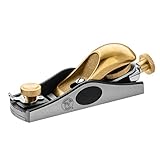
 Rockler Bench Dog No. 60-1/2 Low Angle Block60-1/2 Block Plane6.25 x 1.6 x 6.25 inches0 PoundsCheck on Amazon
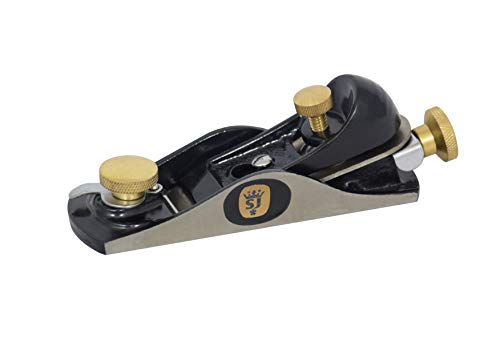 Spear & Jackson CBP95 9 1/2 Carpenters Block9 1/2 In6.89 x 1.77 x 2.76 Inches1.98 poundsCheck on Amazon


Find the rubbing spot before you plane
Close the door slowly and note where it binds. Look for a bright rub mark, fresh paint transfer, or a thin strip of paper that gets trapped. Check the hinge screws too: a loose hinge or a door that has dropped can make the latch-side corner scrape, and removing wood will not fix the underlying cause. Tighten loose screws and test again before reaching for a plane.
Mark the tight area with pencil. If the door sticks along a broad section, check the gap at the top and sides; a door that has shifted may need hinge adjustment rather than a local shave. Remove as little as possible at first. A few light passes can remove roughly 1/32 inch, while an overeager cut can leave a visible gap that is difficult to undo.
Which hand plane suits the job?
| Plane type | Best use on a hung door | Trade-off |
|---|---|---|
| Standard block plane | Short, accessible rubs on the latch edge or a corner | Affordable and compact, but a standard-angle blade can tear end grain |
| Low-angle block plane | End grain and controlled trimming of the top or bottom edge | Usually costs more; the lower cutting angle often leaves end grain cleaner |
| Bench plane, roughly 9–14 inches | A longer, reasonably straight edge that needs an even cut | More stable over distance, but bulky to use on a hanging door |
| Rasp or coarse file | A small corner adjustment or a spot a plane cannot reach safely | Easy to control locally, but slower and more likely to leave a rough surface |
For occasional household work, a basic adjustable block plane is often enough. Look for a blade that can be set to take a fine shaving and a mouth that can be adjusted or is narrow enough to limit tear-out. A cheap plane can work, but its blade may arrive blunt or poorly ground; budget time to sharpen and tune it.
If the edge is mostly end grain, consider a low-angle block plane. Its geometry is helpful on short-grain wood, where a standard block plane may lift fibers ahead of the cut. It is not a cure for a dull blade or a badly adjusted iron, and it is not necessary for a tiny paint buildup or one small high spot.
What to check before buying
Blade sharpness matters more than a premium-looking body. The iron should be held securely, project evenly across its width, and retract without fuss. A fine cut should produce a thin, continuous shaving rather than dust or ragged chips. If the plane has a depth adjustment, test that it moves the blade in small increments; an adjustment that jumps from no cut to a deep cut is frustrating on a finished door.
For a plane you will use on more than this repair, a decent sharpening stone is a better investment than replacing a dull tool. A sharp edge cuts with less force and is less likely to tear fibers. The inexpensive option is still reasonable if you already have a way to sharpen it, or if the plane will see only occasional, light use.
Trim the door without making a mess
Protect the floor with a drop cloth, then open the door enough to work on the edge. Keep fingers clear of the blade path and make sure the door cannot swing into you. If the door moves while planing, wedge it securely or have someone hold it. Do not try to plane toward your hand or toward the hinge hardware.
Set the plane for a fine cut. Hold the body firmly with one hand and guide the nose with the other, keeping the sole flat on the edge. Plane with the grain where possible. On end grain, take short, light strokes and work from each edge toward the middle to reduce the chance of breaking out a corner. If the door edge is painted, a utility knife scored along the intended cut can help prevent paint from lifting, though it will not stop every chip.
After two or three passes, close the door and check the fit. Repeat in small steps until it clears. Avoid planing the entire edge just because one corner rubs; feather the cut into the surrounding area only as much as needed to avoid a noticeable hollow. If the plane chatters, digs in, or leaves torn fibers, stop and check blade sharpness, projection, and grain direction rather than pushing harder.
When a plane is the wrong fix
Do not remove wood until you have ruled out loose hinges, a loose frame, or a latch that is misaligned. Seasonal swelling may ease when humidity drops, so a large cut made during a damp spell can leave an oversized gap later. If the door is hollow-core, inspect its construction before trimming: the solid wood rail at the bottom may be only about 1 inch high, and cutting beyond it can expose the hollow interior.
For a very small paint ridge, scraping or sanding may be enough. For a long, uneven edge, taking the door off and using a bench plane or a guided power tool can give a straighter result, but removal and re-hanging take time. If the door binds badly, has a twist, or needs more than about 1/8 inch removed over a substantial length, diagnose the frame and hinges before treating it as a simple planing job.