What's inside
As an Amazon Associate I earn from qualifying purchases. This post may contain affiliate links at no extra cost to you.
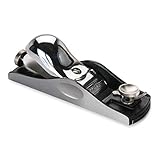
End-grain timber is where a mediocre block plane shows its weaknesses. The cut can tear out at the far edge, the blade may chatter across hard growth rings, and a poorly adjusted mouth will clog with shavings. A good low-angle block plane makes the job controlled rather than frustrating, but the most expensive plane is not automatically the best choice.
For trimming end grain, look for a low bedding angle—usually around 12 degrees—with a blade bevel that brings the effective cutting angle to roughly 25 degrees. This geometry slices across fibres efficiently and needs less force than a standard-angle plane. A tight mouth, solid blade adjustment and a sole that stays flat matter just as much.
As an Amazon Associate we earn from qualifying purchases at no extra cost to you.
Sections
What Makes a Good End-Grain Block Plane
The plane should be comfortable to hold with one hand while allowing your thumb and fingers to keep it square to the work. A useful block plane weighs roughly 450 to 900 grams. Lighter planes feel quick on small parts; heavier ones carry momentum through dense hardwood. Weight is not a substitute for a sharp blade, but an ultra-light casting can feel nervous when trimming a broad end.
A low-angle bed is the main feature to prioritise. It reduces the angle at which the blade meets the fibres, which helps it cut cleanly across end grain. The blade should be thick enough to resist vibration—around 3 mm is a sensible minimum for a general-purpose plane—and its edge should be easy to remove and sharpen.
Blade adjustment is another dividing line. A screw-adjusted blade is simple and dependable, but it can take several attempts to centre the edge in the mouth. Lateral adjustment through a small lever or adjustable blade carrier makes fine correction faster. Either system works if it holds the setting under pressure.
Block Plane Types Compared
| Plane type | Best use | Advantages | Limitations |
|---|---|---|---|
| Small low-angle block plane | Small end-grain parts, dowels and light trimming | Easy to control and carry; usually cheaper | Short sole can rock on wide surfaces |
| Standard-size low-angle block plane | Door edges, boards and general joinery | Better balance, more sole support and wider blade | Costs more and can feel bulky on tiny work |
| Premium adjustable-mouth plane | Frequent hardwood work and precise fitting | Fine mouth control, better machining and smoother adjustments | High price; still needs sharpening and setup |
| Low-cost cast block plane | Occasional trimming and rough site work | Good value when modified and sharpened | Blade, sole and adjustment quality may vary |
Which Plane Is Worth Buying
For most carpenters, a standard-size low-angle block plane is the safest purchase. It gives enough sole length to bridge small irregularities without becoming tiring. Choose one with a blade at least 40 mm wide, a comfortable side grip and a mouth that can be closed to approximately 1 mm or less for fine work.
A premium plane is justified if you regularly fit doors, trim hardwood components or work on expensive furniture where tear-out is costly. Better planes generally arrive flatter, have cleaner castings and offer more positive blade adjustment. These benefits save setup time, but they do not make a blunt edge perform well.
If you only trim the occasional shelf, door edge or frame, a cheaper low-angle block plane is fine. Check the sole with a straightedge, flatten any obvious high spots, and replace or improve the blade if it will not hold an edge. A budget plane that cuts cleanly is more useful than a premium plane with poor sharpening.
Small models are particularly handy for fitting drawer parts and narrow strips. They are less suitable for trimming the end of a 100 mm-wide board because the short sole can tip at the leading or trailing edge. In that situation, step up to a full-size plane or take several shallow passes while supporting the plane carefully.
Blade and Mouth Setup
Start with a sharp blade. For end grain, a practical bevel angle is about 25 degrees on a low-angle bed. A micro-bevel of a further 1 or 2 degrees can make honing quicker and strengthen the edge. Use a honing guide if necessary, but the important test is whether the blade cleanly shaves end grain without requiring excessive pressure.
Set the blade for a shaving around 0.05 to 0.15 mm thick. Take a lighter cut near the final dimension. Open the mouth slightly for rougher removal, then close it for the last passes. If the blade is projecting unevenly, one corner will dig in and leave a step or diagonal scratch.
Waxing the sole reduces effort, especially on wide hardwood ends. Keep wax away from surfaces that will be glued or finished, or clean the timber with an appropriate solvent first. A small amount is enough; an oily sole can make the plane hard to control.
How to Trim End Grain Without Tear-Out
Mark the final line on all four faces of the timber. Plane from the waste side toward the line, and stop when the cut reaches the mark on every face. This prevents accidentally shortening the part while concentrating on one edge.
Use short, overlapping strokes and keep the sole flat. On a board end, plane from both edges toward the centre so the final fibres are supported rather than levered away. Another reliable method is to make a light scoring cut along the line with a marking knife before planing. The knife line severs the surface fibres and sharply limits breakout.
For cross-grain corners, take a tiny chamfer—about 0.5 to 1 mm—on the leading edges before the main cut. This sacrificial bevel prevents the plane from catching the corner. It can be removed later or left as a deliberate eased edge.
Common Failures and Fixes
If the plane chatters, check that the blade is firmly clamped, the edge is sharp and the cut is not too deep. A blade with a rounded or uneven bevel can vibrate even when the mechanism is tight. If the plane leaves tear-out, reduce the cut, close the mouth and reverse the direction of the stroke where the grain changes.
A plane that veers sideways may have a skewed blade or an uneven sole. Correct the blade first; only then consider flattening the sole. If the sole rocks, mark it with pencil and rub it on abrasive paper fixed to a flat surface. Remove only the high areas, checking frequently. Excessive flattening can waste time and alter the mouth geometry.
For a broader selection of sizes, a low-angle block plane with an adjustable mouth is the most versatile upgrade. Pair it with a reliable sharpening system for plane blades; that investment usually improves results more than changing from one decent plane to another.