What's inside
- Lincoln Diesel Welder Lineup at a Glance
- Why Diesel for an Engine-Driven Welder?
- Lincoln Diesel Welder Models Compared
- How to Choose: Decision Matrix by Situation
- Duty Cycle: The Spec That Decides Real Capability
- Portability and Mounting Realities
- Ownership Costs and What Actually Wears
- Frequently Asked Questions
- Bottom Line
- Lincoln Diesel Welder Lineup at a Glance
- Why Diesel for an Engine-Driven Welder?
- Lincoln Diesel Welder Models Compared
- How to Choose: Decision Matrix by Situation
- Duty Cycle: The Spec That Decides Real Capability
- Portability and Mounting Realities
- Ownership Costs and What Actually Wears
- Frequently Asked Questions
- Bottom Line
As an Amazon Associate I earn from qualifying purchases. This post may contain affiliate links at no extra cost to you.
Sections
- Lincoln Diesel Welder Lineup at a Glance
- Why Diesel for an Engine-Driven Welder?
- Lincoln Diesel Welder Models Compared
- How to Choose: Decision Matrix by Situation
- Duty Cycle: The Spec That Decides Real Capability
- Portability and Mounting Realities
- Ownership Costs and What Actually Wears
- Frequently Asked Questions
- Bottom Line
Lincoln Diesel Welder Lineup at a Glance
If you need a diesel Lincoln welder for field work, your realistic choices in 2026 are the Lincoln Electric diesel-driven engine welders: the Vantage series (Vantage 300, 400, 500) and the Big Red 500 — engine-driven machines built on proven diesel powerplants that deliver between roughly 300 and 575 amps of welding output plus auxiliary power for tools. Gasoline models like the Ranger exist below them, but if you’re specifically shopping diesel Lincoln welders, you’re shopping the Vantage and Big Red families, and the real question is which duty cycle and output tier matches the work you actually do.
Why Diesel for an Engine-Driven Welder?
A Lincoln Electric diesel welder makes sense when three conditions are true: you weld frequently enough that fuel economy matters, you need high duty cycles for heavy structural or pipe work, and the machine will live on a truck or trailer where diesel fuel is already on site. Diesel engines hold up better under continuous load, idle more efficiently, and typically outlast comparable gasoline engines by thousands of hours. The trade-offs are weight, upfront cost, and the fact that diesel machines can struggle to start in extreme cold without a block heater or ether assist.
As an Amazon Associate we earn from qualifying purchases at no extra cost to you.
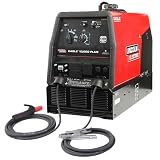


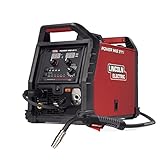
- Fuel cost: Diesel engines in this class burn roughly 30–40% less fuel per hour at weld load than gasoline equivalents. Over a 2,000-hour service life, that difference can exceed the price gap between gas and diesel models.
- Longevity: Kubota and Perkins diesel engines commonly run 8,000+ hours before major overhaul with proper maintenance.
- Resale: Diesel welders hold value noticeably better than gas units on the used market.
Lincoln Diesel Welder Models Compared
Here are the core models in the current diesel lineup, with the specs that actually drive a purchase decision:
| Model | Engine | Max Output (CC) | Duty Cycle | Aux Power | Approx. Weight | Best For |
|---|---|---|---|---|---|---|
| Vantage 300 | Kubota V1505 diesel, 4-cyl | 300A | 300A @ 100% (select ranges) | ~11 kW | ~1,150 lbs | Maintenance, light structural, mobile repair |
| Vantage 400 | Perkins 404D-22 diesel | 400A | 350A @ 100%; 400A @ 60% | ~12 kW | ~1,400 lbs | Structural steel, general fabrication |
| Vantage 500 | Perkins 404D-22T turbo diesel | 500A | 450A @ 100%; 500A @ 60% | ~12 kW | ~1,500 lbs | Pipe, heavy structural, carbon arc gouging |
| Big Red 500 | Deutz turbo diesel | 575A | 500A @ 100%; 575A @ 60% | ~20 kW | ~2,000 lbs | Pipeline, multi-operator, arctic/severe duty |
All four are CC/CV multi-process machines capable of stick, MIG, flux-cored, TIG, and gouging with the right accessories. Lincoln’s Chopper Technology and enclosed cases are standard across the Vantage line, which matters more than most spec sheets suggest — enclosed, sound-deadened machines run noticeably quieter on job sites with noise restrictions.
How to Choose: Decision Matrix by Situation
Specs don’t pick machines — workloads do. Match your situation to the table below:
| Your Situation | Recommended Model | Why |
|---|---|---|
| Mobile repair, farm/ranch, occasional 5/32″–1/4″ rod, budget-conscious | Vantage 300 | Lightest diesel option; 300A handles everything short of heavy gouging; lowest fuel burn |
| Full-time welding truck, structural steel, mostly 7018 and wire processes | Vantage 400 | Sweet spot of output vs. weight; 100% duty cycle at 350A covers an entire day’s stick work |
| Pipe welding, heavy plate, frequent carbon arc gouging | Vantage 500 | Turbo engine keeps output stable at sustained amperage; handles 3/8″ carbons |
| Pipeline crews, two operators off one machine, extreme environments | Big Red 500 | Highest output and aux power; built for continuous severe service |
Two rules of thumb: if you’ll gouge regularly, step up one tier from what your welding amperage alone suggests — gouging demands far more sustained current than stick welding. And if the machine rides on a service truck, check the truck’s payload rating against wet weight (machine plus fuel, cables, and leads), not just the spec-sheet dry number.
Duty Cycle: The Spec That Decides Real Capability
A Lincoln diesel welder rated “400 amps” doesn’t weld at 400 amps all day. Duty cycle states what percentage of a 10-minute window the machine can weld at a given amperage. The 400A @ 60% rating on the Vantage 400 means six minutes on, four minutes off at full output — fine for fit-up work, limiting for continuous heavy welding. But at 350A and below it runs at 100%, meaning it never thermally limits you at realistic stick and wire amperages. When comparing models, ignore peak amperage and look at the 100% duty cycle number — that’s the machine’s true continuous output.
Portability and Mounting Realities
None of these machines are “portable” in the carry-it sense. The Vantage 300 at roughly 1,150 lbs is pickup-bed territory; the Big Red needs a trailer, skid mount, or a properly rated truck bed. Practical considerations:
- Order the machine with the right factory options up front — trailer packages, stainless covers, battery warmers, and spark arrestors are far cheaper installed at order than retrofitted.
- Skid-mounted units with forklift pockets simplify moving between shop and field.
- Diesel welders this size draw attention to weight distribution on half-ton trucks; three-quarter-ton or larger is the realistic minimum for a full welding rig.
Ownership Costs and What Actually Wears
Buying a diesel Lincoln welder is a 10+ year decision, so ownership economics matter as much as sticker price. Expect the general market range to run from the mid-teens of thousands for a Vantage 300 up to substantially more for a Big Red, depending on options.
- First to wear: Brushes and slip rings (on applicable designs), batteries, fuel filters, and drive belts — all cheap, routine items. Keep spares on the truck.
- Consumables: Engine oil and filters every 200–250 hours; fuel filters more often if you fuel from field tanks or drums.
- Fuel math example: A Vantage 500 welding at 300A burns roughly 1.3–1.6 gallons per hour; a comparable gas unit burns 2+ gallons. At 1,500 hours/year and a modest fuel price gap, diesel saves well over $1,500 annually in fuel alone.
- Common mistakes: Running the machine at idle for hours only to power tools (wet-stacks a diesel engine — use a high-idle or exercise it under weld load periodically); ignoring battery maintenance in cold climates; and buying aux power capacity you never use — 12 kW already runs a grinder, lights, and a small compressor simultaneously.
- Altitude and cold: Naturally aspirated diesel engines lose roughly 3% of power per 1,000 ft of elevation. Turbo models (Vantage 500, Big Red) hold up far better in mountain work.
Frequently Asked Questions
Is a Lincoln diesel welder worth it over a gas model?
If you weld more than a few hundred hours per year or need high duty cycles, yes — fuel savings and engine longevity pay back the premium. For occasional farm use, a gas Ranger-class machine is cheaper to buy and easier to start in cold weather.
Can a diesel Lincoln welder power my tools?
Yes. Vantage models provide around 11–12 kW of clean auxiliary power, enough for grinders, drills, lights, and battery chargers while welding at moderate amperage. Note that aux output drops as welding output rises — check the simultaneous power curve if you plan to weld and run a compressor at once.
Which Lincoln diesel welder for pipeline work?
The Big Red 500 is the traditional pipeline choice for output and multi-operator support; the Vantage 500 suits single-operator tie-in and fabrication work at lower weight and cost.
How long do these engines last?
With scheduled oil and filter service, diesel engines in this class routinely exceed 8,000–10,000 hours. Welding output sections typically outlast the engine — many owners rebuild or replace engines rather than the whole machine.
Bottom Line
Buy at the 100% duty cycle number, not peak amperage. For most welding trucks, the Vantage 400 hits the balance of output, weight, and fuel economy; step up to the Vantage 500 for gouging and pipe, or down to the 300 for lighter mobile work. Whichever Lincoln welder diesel model you choose, budget for cold-start accessories if you work in northern climates and keep filters and a spare battery on hand — that’s where downtime actually comes from.