What's inside
As an Amazon Associate I earn from qualifying purchases. This post may contain affiliate links at no extra cost to you.
Sections
Our Top Picks


The short answer
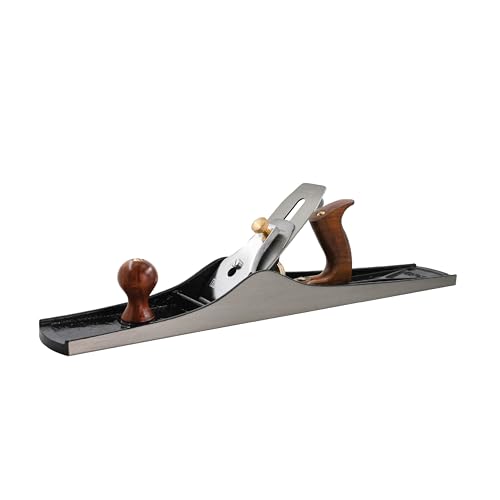
A jointer plane is the better choice for straightening long board edges and faces because its long sole bridges hollows and high spots instead of following them. A jack plane is shorter, easier to handle, and usually the better first purchase for general stock preparation. It can straighten a long board, but it takes more careful technique and checking.
If you only flatten a few boards a year, a jack plane is often enough. If you regularly prepare long edges for glue-ups or flatten boards around 1.5 metres (5 feet) or longer, a jointer plane saves effort and makes consistent results easier. Neither plane guarantees straightness on its own: you still need to read the board, set the blade, and check your work.
As an Amazon Associate we earn from qualifying purchases at no extra cost to you.


What each plane does
A jack plane is commonly around 350–400 mm (14–16 inches) long. It is a general-purpose plane for removing material, smoothing rough faces, and bringing edges close to square. With a cambered iron—a blade ground with a slight curve—it can take a relatively thick shaving without leaving sharp tracks at the sides.
A jointer plane is much longer, often around 560–610 mm (22–24 inches). Its length is its main advantage. When the plane crosses a shallow hollow, the front and rear of the sole can ride on the higher areas while the blade reaches the middle. A shorter plane is more likely to dip into the hollow and follow the board’s existing shape.
That does not make a jointer plane a fast stock-removal machine. Its long body is heavier and harder to control, and a badly set blade will still tear out the grain or dig in. It works best after the board is reasonably close to flat and the iron is sharp.
Jointer plane vs jack plane
| Factor | Jointer plane | Jack plane |
|---|---|---|
| Typical length | About 560–610 mm (22–24 in.) | About 350–400 mm (14–16 in.) |
| Best at | Straightening long edges and checking flatness | General preparation and moderate stock removal |
| Long-board control | Bridges dips more reliably | Needs more frequent checking and careful strokes |
| Handling | Heavier; needs room and a controlled push | More versatile and easier to use in tight spaces |
| First-plane value | Specialised purchase | Usually the more useful starting point |
Choose by the work you actually do
For a table edge, door stile, or other board roughly 1 metre (3 feet) long, a sharp jack plane can do the job well. Take light shavings and check the edge with a reliable straightedge or winding sticks. A jointer becomes more useful as the board gets longer, especially when the edge must mate cleanly with another board over its full length.
For face flattening, a jointer plane is mainly a checking and refinement tool, not a substitute for a sensible sequence. Remove obvious high spots first, then use longer strokes to bring the surface into one plane. On a badly twisted or cupped board, starting with a long plane can be slow and frustrating. Mark high spots with pencil, work them down, and check across the width and along the length. If you do not already own a suitable general plane, a No. 5 jack plane is a practical place to start.
Buy a jointer plane if you repeatedly need long, straight edges for glue-ups or prepare long solid-wood boards by hand. It is a less compelling purchase for occasional repairs, short parts, or work where a machine does most of the flattening. A No. 7 jointer plane is a common size for this work, though its length and weight are worth handling before buying if possible.
How to straighten a long edge
Secure the board so it cannot rock, but do not clamp so hard that you bend it. Sight along the edge and mark obvious high spots. Take diagonal or shorter strokes over those areas first, then use full-length strokes once the edge is close. With a jointer, start the cut before the board and continue past the far end so the plane stays supported through the stroke.
A common failure is leaving the ends rounded by pressing down too hard at the start or finish. Keep pressure over the front tote as the plane enters the cut, then shift pressure toward the rear handle as it exits. Another is planing only in one direction against difficult grain. Try reversing direction if the shavings tear out, and reduce the cut before forcing the plane.
Check the edge with a straightedge and hold it to the light; small gaps reveal hollows. For glue-ups, a slight hollow of a few tenths of a millimetre near the middle can sometimes close under clamp pressure, but do not rely on clamps to correct a visibly bowed or twisted edge. Check two mating edges together as well: a straight individual edge can still be out of square.
Setup matters more than the label
Before blaming plane length, check the sole for damage, sharpen the iron, and set the blade for a fine, even shaving. A dull iron takes more force and encourages the user to push down unevenly. A jack plane set for heavy, cambered roughing cuts is not set up for a clean final edge; reduce the projection and use a straighter blade profile when accuracy matters.
For one-off work, borrowing or buying a sound used plane may make more sense than paying for a jointer you rarely use. Used planes need inspection: check for a cracked casting, a bent or badly pitted iron, a loose frog, and a sole that is not badly worn or damaged. Budget time for cleaning and sharpening. A plane that is longer but poorly adjusted will not outperform a well-set jack in the hands of someone who checks often.
In short, choose the jack plane for versatility and lower cost, and choose the jointer when long, straight edges are a repeated requirement. If you are undecided, start with the jack, learn to check your work, and add a jointer when its length solves a problem you can clearly identify.