What's inside
As an Amazon Associate I earn from qualifying purchases. This post may contain affiliate links at no extra cost to you.
Sections
Our Top Picks


What matters on a long edge
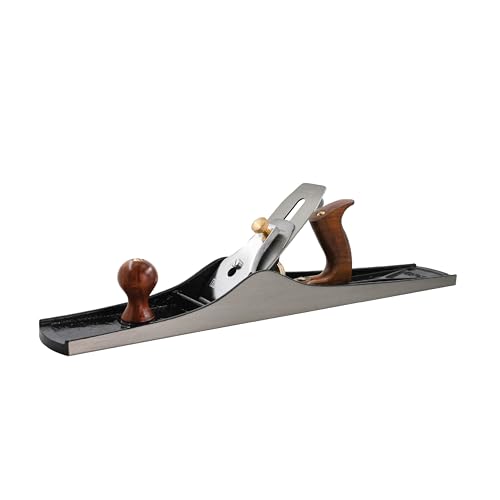
A jointer plane is for bringing a board edge straight and square over a useful length. The long sole bridges small hollows, while the iron takes down high spots. Whether the body is wood or metal changes the feel, adjustment and upkeep, but neither material makes a plane cut a straight edge by itself. A sharp iron, a sole or base in good condition, and a sensible planing sequence matter more.
For furniture work, a practical target is an edge with no visible gaps when two mating boards are held together, and a face that stays square to the edge. Check with a reliable straightedge and try square rather than relying on the plane’s length as proof. A long plane can still follow a twisted setup or a board that moves under clamping pressure.
As an Amazon Associate we earn from qualifying purchases at no extra cost to you.


Wood versus metal: the useful differences
| Feature | Wooden jointer plane | Metal jointer plane |
|---|---|---|
| Feel and weight | Often lighter for its length; wood-on-wood contact can feel smooth and quiet. | Usually heavier; the mass helps maintain contact but can tire the arms on repeated strokes. |
| Adjustment | Often adjusted by tapping the body or iron with a small hammer or plane hammer. | Typically has a knob or lever-based iron adjustment, depending on the design. |
| Care | Wood can swell, shrink or wear with humidity and use; keep it dry and check the sole. | Metal is less affected by humidity, but can rust and may need sole cleaning or flattening. |
| Best reason to choose | You like a light, traditional plane and are comfortable with tapping adjustments. | You want familiar, controlled adjustment and a body that is less sensitive to seasonal changes. |
In practice, the adjustment method is the biggest day-to-day difference. With a wooden plane, a light tap can shift the iron laterally or change its projection. It is quick once learned, but a heavy-handed blow can move the iron too far. A metal plane’s adjuster is more incremental, though not every mechanism is precise or free of play. Test the actual tool rather than assuming all planes of one material behave alike.
Which type should you buy?
Choose a wooden jointer if low weight and traditional feel matter, and you do not mind learning to set the iron by tapping. It can be a good buy when the body is straight, the mouth is sound, and the iron sharpens properly. An inexpensive wooden plane is not a bargain if its sole is twisted, its iron is badly pitted, or the wedge will not hold the blade securely.
Choose a metal jointer if you prefer a familiar adjustment system, work in a workshop with changing humidity, or want a plane that is straightforward to inspect for corrosion and wear. Its weight can help on a long, steady stroke, but it is no automatic advantage: a plane that is too heavy for you can make control worse, especially when working awkward stock.
Browse wooden jointer planes or metal jointer planes by size and condition. For most bench work, a plane around 22 to 24 inches long is a useful jointer size. Longer bodies can span more variation, but cost more, weigh more and are less convenient for short stock. If buying used, check the sole against a straightedge, examine the iron for enough usable steel, and make sure the handles and adjustment parts are secure.
Set up before planing
Mark the board’s high spots and identify the reference face. Support the work so it cannot rock, and clamp it firmly without bowing it. A bowed board held flat by excessive clamping will spring back when released, leaving an edge that no longer fits. If the stock is rough-sawn or badly cupped, flatten the reference face first; edge jointing against an unstable face makes it difficult to keep the edge square.
Sharpen the iron before judging the plane. A dull edge tends to skate, tear fibers or need excessive force. For a long edge, set the iron for a fine shaving at first. On a wooden plane, tap the iron down gently and check the shaving; on a metal plane, use its adjuster in small increments. If the cut is heavier on one side, correct the lateral setting rather than steering the plane with your hands.
Plane the edge in stages
Start by removing obvious high spots with controlled strokes. Keep the plane centered over the board and use your body to move it forward rather than pushing hard with your arms. A common method is to take shorter strokes on high areas, then longer strokes over the full edge as it approaches straight. Check frequently with a straightedge; a gap in the middle indicates a hollow, while contact in the middle with gaps at the ends indicates a crown.
For a board roughly 1 metre (39 inches) long, check at several points along the edge and across its width. A try square reveals whether you are drifting out of square. If the edge leans, correct the high side with a light cut rather than tilting the plane throughout every stroke, which can create a twist. Stop when the edge is straight and square enough for the joint; polishing it beyond that point can introduce a new hollow.
Common failures and when a cheaper plane is fine
Chattering usually points to a dull or poorly secured iron, a heavy cut, or grain that is difficult to plane. Reduce the cut, sharpen, and check that the iron is firmly seated. Tear-out is more likely when planing against rising grain; reverse direction if the fibers lift, or take a finer shaving. If the plane repeatedly cuts at the ends but not the middle, check the edge with a straightedge before changing the iron setting—an adjustment cannot correct a crooked sole or a bad setup.
A cheaper plane is fine for occasional edge jointing if it holds its iron, has a usable sole and can be made sharp. You may need to spend time cleaning, sharpening or tuning it. Pay more when the plane will see regular use and you value reliable adjustment, a comfortable grip and less setup work. If you only joint a few short edges each year, borrowing a sound jointer or using a shorter plane with careful straightedge checks may be more sensible than buying a premium long plane.