What's inside
As an Amazon Associate I earn from qualifying purchases. This post may contain affiliate links at no extra cost to you.
Sections
Best Sawzall Blade for Hardened Steel: The Short Answer
For thick, solid hardened steel, the best Sawzall blade for hardened steel is usually a short, thick carbide-tooth blade; for thin hardened sheet or tubing, a carbide-grit blade is often the safer choice because its continuous abrasive edge is less likely to snag. Neither type makes every hardened part practical to cut: very hard, thick steel can consume blades quickly, and a grinder or abrasive cutoff tool may be faster.
“Sawzall” is Milwaukee’s reciprocating-saw brand name, but the blade guidance applies to compatible reciprocating saws from other manufacturers. Check the blade’s material rating and shank compatibility rather than assuming every blade marketed for metal is suitable for hardened steel.
As an Amazon Associate we earn from qualifying purchases at no extra cost to you.


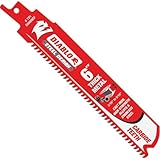

Carbide Grit vs. Carbide Tooth
| Feature | Carbide-grit blade | Carbide-tooth blade |
|---|---|---|
| Cutting edge | Continuous abrasive grit bonded along the edge | Individual carbide teeth, commonly spaced for metal cutting |
| Best fit | Thin sheet, tubing, and material where tooth snagging is a concern | Thicker solid stock, heavy sections, and demanding demolition cuts |
| Common lengths | 6–9 in. (about 150–230 mm) | 6–12 in. (about 150–300 mm) |
| Typical body thickness | About 0.035–0.050 in. (0.9–1.3 mm) | About 0.050–0.063 in. (1.3–1.6 mm) for heavy-duty styles |
| Cutting feel | Smoother, slower abrasion; little conventional tooth engagement | More aggressive bite; needs steady control and secure workholding |
| Wear pattern | Grit gradually dulls, loads, or sheds | Teeth can chip, lose cutting ability, or break if snagged |
These are common selection ranges, not universal specifications. Always check the individual blade’s published dimensions and intended materials. Carbide-tooth designs vary in tooth pitch and geometry; there is no single tooth count that guarantees a cut through hardened steel.
Choose by the Workpiece, Not Just the Label
Thin hardened sheet, small tubing, or delicate sections
Start with a carbide-grit blade, typically around 6 or 9 inches long. Its continuous edge avoids the coarse tooth impact that can catch an unsupported thin wall. Clamp the work close to the cut and use a slower, controlled stroke. If the material flexes, vibrates, or is thinner than the blade maker recommends, a reciprocating saw may be a poor match; a suitable abrasive cutoff tool can make a cleaner, more controlled cut.
Thick plate, solid bar, or heavy structural pieces
Choose a short carbide-tooth blade when the work is securely clamped and there is enough thickness for the teeth to engage consistently. A 6-inch blade is easier to control than a long blade when it can reach through the workpiece; use a longer blade only when access or stock depth requires it. A thicker body resists flex, but it does not prevent tooth damage if the blade twists or the cut closes on it.
For a very hard, thick, or valuable part, first confirm that the blade is explicitly rated for the material. Some hardened steels are far more difficult to cut than ordinary structural steel. If the blade stalls, chatters, or makes little progress, stop rather than forcing it. The work may call for a different cutting method or a shop with appropriate equipment.
Frequent demolition or occasional repair
For repeated cuts, favor a robust carbide-tooth blade for solid stock and keep carbide-grit blades for thin sections or situations where snagging is the bigger risk. For a one-off cut, compare blade cost and likely cut time with an abrasive wheel or professional cutting service. The least expensive blade is not necessarily the least expensive option if it wears out early or damages the workpiece.
Length, Thickness, and Tooth Design: What Changes in Use
- Length: A blade needs enough exposed length to clear the work through the full stroke, but excess length increases flex and vibration. Pick the shortest blade that gives adequate reach and clearance.
- Thickness: A thicker blade generally tracks more steadily in heavy work. Thin blades can be useful where access is tight, but are easier to deflect. Blade thickness is not the same as cutting capacity.
- Tooth design: Carbide teeth are intended to retain a cutting edge under demanding conditions, but tooth spacing and shape still matter. Fine or closely spaced teeth suit thinner sections better than widely spaced, aggressive teeth, which can catch on thin material.
- Grit design: Grit blades cut by abrasion rather than by a row of teeth. They can suit thin or irregular sections, but cutting speed and life depend on the grit, bond, workpiece hardness, and heat buildup.
Practical Selection Matrix
| Your situation | Starting choice | Why | Trade-off |
|---|---|---|---|
| One occasional cut; lowest upfront spend matters | Carbide grit, 6–9 in., if the section is thin | Often easier to control on material that could snag | May cut slowly and wear before finishing a large job |
| Repeated cuts in solid, thick stock | Short, thick carbide-tooth blade | More stable body and aggressive tooth engagement | More vulnerable to damage from twisting or binding |
| Thin wall or sheet that moves easily | Carbide grit, with firm clamping | Continuous abrasive edge reduces tooth-catching risk | Still produces heat and can wear quickly |
| Restricted access or deep section | Shortest blade that clears the cut; longer only if needed | Limits flex while preserving reach | A long blade is harder to keep aligned |
Setup That Helps the Blade Last
- Identify the material and section. “Hardened steel” covers a wide range of alloys and hardness levels. If the grade or heat treatment is unknown, expect blade life to be uncertain.
- Secure the workpiece close to the cut. Movement causes chatter and impact loading. Support offcuts so they cannot pinch the blade as the cut finishes.
- Use the right blade length and keep it straight. Let the blade do the work; pushing sideways or twisting the saw can chip carbide teeth or wear grit unevenly.
- Start gently and maintain a steady stroke. Follow the saw and blade manufacturer’s guidance for speed and cutting conditions. Excessive pressure can overheat the edge without making the cut faster.
- Inspect and clean after the cut. Remove metal debris with the saw disconnected from power or with its battery removed. Check for missing teeth, cracks, a bent body, or a clogged abrasive edge; retire a damaged blade.
Use eye protection, hearing protection, and appropriate work gloves, and control sparks away from flammable materials. Secure loose clothing and keep hands clear of the blade path. Metal can remain hot after cutting.
What to Expect from Blade Life
There is no reliable universal cut-count for hardened steel. A blade may last through several light cuts or fail during one demanding cut, depending on hardness, thickness, clamping, saw speed, alignment, and whether the kerf pinches. On carbide-tooth blades, chipped or rounded teeth are common failure signs; on grit blades, a smooth-looking edge that cuts progressively slower can indicate worn or loaded grit.
To compare options fairly, track the number of similar cuts completed rather than judging by the first cut. Divide the blade’s purchase price by completed cuts to estimate cost per cut, then account for time and finish quality. For example, a blade costing $20 that completes 10 comparable cuts costs about $2 per cut; a $30 blade completing 25 costs about $1.20. These are illustrative figures, not a promise of performance.
The most dependable choice is therefore conditional: carbide grit for thin, snag-prone sections; a short, stout carbide-tooth blade for securely held thick stock. Match the blade to the actual material and cut, and switch methods when the work is too hard or demanding for a reciprocating saw.