What's inside
As an Amazon Associate I earn from qualifying purchases. This post may contain affiliate links at no extra cost to you.
Sections
Milwaukee Sawzall: compare models, power and prices
For most buyers, the Milwaukee M18 FUEL Sawzall 2821-20 is the best all-around choice: it combines a 1-1/4-inch stroke, up to 3,000 strokes per minute (SPM), and a brushless motor with Milwaukee’s M18 battery platform. Choose the compact M18 Hackzall for tight spaces, the corded 6519-31 to avoid batteries, or the M18 FUEL Super Sawzall 2722-20 when faster, heavier-duty cutting and added vibration control matter more than weight or cost.
“Sawzall” is Milwaukee’s reciprocating-saw name, but the right model depends on what you cut, how often you use it, and whether you already own M18 batteries. The comparison below focuses on published tool specifications. Weights are tool-only where available; adding a battery increases carry weight and can change the balance.
As an Amazon Associate we earn from qualifying purchases at no extra cost to you.

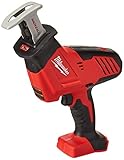
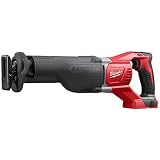

| Model | Power | Stroke length | Speed | Vibration control | Tool-only weight | Typical tool-only price range |
|---|---|---|---|---|---|---|
| M18 FUEL Sawzall 2821-20 | 18V M18 brushless | 1-1/4 in. | 0–3,000 SPM | Counterbalance mechanism | About 7.4 lb | About $200–$300 |
| M18 FUEL Super Sawzall 2722-20 | 18V M18 brushless | 1-1/4 in. | 0–3,000 SPM | Advanced counterbalance system | About 8.2 lb | About $250–$350 |
| M18 Hackzall 2625-20 | 18V M18 brushed | 3/4 in. | 0–3,000 SPM | Compact design; no equivalent full-size counterbalance system | About 3.8 lb | About $100–$170 |
| Milwaukee 6519-31 corded Sawzall | 12A corded | 1-1/8 in. | 0–3,000 SPM | Standard vibration-reducing design | About 7.1 lb | About $100–$170 |
Specifications and street prices can vary by kit, retailer, and date. Kit prices may include batteries, a charger, or a case; compare like with like. Confirm the exact model’s current specifications before purchase.
Which Milwaukee Sawzall fits your work?
For renovation and regular jobsite cutting: M18 FUEL 2821-20
The 2821-20 is the balanced pick if you need a full-size cordless recip saw for cutting framing lumber, metal pipe, or mixed demolition materials. Its 1-1/4-inch stroke moves the blade farther per cycle than the Hackzall’s 3/4-inch stroke, which can help clear material more quickly when paired with a suitable blade and firm technique. The brushless motor is designed for efficient power delivery and reduced motor wear compared with a brushed design.
Its counterbalance helps tame vibration, but it does not make long overhead cuts effortless. A high-capacity M18 battery can improve runtime, while adding weight. If you already own M18 packs, the bare tool often makes better value than buying another battery kit.
For heavy demolition: M18 FUEL Super Sawzall 2722-20
The 2722-20 is aimed at demanding, frequent cutting where control and productivity justify a heavier, higher-priced tool. It has the same 1-1/4-inch stroke and 0–3,000 SPM range as the 2821-20, but its advanced counterbalance system is intended to reduce vibration. That may be especially useful during repeated cuts, though blade choice, grip, and workpiece support still make a major difference.
Pick it over the standard FUEL model when demolition is a regular part of the job, not just an occasional task. For a few cuts a month, the extra cost and weight are harder to justify.
For cramped spaces and one-handed positioning: M18 Hackzall 2625-20
The Hackzall’s compact form and roughly half the tool-only weight of the full-size models make it easier to position around plumbing, in cabinets, or between framing members. Its shorter 3/4-inch stroke is a trade-off: it is handy for access and control, but generally less suited to fast, sustained demolition through thick material. The 2625-20 is a brushed model, so it is a budget-conscious compact option rather than a smaller version of the FUEL Sawzall.
For steady power without batteries: 6519-31 corded Sawzall
If you work near a reliable outlet and do not want to manage battery charge, the 12-amp 6519-31 offers a familiar full-size format at a lower entry price. The 1-1/8-inch stroke is shorter than the two FUEL models’ strokes, but its speed range reaches 3,000 SPM. The cord limits reach and can snag during demolition, so it is less convenient on ladders, roofs, or remote sites.
M18 battery compatibility: what to check
The 2821-20, 2722-20, and 2625-20 are M18 tools and accept Milwaukee M18 batteries. M18 batteries are interchangeable across the M18 tool platform, though a larger-capacity pack adds weight and may affect handling. For sustained cutting, a healthy higher-capacity battery is often more practical than a small compact pack; for overhead or tight-space work, the lighter pack may be preferable.
The 6519-31 is corded and does not use a battery. Also distinguish “bare tool” from a kit: bare-tool listings typically exclude the battery and charger. If you are new to Milwaukee tools, include those costs when comparing the total price rather than comparing a bare tool with a complete kit.
A practical choice by budget and frequency
| Your situation | Best fit | Reason |
|---|---|---|
| Occasional home repairs; lowest cordless entry cost | M18 Hackzall 2625-20 | Compact, lighter, and suitable for access-focused cuts; slower on demanding demolition. |
| Mixed renovation work; already own M18 batteries | M18 FUEL Sawzall 2821-20 | Strong balance of full-size stroke, brushless drive, and cordless convenience. |
| Frequent heavy cutting; vibration is a priority | M18 FUEL Super Sawzall 2722-20 | Advanced counterbalance and full-size cutting performance, with added weight and cost. |
| Fixed workshop or outlet-accessible work; no battery platform | 6519-31 corded Sawzall | Continuous corded power without buying M18 batteries. |
Blade choice and ownership costs
A Sawzall’s cutting speed depends on the blade as much as the tool. Use a wood-cutting blade for lumber, a metal-cutting blade with finer teeth for pipe or sheet metal, and a demolition blade when the cut may encounter nails. A dull or unsuitable blade can make even a high-speed saw feel underpowered, increase heat, and encourage the user to push too hard. Let the blade do the work and support the material to limit chatter.
Blades are the main recurring consumable. Inspect them for bent teeth, cracks, and excessive wear, and replace them rather than forcing a poor cut. Keep the blade clamp clear of dust and debris, and check that the blade is fully seated before use. After dusty demolition, clean the tool’s exterior and vents according to the manual; avoid forcing debris into the mechanism with high-pressure air. Battery packs should be stored and charged as Milwaukee specifies.
When comparing prices, account for blades and, if needed, an M18 battery and charger. A lower tool-only price may not be the lower-cost setup if you lack compatible batteries; conversely, an existing M18 owner may get the best value from a bare tool.
Bottom line
For most buyers comparing Milwaukee tools Sawzall options, the M18 FUEL 2821-20 is the versatile middle ground. Choose the 2722-20 for frequent heavy-duty work and added vibration management, the Hackzall when compact reach matters more than maximum demolition pace, and the corded 6519-31 when outlet access beats cordless mobility. Match the blade to the material, then weigh battery compatibility and total kit cost—not just the tool’s headline price.