What's inside
As an Amazon Associate I earn from qualifying purchases. This post may contain affiliate links at no extra cost to you.
Setting a timber post, stud wall, door lining, or stair component truly vertical is easier with a plumb bob than with a spirit level—especially when the workpiece is tall, awkward, or too wide for a short level to register accurately. A plumb bob uses gravity as its reference, so it remains useful on rough sawn timber, uneven ground, and jobs where you need to check the same line from top and bottom.
The best choice depends on how often you use it, how exposed the work is, and whether you need a quick visual check or a precise layout tool. For most carpenters, a compact brass or steel bob with a replaceable line is the sensible middle ground.
As an Amazon Associate we earn from qualifying purchases at no extra cost to you.



Sections
Our Top Picks


What makes a good plumb bob
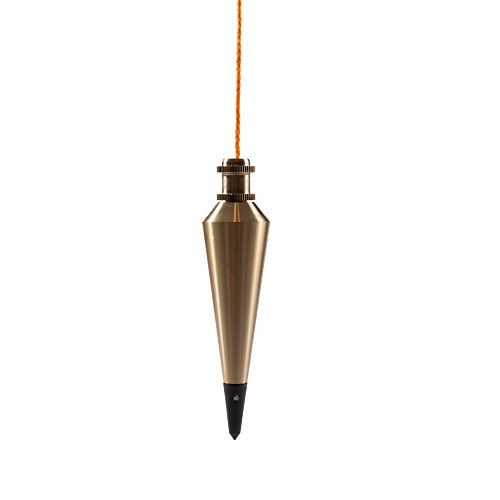
A plumb bob has three important parts: the weight, the point, and the cord. The weight should be heavy enough to pull the line straight without swinging excessively. A bob weighing roughly 6 to 16 ounces suits most timber framing and general carpentry. Very light plastic bobs can work indoors, but they take longer to settle and are more easily disturbed by a draught.
The point should be sharp enough to identify a precise position, but not so delicate that it bends when set against timber. A replaceable point is useful if you regularly work on hard or abrasive surfaces. Look for a flat or knurled top that can be held securely while transferring a mark.
The cord needs to resist stretching and tangling. Braided nylon is common and inexpensive. Thin line is less obtrusive for fine layout, while thicker cord is easier to see outdoors. A reel or winding case keeps the line clean and prevents it becoming a knot-filled nuisance in your tool belt.
Which type should you buy?
| Type | Best use | Advantages | Limitations |
|---|---|---|---|
| Basic metal bob with loose cord | Occasional indoor carpentry | Cheap, simple, easy to replace | Line tangles; little protection in a tool bag |
| Reel-style plumb bob | Regular site and workshop use | Fast deployment, cleaner storage, controlled line | More expensive; reels can clog with dust |
| Heavy-duty brass or steel bob | Long posts, exterior work, and windy conditions | Settles more reliably and tolerates hard use | Heavier to carry and slower to stop swinging |
| Plastic or lightweight bob | Light-duty DIY work | Low cost and unlikely to damage finished surfaces | More affected by draughts and accidental knocks |
For occasional shelf, partition, or door work, a basic carpentry plumb bob is usually enough. Spending more will not make gravity more accurate; it mainly buys better line storage, durability, and handling.
The best choice for setting out timberwork
A medium-weight metal bob with a pointed end and a reel is the most versatile option. A bob around 8 to 12 ounces is a good compromise: heavy enough to settle on a tall stud, but not so heavy that it dents softwood or becomes awkward overhead.
Choose a model with at least 10 feet of usable line for normal carpentry. Twelve to 20 feet is more useful for checking tall posts, roof work, and exterior frames. If the cord is permanently fixed and cannot be replaced, inspect the attachment carefully. A damaged line can produce a false result even when the bob itself is perfectly sound.
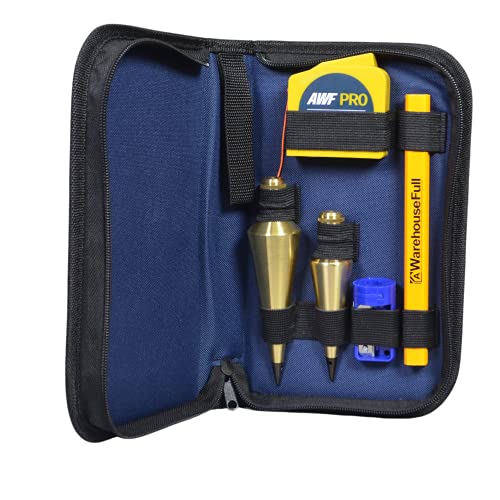
Brass looks traditional and resists corrosion, while plated steel is often cheaper and equally suitable indoors. Stainless steel is worthwhile in damp conditions, but it is not essential for ordinary framing. If the bob will be carried with chisels, marking knives, and other sharp tools, a protective case or reel is worth paying for.
For site work, compare heavy-duty brass plumb bobs with reels rather than buying the heaviest item available. A 1-pound bob may settle well, but it can leave a mark in soft cedar and takes longer to stop moving after a knock.
How to use a plumb bob accurately
First, establish the reference mark. Hold the line at the upper point and let the bob hang freely. Keep the cord clear of the timber face; contact with the workpiece can pull it off line. Wait until the bob has stopped swinging. In a breeze, shield it with your body or a sheet of cardboard rather than trying to read a moving point.
Once settled, mark the position directly beneath the cord. For a post, take readings on two faces at 90 degrees to each other. A post can appear plumb from one direction while leaning significantly from the other. On a stud wall, check several studs and confirm that the top and bottom plates are not themselves twisted.
For greater accuracy, use the bob to transfer a point rather than trying to hold it against the timber. Suspend the cord from a nail, screw, or temporary cleat. If the upper fixing is 8 feet above the floor, allow at least an inch or two of clearance at the bottom so the bob cannot touch the ground and transmit movement.
Common errors and failure modes
The most common mistake is reading the bob before it has settled. A swinging bob can move several millimetres, which is enough to affect a door lining or narrow post. Another error is using a cord that has stretched, absorbed water, or been kinked around a tool handle. Replace suspect line rather than compensating by eye.
Do not trust a plumb bob in strong wind without protection. The line acts like a small sail, and the bob will lean downwind. A light plastic bob is especially vulnerable. Dust and sawdust can also clog reel mechanisms, causing the line to release unevenly or stop short of the required length.
Check the point for damage before precision work. If it is bent, the visible tip will not represent the cord’s true centre. Similarly, a loose eye or cap can shift the bob’s alignment. These faults are uncommon on a new tool but easy to create by dropping it onto concrete.
When a different tool is better
A long spirit level is faster for checking a single exposed stud, particularly when you need to adjust the timber immediately. A laser level is better for repeated layout across a room or for transferring a vertical line over distance, but it needs batteries, a stable setup, and a clear beam. A plumb bob remains the cheapest and most dependable option for one-off vertical transfers.
If you already own a reel-style chalk line, a separate metal plumb bob with replacement line may be all you need. For occasional DIY use, the cheaper option is entirely reasonable. Spend more only when the reel, line quality, corrosion resistance, or heavier construction will save time on the work you actually do.