Our Top Picks
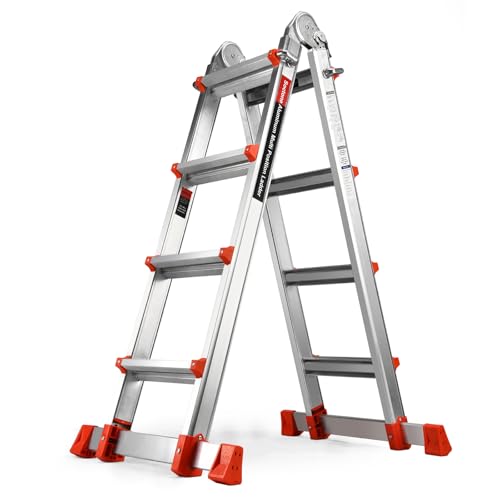
 VEVOR Telescoping Ladder 10.5 FT Aluminum Extension Ladder(37510.519 x 4.99 x 126 inches18 PoundsCheck on Amazon



What's inside
As an Amazon Associate I earn from qualifying purchases. This post may contain affiliate links at no extra cost to you.
Most ladder failures on a jobsite start as spec failures, not balance failures. Someone grabs the 225 lb Type II step ladder that was on sale, then a 210 lb framer climbs it wearing a belt and carrying a coil hose, and the ladder is already over its rated load. The best ladders for contractors get chosen the way you choose a compressor: rated capacity first, then the reach and footprint the work actually demands.
What follows is a catalogue by category, with the criterion that separates professional from homeowner gear at the top of each section. Duty ratings come from ANSI A14 and are printed on the side rail, so every capacity claim is verifiable in seconds.
As an Amazon Associate we earn from qualifying purchases at no extra cost to you.


| Ladder type | Common size range | Best fit |
|---|---|---|
| Fiberglass step ladder | 4 to 14 ft | Electrical, trim, interior punch lists |
| Extension ladder | 16 to 40 ft | Roofs, gutters, siding, exterior paint |
| Multi-position articulating | 13 to 26 ft | Remodels, stairwells, tight rooms |
| Podium or platform | 4 to 12 ft platform | Ceilings, conduit, sprinkler heads |
| Twin-step ladder | 6 to 12 ft | Two-worker drywall and panel hanging |
Sections
Duty Ratings: Start Here or Skip the Rest
The duty rating is the total load the ladder is built to carry: you, boots, belt, tools, and whatever material is in your hand. It is not a user weight limit. Run that math honestly and most trade users need more capacity than they assume.
Type III (200 lb) is household duty and does not belong on a paid job. Type II (225 lb) is light commercial, fine for a painter with a brush and marginal for anyone else. Type I (250 lb) is industrial. Type IA (300 lb) is the practical floor for daily trade use. Type IAA (375 lb) is special duty and earns its weight for HVAC, glaziers, and anyone moving equipment up a ladder.
Rating is independent of height. A 6 ft ladder can be Type III or Type IAA, and the two do not feel remotely alike underfoot. The rating label lives on the rail, which means you can confirm it from a product photo before you order.
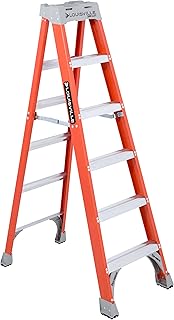
Fiberglass Step Ladder, Type IA 300 lb
If you own one interior ladder, make it a 6 ft or 8 ft fiberglass step rated Type IA. Prioritize a deep rail, a molded top with tool slots, a pail shelf that locks flat, and wide slip-resistant shoes. Anything rated under 300 lb is a compromise once you add a belt.
Best Ladders for Contractors by Job Type
Fiberglass Step Ladders, 4 to 14 ft
The criterion is rail depth and hardware, not height. A deeper rail flexes less on the top step, and that stiffness is most of the gap between a ladder that feels planted and one that feels cheap. Size it as ladder height plus about 4 ft of comfortable reach: a 6 ft step covers 8 to 9 ft ceilings, an 8 ft step handles most 10 ft commercial ceilings. Twin-step models climb from both sides and pay off on drywall days.
Extension Ladders, 16 to 40 ft
The criterion is working length, not advertised length. Sections have to overlap, so a two-section ladder never reaches the sum of its parts: plan on roughly 3 ft of overlap up to 36 ft, 4 ft from 36 to 48 ft, and 5 ft beyond that. Then subtract the 3 ft the ladder must project above the roof edge you step onto. That math is why 24 ft is a single-story tool and most two-story roof access wants 28 ft or more.
Two details separate pro ladders from bargain ones: the top three rungs are not standing rungs, so buy height accordingly, and built-in levelers beat shimming a foot with scrap lumber. D-shaped rungs are easier on the arches, and a standoff keeps rails off gutters.
Fiberglass Extension Ladder, 24 to 28 ft
For residential exteriors, 24 ft handles single-story and low roofs while 28 ft covers most two-story eaves. Fiberglass rails are the safe call anywhere near a service drop. Check the listed weight before ordering, because long fiberglass ladders get heavy and one person still has to walk it up.
Multi-Position Articulating Ladders
The criterion is lock quality. Hinges carry the whole load, so look for large positive-locking pins, clean detents, and a Type IA or IAA rating. These earn their keep in remodels, where one ladder becomes an A-frame, a straight extension, a stairway ladder, and a low work platform.
- ✔ Covers A-frame, extension, stairway and 90-degree wall positions
- ✔ Type IA and IAA versions are widely available
- ✔ Adjustable legs handle stair treads and sloped ground
- ✔ Folds short enough for a van without a roof rack
- ✘ Heavier than a dedicated step ladder of the same height
- ✘ Reconfiguring costs time on repetitive work
- ✘ Hinges collect grit and need cleaning
- ✘ Feels less rigid than a straight extension ladder at full height
Podium and Platform Ladders
The criterion is platform size and guardrail height. Podiums are for standing still with both hands overhead: ceiling grid, conduit, sprinkler heads, can lights. The platform is a rated standing surface, unlike a step ladder top cap, and platform heights of roughly 4 to 12 ft cover most commercial interiors.
Multi-Position and Podium Ladders
Remodelers and service techs get the most out of these. Compare hinge hardware and folded length first, then weight. If most of your day is overhead work in one spot, a podium ladder with a guardrail beats an articulating ladder on comfort.
Fiberglass or Aluminum: What Rides on the Truck
The criterion is conductivity, and it is not negotiable. Anyone working near service drops, panels, or energized conductors uses fiberglass. Aluminum is lighter, corrosion resistant, and cheaper per foot, which is real value for roofers and gutter crews walking long ladders up alone. Fiberglass costs and weighs more and breaks down under years of UV: once rails go fuzzy and shed fibers, treat that ladder as scrap. Keep rails clean, because wet or dirty fiberglass conducts.
Setup and Safety: The Details That Get Cited
Set extension ladders at 4 to 1: 1 ft of base offset per 4 ft of working height, about 75 degrees. Extend 3 ft above the landing and secure the top. Keep three points of contact, face the ladder, and hoist tools with a rope instead of climbing with an armful. Use the built-in levelers, not blocks. Inspect rungs, rivets, spreaders, rope, and shoes before each use, and pull any ladder that fell off a rack out of service.
Frequently Asked Questions
What duty rating do contractors actually need? Treat Type IA (300 lb) as the daily minimum and Type IAA (375 lb) if you carry heavy tools or material. The rating covers you plus everything you bring up.
Can I stand on the top step of a step ladder? No. The top cap and top step are not standing surfaces, and the top three rungs of an extension ladder are off limits too. Buy the taller ladder or a podium with a rated platform.
How tall an extension ladder do I need for a two-story house? Most two-story eaves land in the 28 to 32 ft range once you account for overlap and the 3 ft above the roof edge. Measure to the gutter line and size up if the ground slopes away.
Buy the rating first, the height second, and the material based on what is energized nearby. A ladder that is one size short or underrated is the one that ends up getting misused.
Check prices on Amazon →