What's inside
As an Amazon Associate I earn from qualifying purchases. This post may contain affiliate links at no extra cost to you.
Softwood framing and trim work do not need the hardest or most expensive chisels. They need a sharp, controllable edge, a handle that survives a mallet, and sizes that match common joinery and hardware. Pine, spruce, fir, cedar, and similar softwoods are easy to cut but also easy to bruise, crush, and tear out. A good set should handle door hinges, strike plates, mortises, shims, casing adjustments, and the occasional framing notch without becoming frustrating on fine trim.
As an Amazon Associate we earn from qualifying purchases at no extra cost to you.


Sections
Our Top Picks
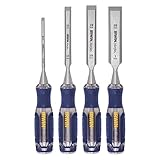
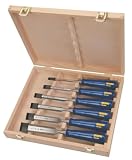
 IRWIN Tools Marples High-Impact Chisel Set3 Piece12.63 x 5.75 x 1.3 inches2.05 poundsCheck on Amazon


What to look for in a framing and trim chisel
Choose chisels with high-carbon or chrome-vanadium steel, a reasonably thick blade, and a bevel on both sides unless you have a specific reason to use a bevel-edge bench chisel. A 25- to 30-degree primary bevel is a useful general-purpose range. Softer wood does not require an extremely thin edge, and a slightly stronger edge is less likely to fold when it encounters a hidden nail or knot.
For site work, a metal striking cap or reinforced handle is worthwhile. It lets you use a wooden or nylon mallet repeatedly without worrying about splitting the handle. Plastic-handled chisels are often comfortable and durable, but the striking end should be clearly designed for impact. A delicate bench-chisel handle is a poor choice for chopping hinge gains all day.
Blade length also matters. Longer blades give better hand clearance and control when paring, while shorter, thicker blades resist levering and are easier to control in a confined mortise. Avoid using any chisel as a screwdriver, pry bar, or nail puller. That is how otherwise good edges get chipped or handles get cracked.
The most useful sizes
| Chisel width | Best use | Practical note |
|---|---|---|
| 6 mm (1/4 inch) | Small hinge corners, latch recesses, detail trimming | Useful but easy to over-control; not a first purchase |
| 12 mm (1/2 inch) | General trim fitting, hinge work, small mortises | Best all-around size for most carpenters |
| 19 mm (3/4 inch) | Door hardware, wider notches, framing adjustments | Good balance of cutting power and control |
| 25 mm (1 inch) | Large hinge gains, broad paring, cleanup after a saw cut | Helpful for framing, but bulky for small trim |
If you are buying one chisel, choose a 1/2-inch model. For a useful working pair, add a 3/4-inch chisel. A four-piece set containing 1/4-, 1/2-, 3/4-, and 1-inch sizes covers most softwood framing and installation tasks. Sets are usually cheaper per chisel, but inspect the edges before assuming they are ready to use. Some arrive with a blunt or uneven factory grind.
A practical framing chisel set is a better purchase than a ten- or twelve-piece set if you already own a small detail chisel. Extra sizes tend to spend most of their time in the box.
Which chisel type suits the job?
Heavy-duty bevel-edge chisels are the default choice for framing and general installation. They have enough steel behind the edge for chopping and can still pare a hinge recess cleanly. They are the best option when one tool has to cover rough and finish work.
Bench chisels are lighter and often more comfortable for trim. They excel at paring casing ends, easing tight joints, and cleaning a shallow recess. They are fine for occasional mallet taps, but a thin-handled bench chisel should not be your main framing tool.
Mortise chisels have thick blades and stout handles designed for repeated chopping. They are excellent for deep hinge or latch mortises, but their extra thickness makes them clumsy for delicate trim. Buy one only if you regularly chop deep, square-sided recesses.
Japanese-style bench chisels can take and hold a very sharp edge, making them attractive for finish carpentry. They often need more careful sharpening and may be less forgiving when they hit a staple or nail. They are a good specialist choice, not automatically a better site chisel.
Good buying choices at different budgets
For occasional DIY trim work, a basic four-piece bevel-edge wood chisel set is usually enough. Expect to hone the backs and sharpen the edges before serious use. The cheaper option is fine when you install a few doors a year, keep the chisels clean, and are willing to touch up the edge.
For regular site work, spend more on a set with impact-resistant handles, protective caps, and consistent steel. The advantage is not that it cuts softwood dramatically faster. It is that the handles tolerate repeated striking, the edges need less correction, and the tools are less likely to bend or chip after a busy week.
If you already own good 1/2- and 3/4-inch chisels, add a dedicated heavy-duty 1-inch mortise chisel only for deep hardware recesses. Do not buy a large set just to get that one size.
Using and sharpening chisels in softwood
Mark the waste clearly and remove most of it with a drill, router, or saw where practical. Chiseling away a full mortise in one pass encourages crushed fibers and wandering cuts. Make shallow chopping cuts, working across the grain first, then pare to the line with the bevel facing up when you need maximum control.
Softwood can disguise a dull edge. The chisel may still cut, but it will compress the fibers instead of slicing them. Hone when the edge begins leaving a fuzzy surface or requires excessive force. A useful general setup is a 1,000-grit stone for establishing the edge, followed by 4,000 to 8,000 grit for a cleaner finish. Hone the back flat near the tip; you do not need to polish the entire back.
Keep the cutting edge protected in a pocket roll or plastic cap. A loose chisel in a tool bag can hit a tape measure or nail set and lose its corner. Before chopping into a frame, probe the area for fasteners and remove nearby staples. A hidden nail can put a chip 3 to 6 mm deep into a freshly sharpened edge.
The sensible setup
For most carpenters, the best setup is a durable 1/2-inch and 3/4-inch bevel-edge pair, plus a 1/4-inch chisel for detail work. Add a 1-inch heavy-duty chisel if your work includes frequent door hardware or framing notches. Spend extra on handles and edge consistency only when the tools see regular impact; for occasional softwood trim, an inexpensive set that you sharpen properly will do the job.