What's inside
As an Amazon Associate I earn from qualifying purchases. This post may contain affiliate links at no extra cost to you.
Removing a small amount of timber during installation is a different job from chopping a mortise or splitting a joint. You may be easing a door hinge, trimming a window packer, cleaning up a hinge recess, or making a cabinet component fit by a millimetre or two. For this work, control matters more than maximum strength. The best chisel is usually sharp, comfortable to guide, and small enough to remove material in measured cuts.
As an Amazon Associate we earn from qualifying purchases at no extra cost to you.


Sections
Our Top Picks
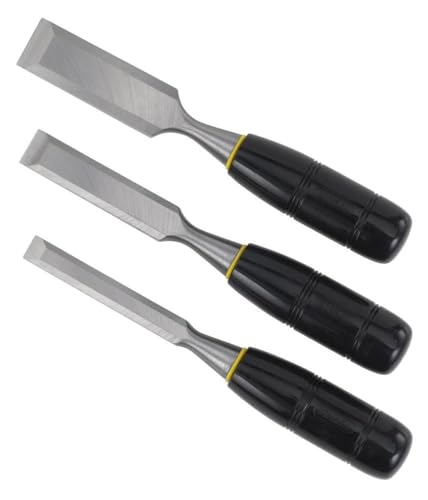
 IRWIN Tools Marples High-Impact Chisel Set3 Piece12.63 x 5.75 x 1.3 inches2.05 poundsCheck on Amazon

What to look for in an installation chisel
A bevel-edge chisel between 12 mm and 25 mm wide is the most useful general choice. The bevels let you get close into a corner, while the flat back can be registered against a reference surface. A 19 mm chisel is a particularly practical size for hinge recesses, door adjustments, and general site work.
Choose a chisel with a reasonably thin blade rather than an aggressively thick framing pattern. A thin blade enters a recess more easily and gives better feedback when paring end grain. It is less suitable for heavy hammering, but that is rarely the right method when removing only a small amount of timber.
A sharp edge is more important than the brand. For installation work, a primary bevel around 25 degrees is common. A small secondary bevel of roughly 30 degrees can make the edge more durable, especially in knotty softwood or hardwood. If the chisel will be pushed by hand, polish the back near the cutting edge; it does not need to be mirror-finished across its entire length.
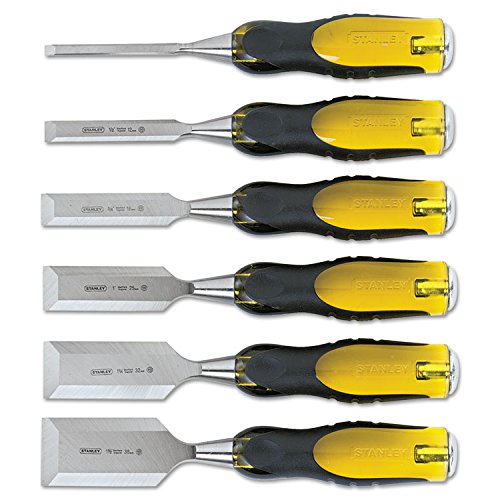
For a dependable general-purpose option, compare bevel-edge wood chisel sets. A set gives you useful widths from about 6 mm to 32 mm, but a single good 19 mm chisel is often better value than a large inexpensive set if installation work is your main use.
The best chisel types for small adjustments
| Chisel type | Best use | Main advantage | Limitation |
|---|---|---|---|
| Bevel-edge bench chisel | General fitting, hinges, rebates, small joinery adjustments | Good balance of access, strength, and control | Not ideal for very deep recesses |
| Butt chisel | Hinge gains, lock plates, tight corners | Short blade is easy to control in confined spaces | Less useful for broad paring cuts |
| Paring chisel | Fine trimming and long, shallow cuts | Excellent control when pushed by hand | Usually too delicate for hammering |
| Mortise chisel | Occasional heavier chopping | Strong, thick blade and robust handle | Too bulky for precise light removal |
A butt chisel is worth considering if you frequently fit hinges or strike plates. Its short blade reduces leverage and makes it easier to control the cutting edge close to a door edge. It is not automatically sharper or better than a normal bevel-edge chisel, though; the compact shape is the benefit.
A paring chisel is the specialist choice for removing the last thin shaving. Long blades can be guided with two hands and pushed along the grain with very little force. They are vulnerable to damage if struck with a hammer, so keep one for finishing cuts rather than general site abuse. See paring chisels for woodworking if this is the type of work you do regularly.
Choosing size and handle style
For most installation tasks, a small working set should include approximately 6 mm, 10 mm, 13 mm, 19 mm, and 25 mm widths. The 6 mm and 10 mm sizes reach narrow corners, while the 19 mm and 25 mm sizes remove material efficiently without leaving ridges between cuts.
A wooden-handled chisel is pleasant to hold and light in a tool belt, but repeated striking can bruise or split a delicate handle. A plastic or composite-handled pattern tolerates site use better and is easier to clean. If you expect to use a hammer frequently, select a handle with a striking cap or a clearly reinforced end. Do not strike a normal paring chisel simply because it happens to be nearby.
Full-length heavy chisels are often cheaper per tool in a set, and they are fine for door fitting, rough hinge work, and occasional repairs. The cheaper option is acceptable when the edge can be sharpened flat, the blade is not visibly twisted, and the handle is secure. Expensive chisels earn their cost through better steel consistency, smoother backs, and more comfortable handles, not because they remove timber by magic.
How to remove only the timber you need
Mark the waste clearly with a sharp pencil or marking knife. Score across the grain at the exact stopping line, then make a second line 1 or 2 mm inside the waste. This shoulder prevents the chisel edge from running past the finished boundary.
Start with shallow cuts. Hold the bevel toward the waste for a controlled paring cut, or place the flat back against the reference surface when you need to follow an existing face. Remove roughly 0.5 to 1 mm at a time. In softwood, a light tap may remove 1 to 2 mm, but deeper blows increase the risk of splitting below the line.
When fitting a hinge, cut across the grain at both ends first, then pare with the grain between them. For a door or frame, support the work so it cannot move; a moving workpiece is a common cause of slips and bruised edges. Stop when the hinge leaf, plate, or fitting sits flush. Continuing to “improve” the recess often creates a loose fit that must be packed.
Sharpening and site maintenance
A chisel that needs force is more dangerous than one that is slightly dull but controlled. Hone the edge as soon as it stops producing clean shavings. A 1,000-grit stone is suitable for establishing an edge, followed by approximately 4,000 to 8,000 grit for a cleaner finish. On site, a compact diamond plate is convenient, though it may leave a less polished edge than waterstones.
Keep a blade guard or wrap chisels so the edges do not strike screws and other tools in a belt or box. Wipe carbon-steel blades after use, particularly after working in damp construction sites. For a compact sharpening setup, a diamond sharpening stone for chisels is usually less troublesome on site than soaking waterstones.
If you are buying one chisel, choose a 19 mm bevel-edge model with a comfortable handle and a blade that arrives flat enough to sharpen without major corrective work. Add a 10 mm or 12 mm chisel next. That combination covers most small timber adjustments, while a butt or paring chisel becomes worthwhile only when the specific installation work demands better access or finer control.