What's inside
As an Amazon Associate I earn from qualifying purchases. This post may contain affiliate links at no extra cost to you.
Sections
Our Top Picks
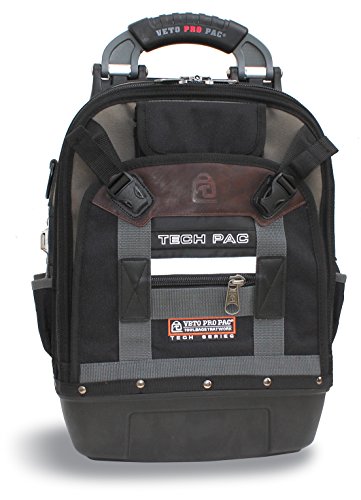

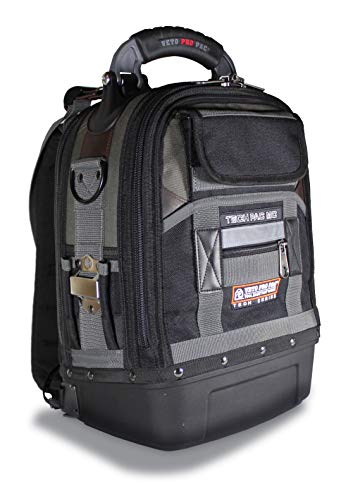
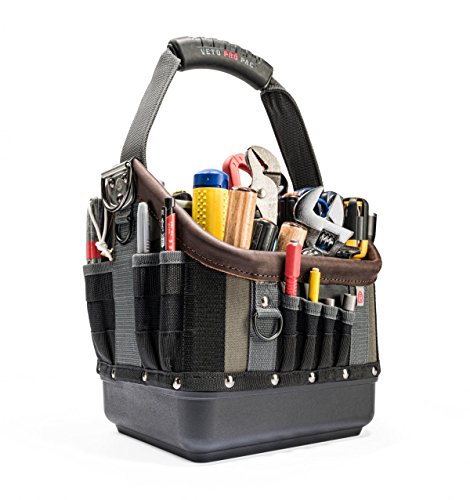
What a carpentry bag actually needs to hold
A carpenter’s hand tool kit is awkward to bag. Chisels need edge protection, hand planes are heavy and dense, measuring tools need to stay clean and flat, and site consumables — screws, plugs, pencils, wipes, glue, tape — always try to migrate to the bottom. The wrong bag turns that into a tangled pile where your 6-inch combination square gets knocked out of square and your chisels blunt each other.
Before picking a bag, lay out what you carry daily. For most first and second fix work, that is: 3 to 6 bench or bevel-edge chisels, a No. 4 or 5 plane, block plane, marking gauge, sliding bevel, 12-foot and 25-foot tapes, 6-inch and 12-inch combination squares, 300mm speed square, chalk line, utility knife, pliers, nail punch set, and then consumables. That kit weighs 18 to 28 pounds without timber. If your bag cannot handle that weight without the handles tearing or the base sagging, it will fail in the first month on site.
As an Amazon Associate we earn from qualifying purchases at no extra cost to you.

Bag types compared for hand tools
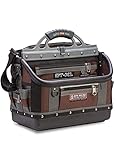
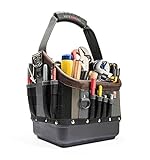
There are four bag styles that actually work for carpentry hand tools. Everything else is a variation. Open totes, zip-top closed bags, bucket organizers, and backpacks each have a clear trade-off between access, protection, and carry comfort.
| Bag Type | Best For | Protection | Access on Site | Common Failure Mode |
|---|---|---|---|---|
| Open Canvas Tote (14-18 inch) | Shop to site, bench work | Low – tools exposed, no crush protection | Excellent – grab anything without unzipping | Handles rip at rivets, base sags with a plane inside |
| Zip-Top Tool Bag (16-20 inch) | Mixed hand tools + consumables in a van | Medium – holds dust out, keeps tools from falling out in transit | Good if it opens wide with a metal frame | Cheap #5 zippers blow out under 20+ lb loads |
| 5-Gallon Bucket Organizer | Site kit, fixings and rough tools | Low – open top | Excellent – 30+ pockets around outside | Spins on bucket, becomes top-heavy with a plane |
| Tool Backpack (30-40L) | Carry-in jobs, stairs, public transport | High – padded, stands upright | Poor – you dig vertically for flat tools | Shoulder stitching and thin 600D fabric tear at seams |
For chisels and planes, the open tote and the zip-top bag with a rigid base win. Backpacks are great for getting tools to the job, but terrible when you need to see your marking tools laid flat. If you work mostly in one room or at a bench, a canvas tool tote with a reinforced bottom is faster than anything with zippers. If your kit lives in a van and gets stacked under power tools, you want a zip-top bag that stays closed.
What to look for before you buy
Material weight matters more than brand. For canvas, look for 16oz canvas or 1000D to 1680D ballistic polyester. Anything labeled 600D without reinforcement will wear through where chisels rub. The base should be hard plastic or triple-layer fabric with feet — not just another layer of canvas. Without a hard base, a tote with a No. 5 plane (about 5.5 pounds) will deform and tip.
Stitching and handles are the real test. Double-stitched seams with bar tacks at handle junctions last. Single stitching and handles that are just sewn to the side panel, not wrapped under the bag, will pull out. Leather or heavy webbing handles riveted through the bag body hold 40 pounds. Stitched-only handles do not.
Zippers, if present, should be #8 or #10 coil or metal with a metal slider. #5 zippers are standard on cheap bags and will separate when the bag is overfilled with consumables boxes. A wide mouth opening with a steel frame that holds the bag open is worth paying for — you will not unzip a narrow slit bag repeatedly throughout the day.
Pockets need to be tall and narrow for chisels and squares. Shallow, floppy pockets let chisels fall out and let a 12-inch combination square flop over. Look for at least 4 to 6 internal tool loops or slots that are 6 to 8 inches deep, plus one flat pocket for squares and bevels. External pockets are for tape measures, pencils, and consumables, not cutting edges.
Weight and size: A 16-inch tote is the sweet spot for hand tools. 12-inch is too small for a hand plane, 18 to 20-inch gets too heavy to carry one-handed when loaded and will not fit between stud bays. Empty weight should be under 5 pounds; some heavy rolling bags weigh 8 pounds empty and eat into what you can actually carry.
Recommendations by how you work
Bench and workshop carpenter: Use an open 16-inch tote with a hard base and a separate chisel roll. Do not store chisels loose in the tote, even with blade guards — they will still rattle and chip. A roll keeps edges off each other and off your squares. Keep planes low and flat in the main compartment, not standing on their soles against the side. This setup is cheap, fast, and if the tote is 16oz canvas with riveted handles it will last years. The cheaper unreinforced tote is fine here if you are not hauling it over rough ground daily.
Site carpenter moving room to room: A zip-top bag with a full-width frame opening protects marking tools from drywall dust and keeps fixings from spilling in the van. Choose one with a hard bottom and vertical dividers. Put planes and heavy tools in the center, chisels in a roll along one wall, measuring tools flat against the other wall. Consumables — 1-pound boxes of 1-1/4 inch screws, plugs, shims, pencils — go in zippered side pockets so they do not bury your square. When you need to carry this plus a belt, a carpenter tool backpack with a separate hard-base bottom is worth it only if you are walking more than a few hundred yards or up stairs all day. Otherwise the extra organization of a backpack works against you.
Fix and fit-out kit: If you carry mostly consumables, tapes, and install tools, a bucket organizer over a 5-gallon bucket is hard to beat for speed. It holds a drill, driver, caulk, shims, and fixings in separate pockets and you can see everything from above. It is not a good primary bag for sharp hand tools — chisels in the outer pockets poke through and planes make it tip. Use it as a second site bucket, not your main hand tool bag.
For belt work, your bag and your belt are a system. A good bag holds what you are not wearing. Do not duplicate. If you already wear tool belt pouches with a tape, square, knife, and pencil, you do not need deep external pockets for those same tools on the bag. Save that space for spares and consumables.
How to pack it so it lasts
Pack heavy to light, hard to soft. Plane and mallet on the bottom, flat against the base. Chisel roll next, standing vertically if the bag is deep enough so handles are up. Squares and bevels flat against the side wall, not under weight where they can bend. Tapes and chalk line in external pockets where dust is less of an issue. Consumables in small resealable boxes or zip bags — loose screws will work into seams and hold moisture.
Keep the bag dry. Canvas and polyester wick water from a wet van floor into your tools overnight. If the bag gets wet, empty it. Even stainless marking tools will rust where the bag holds damp dust against them. Wipe planes and chisels with a light oil rag before they go back in, not after they have sat damp for a week.
Do not overfill. When you have to force the zipper closed, you are at 30-plus pounds and the zipper is the fuse. If you are consistently zipping under tension, size up or split consumables into a second small tote. A $35 tote that you do not overstuff will outlast a $120 bag you abuse.
When the cheaper option is fine: if you work in a dry shop, carry under 15 pounds, and do not stack other bags on top, a basic 16-inch canvas tote without a steel frame is perfectly serviceable. Spend the savings on a proper chisel roll and edge guards. Where you should spend more is on the base, handles, and zipper gauge if you are on site daily and the bag rides in a van. Those three points are where cheap bags fail first, and they are not repairable in a useful way once torn.