What's inside
As an Amazon Associate I earn from qualifying purchases. This post may contain affiliate links at no extra cost to you.
Long edge layout on framing timber is where a small marking error becomes a visible framing problem. A line that is 3 mm out at one end of a 2.4 m stud can throw off a plate joint, cripple, or stair component. The right carpenter’s square should give you a reliable 90-degree reference, stay in contact with a rough board, and remain usable when the timber is wider than the tool.
As an Amazon Associate we earn from qualifying purchases at no extra cost to you.



Sections
Our Top Picks
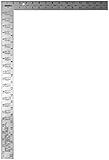
 Johnson Level & Tool CS9 Steel Framing Square16" x 24"24 x 19 x 0.06 inches1.4 poundsCheck on Amazon


What you need from a square
For long crosscuts and layout lines across framing timber, the main choice is a steel framing square. Its long tongue, usually 24 inches, spans the face of common 2x lumber and gives you a straight reference along the edge. The shorter blade is commonly 16 inches, which is enough to cross a nominal 2×8 and most ordinary studs.
A framing square is not just for marking 90 degrees. Its graduations can help with rafter layout, stair calculations, and repeated marks. Those extra scales are useful only if they are clearly engraved and you already understand them. For basic framing, a straight, square edge matters more than a crowded collection of tables.
For smaller layout work, a speed square is faster. It has a thick lip that hooks over the board edge and can be held one-handed while marking. A 7-inch version is convenient for studs, joists, and short cuts; a 12-inch version reaches farther across wider stock. It is not a complete replacement for a framing square when you need a long, continuous reference.
The best square types for long edges
| Square type | Best use | Strengths | Limitations |
|---|---|---|---|
| 24-inch steel framing square | Long crosscuts, rafter and stair layout | Spans wide timber; durable; useful scales | Awkward in a pouch; can slip on rough or rounded edges |
| 12-inch speed square | Fast crosscuts and repeat marks | Hooks onto the edge; quick one-handed use; compact | Does not give a long straight reference; can be bulky |
| 7-inch speed square | Studs, small stock, and site marking | Light, inexpensive, easy to carry | Limited reach across wide boards |
| Aluminum framing square | General site work where low weight matters | Light and corrosion resistant | Edges can be damaged more easily than steel |
For a general framing kit, the most useful combination is a 24-inch framing square kept flat in the truck or tool box, plus a 7- or 12-inch speed square in the tool belt. If you can buy only one, choose the framing square for long-edge layout and the speed square for convenience.
Steel versus aluminum
Steel is the safer choice when the square will be dragged across rough timber, used as a guide for a knife, or carried loose with other tools. A good steel square resists edge damage and stays stable when you press a pencil or marker against it. It is heavier, though, and surface rust can develop if it is left damp. Wipe it dry after wet work and apply a light film of oil occasionally.
Aluminum squares are easier to carry all day and will not rust in the same way. They are adequate for marking cut lines with a pencil. The failure mode is a dinged or burred edge: dropping an aluminum square onto concrete can leave a dent that transfers directly into every layout line. Inspect the edge before using it for precision work. Plastic squares are cheap and useful for rough framing, but they are more likely to warp, melt near heat, or lose accuracy after being stepped on.
Look for engraved or deeply stamped graduations rather than shallow printed markings. Paint can wear off quickly when the square is used against treated lumber. A square with a clear inner and outer scale is also easier to use when marking from either end of a board.
Check accuracy before trusting it
Do not assume a new square is accurate. Place its short edge firmly against a straight board and draw a line along the long edge. Flip the square over against the same reference edge and draw a second line from the same starting point. If the lines separate, the square is out. Over a 150 mm test length, a gap of 1 mm is already noticeable; over a 600 mm cut, that error can approach 4 mm.
Check the board edge first. A twisted or crushed edge can make a perfectly accurate square appear wrong. On rough framing timber, use the straightest edge available, or establish a reference edge with a hand plane before doing fine layout. A small block plane is useful for removing raised fibers and making a short bearing surface reliable.
Using a square without introducing errors
Brush sawdust away before setting the square down. One chip under the stock can move the line by 1 or 2 mm. Keep the square’s reference edge tight against the timber, but do not twist it while marking. For a long line, make several light pencil passes rather than forcing a thick carpenter’s pencil against the edge. A sharp pencil gives a more useful cut line than a broad, soft mark.
When the timber is wider than the square blade, mark from both edges. Extend the first line as far as the square reaches, then repeat from the opposite edge. If the lines do not meet, the error identifies a problem with the edge, the square, or your grip. On wide boards, a chalk line is often better for a long straight reference, with the square used to establish the endpoints. A carpenter’s chalk line is faster than trying to stretch a square beyond its reach.
Buying advice
Choose a square that fits the work rather than buying the heaviest one available. A basic 24-inch steel framing square is enough for most house framing and is usually the best value. Pay extra for a thicker, better-finished square only if you use its rafter scales, need a tougher edge, or work on site every day.
A cheap speed square is fine for marking studs and rafters when its lip is straight and its graduations are readable. Replace it if the hook rocks on a flat board or the edge has been dropped and burred. For repeat work, a 12-inch speed square gives a useful reach without the storage problem of a full framing square.
Before paying for specialist features, spend time checking straightness, edge condition, leg alignment, and readability. Those four details determine whether a square produces a correct long layout line. The scales are secondary.