What's inside
As an Amazon Associate I earn from qualifying purchases. This post may contain affiliate links at no extra cost to you.
Sections
Our Top Picks
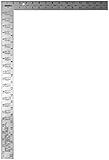
 Johnson Level & Tool CS9 Steel Framing Square16" x 24"24 x 19 x 0.06 inches1.4 poundsCheck on Amazon


What the square needs to do
Checking a long timber assembly is different from squaring a small cabinet carcass. A 300 mm framing square can confirm that a corner is close to 90 degrees, but it may not reveal a slight twist along a long rail or a gradually drifting cut line. For that work, you need a square with enough reach to reference the timber reliably, plus a method that accounts for bowed edges and uneven surfaces.
Before buying, decide whether you need to check a local corner, transfer a line across a wide board, or compare the ends of a large frame. No single carpenter’s square is best at all three. A straightedge, winding sticks, or diagonal measurements may be more useful than a bigger square when the problem is twist or overall frame geometry.
As an Amazon Associate we earn from qualifying purchases at no extra cost to you.



Which type suits the job?
| Type | Useful reach | Best for | Main trade-off |
|---|---|---|---|
| Framing square | Typically about 400–600 mm on the short leg | Checking frame corners, marking across wide stock | Long and versatile, but awkward to carry and easy to knock out of true |
| Combination square | Usually 150–300 mm blade | Short checks, marking, and repeatable small measurements | Convenient and adjustable, but too short to assess a long assembly by itself |
| Large try or engineer’s square | Varies; often 300 mm or more | Accurate checks against a prepared reference face | Can be precise, but a heavy, long square is less convenient on site |
| Speed square | Commonly 150–300 mm along its edge | Rafter layout and quick checks on smaller stock | Fast to use, but short reach limits its value for long-frame checks |
Best all-round choice: a framing square
For general timber framing and site work, a sound framing square is the most useful single purchase. Its long blade lets you check a corner while the shorter leg sits against a rail or stile. It can also mark a line across a board and help compare repeated parts. Look for a leg length that suits the stock you handle; a square with a roughly 600 mm blade is useful on wide timbers, while a smaller one is easier to pack and control.
Check the square before relying on it. Place the stock against a straight edge, draw a line along the blade, flip the square over against the same edge, and draw another line. If the lines diverge, the square is not reliable for precision work. Also inspect for burrs, bent edges, loose rivets, and a blade that rocks on the reference surface. A clean, affordable framing square is fine for many jobs if it passes these checks.
The main failure mode is treating a long square as a straightedge. A blade can be square to its stock and still be bowed along its length. For a long assembly, check the blade against a known straight edge or use it only for the local corner relationship. A framing square also needs clean contact: sawdust trapped under one leg can change the reading enough to mislead a layout line.
For repeatable, smaller checks: a combination square
A combination square is easier to adjust and carry, and its ruler is handy for setting offsets or marking a consistent shoulder. It is a good choice for checking small joints and transferring dimensions across modest-width stock. It is not a substitute for a long square when you need to assess a 1 m rail or a large frame. Use it at several points rather than assuming one short contact proves the whole assembly is straight.
On a long timber assembly, place the combination square at the joint and check for a gap between the stock and blade. Then check the opposite face if accessible. A twisted member can look square from one side and fail from the other. For repeated work, confirm the head locks securely; a head that shifts while marking can create a consistent-looking but inaccurate batch of parts. A basic 12-inch combination square is often enough for furniture and smaller framing, but not for full-width layout on large timbers.
How to check a long assembly
Start with the reference surfaces, not the corner. Remove glue squeeze-out and dirt, then check that the rail or stile face you are using is reasonably flat. A square cannot correct a bowed edge: it will faithfully show the angle between its own stock and whichever high spot it touches. Clamp the assembly without forcing it into shape, since clamp pressure can hide a misfit that returns when released.
Check each corner with the square, then measure both diagonals of a rectangular frame from the same points. If the frame is square, the diagonal measurements should match; a difference of 3 mm on a large frame may be acceptable for rough construction but can cause visible problems in doors, drawers, or fitted panels. Do not rely on the diagonal alone: equal diagonals do not prove that the frame is flat. Lay it on a known flat surface or use winding sticks across the corners to reveal twist.
For a long rail, check for bow with a straightedge or a taut line, and check twist by comparing the faces at each end. If the assembly is too large for a practical square, use a shorter square at each joint and verify the overall geometry with diagonals and a straight reference. A larger large framing square adds reach, but it does not replace those checks.
What to pay for, and how to keep it accurate
Pay for a square that stays straight, has readable graduations, and sits firmly against the work. Stainless or coated steel resists rust; a thick blade is less likely to bend in a tool bag, though it adds weight. Etched or stamped markings generally last better than shallow printed graduations. A premium square is worthwhile if you use it daily for precise fitting, but an inexpensive square that passes the flip test is adequate for occasional site checks.
Store the tool flat or hang it where the blade cannot be struck. Do not use it as a pry bar, hammer surface, or clamp spacer. Recheck accuracy after a fall and periodically during demanding work. If the square fails the flip test, stop using it to establish precision cuts; use a verified square or have the tool corrected. On long assemblies, the most reliable result comes from combining a trustworthy square with straightness and diagonal checks, not from buying the longest square available.